Authors retract study with contaminated cell lines

MBoCAuthors of a molecular biology paper have pulled it after realizing that their cell lines were contaminated.

According to the notice in Molecular Biology of the Cell (MBoC), the contamination occurred by “unknown means” in the senior authors’ laboratory, who told us the mistake was a difficult one to catch. He added that they discovered the problem after other researchers published conflicting results.

He also noted that the contaminated cell lines were not used for experiments in any other papers.

Here’s the retraction notice, issued on August 1: Continue reading Authors retract study with contaminated cell lines

Second retraction for bone researcher with lifetime funding ban

via WCH
via WCH

A researcher banned from funding by a Canadian agency for misconduct has earned her second retraction, after a reanalysis uncovered problems with the paper’s conclusions.

The retraction follows an investigation by Sophie Jamal‘s former workplace, the Women’s College Hospital in Toronto, which has led to a recent retraction of a JAMA paper due to data manipulation, and a lifetime funding ban from the Canadian Institutes of Health Research (CIHR).

The latest retraction stemmed from a re-analysis of the paper by the Canadian Multicentre Osteoporosis Study Group, of which the paper was a part; all authors but Jamal have requested the retraction. In the notice, the authors say that they believe no patients were harmed as a result of the “possibly invalid conclusions” in the paper, which showed patients with kidney problems were at higher risk of bone loss. A researcher told us a third paper by Jamal is also due to be retracted soon.

Here’s the retraction notice, issued by the American Journal of Kidney Diseases (AJKD): Continue reading Second retraction for bone researcher with lifetime funding ban

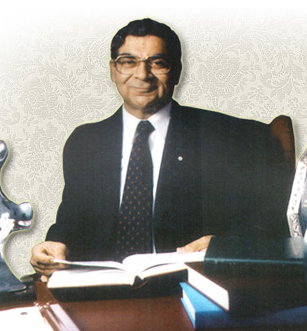
Who is Ranjit Kumar Chandra? A timeline of notoriety

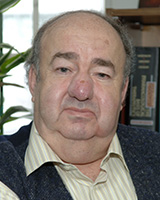
R K Chandra
R K Chandra

Last month, Ranjit Kumar Chandra was denied an extension to file an appeal of his lawsuit against the Canadian Broadcasting Corporation (CBC). It seemed to mark the end of a long fall for the self-proclaimed “father of nutritional immunology,” who has ended up with multiple high-profile retractions and on the wrong end of a costly libel lawsuit.

The case had a lot of twists and turns, however. So for your convenience, we’ve compiled a timeline of everything you need to know about the events that led up to the lawsuit — where it all began, and how it ended last July, when the Ontario Superior Court of Justice ruled in favor of the CBC, and the apparent epilogue this June.

In the 1980s, Chandra was a highly regarded nutrition researcher; in 1989, he was made a member of the Order of Canada. He authored over 200 papers during his time at Memorial University of Newfoundland. He has referred to himself as the “father of nutritional immunology,” but the link to his website no longer appears to be active.

Here’s how it all fell apart: Continue reading Who is Ranjit Kumar Chandra? A timeline of notoriety

Canada funding agency bans researcher for fraud, and in first, reveals her name

via WCH
via WCH

The Canadian Institutes of Health Research (CIHR) has banned a bone researcher for life following a finding of misconduct. And in a first, the agency has named her, in their report out today.

The case of Sophie Jamal may be familiar to Retraction Watch readers, as we covered it in October of last year following reporting by The Toronto Star. JAMA retracted a 2011 study by Jamal and colleagues in December, as we reported, and she resigned her positions at Women’s College Hospital (WCH) and the University of Toronto.

Jamal, according to the an investigating committee at WCH: Continue reading Canada funding agency bans researcher for fraud, and in first, reveals her name

Internet trolling paper published email without consent; retraction sparked lawsuit threat

De Gruyter

When a paper was retracted earlier this year with an opaque notice, we set out to figure out why. We’re still not entirely clear of the reason, but we’ve uncovered one aspect of the paper that raised objections from another researcher: The paper, on internet trolling, included an email he sent without his permission.

The retraction sparked our interest, both because of the journal’s opaque reasoning — saying the paper “does not fit” with the journal — and because the author (Jonathan Bishop, CEO of an independent media company called Crocelshas taken preliminary steps to sue the publisher of the Journal of Homeland Security and Emergency Management.

Here’s some of what happened before all that took place: When mechanical engineer Filippo Salustri discovered the paper included a screenshot of an email he sent to a listserv — along with his email address — his university (Ryerson in Canada) asked the publisher to retract the paper. De Gruyter re-reviewed the paper and retracted it, issuing the vague notice.

Salustri explained that the paper contains a figure with a picture of an email message:
Continue reading Internet trolling paper published email without consent; retraction sparked lawsuit threat

Nutrition researcher loses two more papers after misconduct findings come to light

R K Chandra, self-proclaimed father of nutritional immunology (from www.drrkchandra.com)

The self-proclaimed “father of nutritional immunology,” Ranjit Kumar Chandra, has lost two more papers following the release of a misconduct investigation report by his former employer, Memorial University of Newfoundland (MUN).

The report was released last year after Chandra lost his libel suit against the Canadian Broadcasting Company (CBC). The newly retracted papers were both published in Nutrition ResearchOn one, the author is listed as “Amrit Jain,” who is allegedly Chandra, as well.

Here’s the retraction notice for the article by Amrit Jain

Continue reading Nutrition researcher loses two more papers after misconduct findings come to light

Neuroscientist forged co-author’s signature, submitted paper without consent

European Journal of Neuroscience cover2The European Journal of Neuroscience has pulled a paper after learning that one author’s name had been included without his consent.

Co-editor-in-chief of the journal, Paul Bolam, told us that the Shandong University of Medicine in China (where the work was carried out) conducted an investigation and found “a serious case of academic misconduct” — one author had forged the signature of another researcher, in order to add him as a co-author on a project in which he had not participated.

Here’s the retraction notice, which tells us a bit more: Continue reading Neuroscientist forged co-author’s signature, submitted paper without consent

Journal pulls parasite paper over potential for patient harm

Parasitology ResearchA journal has retracted a paper about a molecular diagnosis for leishmaniasis out of concern it could lead to incorrect clinical diagnoses. 

According to Parasitology Research, all data behind the figures in the main manuscript and supporting information are correct, but the authors’ misinterpretation of the data could lead doctors to diagnose patients incorrectly. 

Let’s take a look at the retraction notice, which tells us a bit more about the nature of the problem: Continue reading Journal pulls parasite paper over potential for patient harm

Corrections chip away at asbestos paper for conflicts of interest, “misleading” citation

EBPHThe journal Epidemiology Biostatistics and Public Health has issued back-to-back corrections for a 2015 paper after the authors failed to disclose conflicts of interest with the asbestos industry and included an “erroneous citation.”

The mistaken citation was more than just a clerical error, critics argue — it undermines one of the key arguments of the paper, “Critical reappraisal of Balangero chrysotile and mesothelioma risk,” which disputes claims that an asbestos mine in northwest Italy was responsible for numerous cases of an aggressive form of cancer called mesothelioma. The authors, led by Edward Ilgren formerly of Oxford University, claim that “myriad sources” of other forms of asbestos—rather than the asbestos produced at the mine, called chrysotile—exist in the region “to account for the alleged cases.”

However, according to a recently added correction, the citation does not support one of the authors’ claims about how other forms of asbestos arrived at the mine area.

Continue reading Corrections chip away at asbestos paper for conflicts of interest, “misleading” citation

Journal retracts bioelectronics paper for lack of credit to collaborators

S09565663The list of co-authors on a paper about a “bioelectronic composite” was apparently too sparse.

According to its retraction note — posted at the request of the editor-in-chief and the corresponding author — the paper failed to include some of the collaborators.

The Biosensors & Bioelectronics paper looks at a protein complex that could function as part of a “bio-hybrid” device, like a sensor or a solar cell. It has been cited only by its retraction according to Thomson Reuters Web of Science.

What went wrong in allotting credit for the work pretty straightforward, according to the note for “Monolayers of pigment–protein complexes on a bare gold electrode: Orientation controlled deposition and comparison of electron transfer rate for two configurations.” Here it is in full:

Continue reading Journal retracts bioelectronics paper for lack of credit to collaborators