Exclusive: OSU investigation finds dishonesty and “permissive culture of data manipulation” in cancer research lab

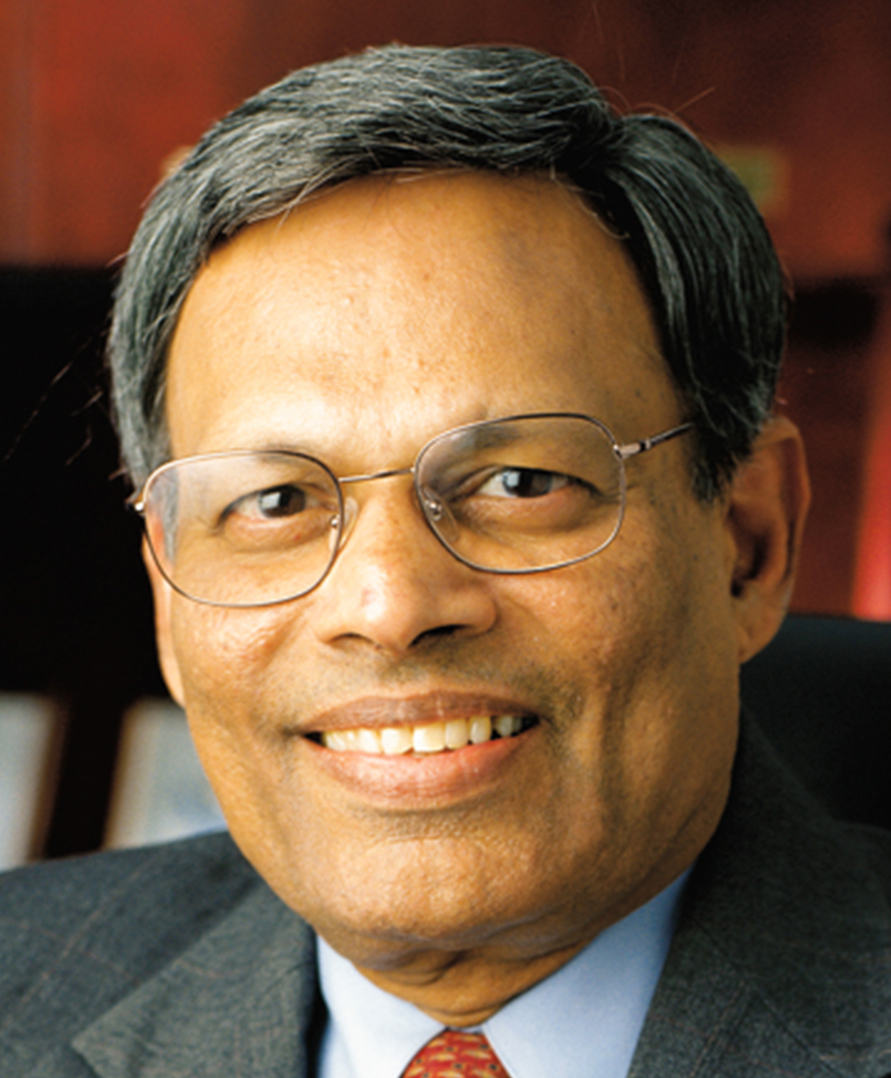
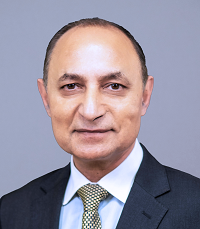
Samson Jacob

A university investigation found an emeritus professor had committed research misconduct after reviewing dozens of allegations, culminating in a recommendation to retract 10 papers and revoke his emeritus status. 

The Ohio State University investigated 20 manuscripts by the cancer research group of Samson Jacob after the university received allegations in 2017 of image manipulation stretching over years of work, according to a misconduct investigation report we obtained via a public records request.

The 209-page report, dated February 9, 2021, tells the story of an investigation spanning more than a decade of Jacob’s lab’s work that encountered “dishonesty” from the lab members interviewed. 

After determining that Jacob had committed research misconduct, the investigation committee recommended sanctions and asked for the immediate retraction of 10 papers in addition to the 10 that had already been addressed (nine retracted and one corrected) prior to the close of the inquiry. The school revoked Jacob’s emeritus position in May 2021, the OSU Lantern reported at the time. 

The investigation committee reviewed 67 allegations, but declined to probe many more concerns that surfaced for the sake of time, according to the report.

Continue reading Exclusive: OSU investigation finds dishonesty and “permissive culture of data manipulation” in cancer research lab

Exclusive: Former associate dean and ‘highly cited researcher’ was demoted by university

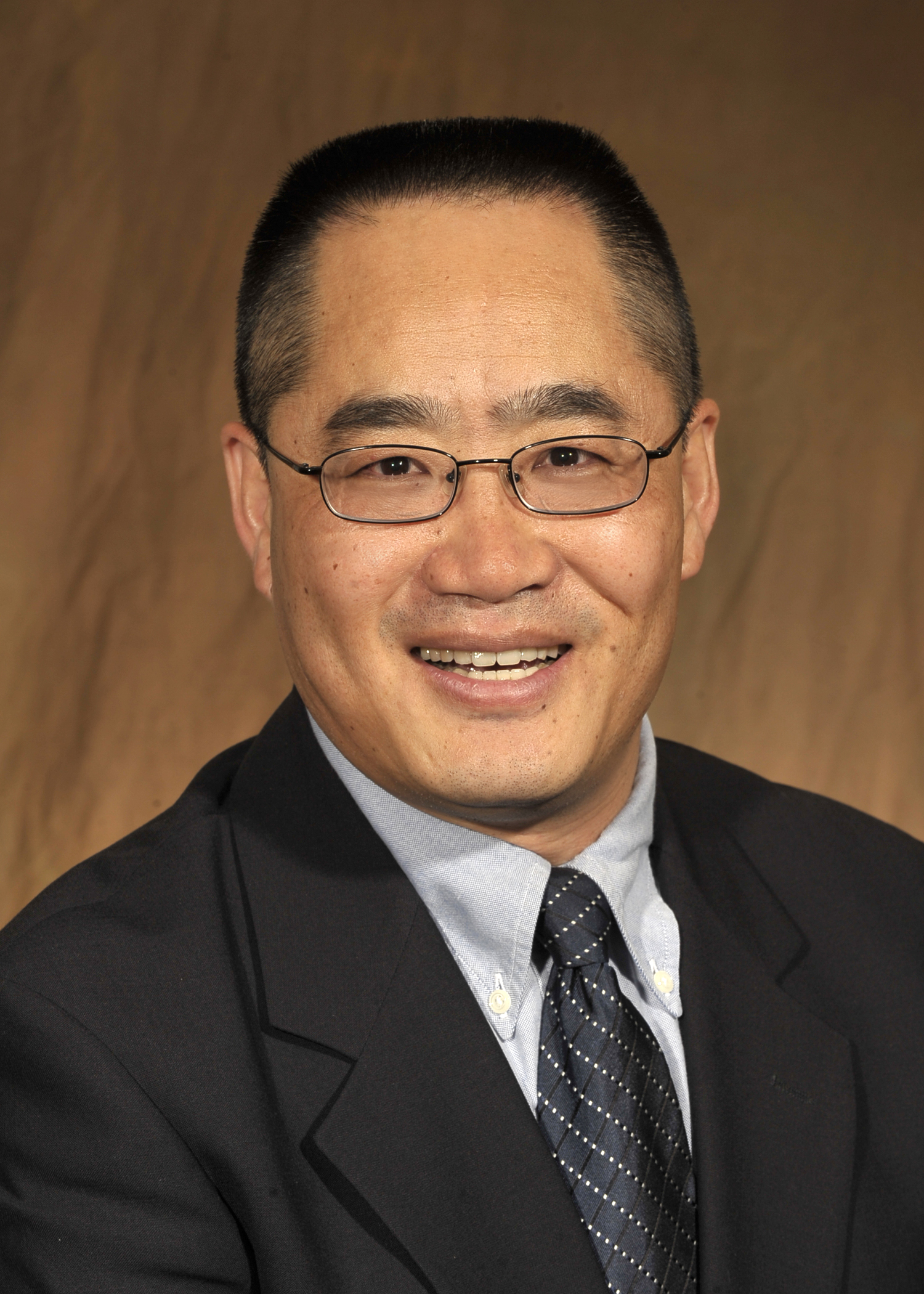
Jun Ren

A former associate dean for research at the University of Wyoming who was named as one of Clarivate’s Highly Cited Researchers for 2021 was sanctioned by the university years ago, Retraction Watch has learned.

Jun Ren, who studies the heart and diabetes, left Wyoming sometime in 2019 or 2020, according to a press release noting his citation achievements, after serving at different times as director of the NIH-funded INBRE program as well as associate dean. But following an investigation of his work between 2013 and 2015 that Ren says found “reckless mistakes” and “no intention to obtain specific results,” he was removed as director of what he says was a multi-million dollar research program and lost “administrative, editorial, grant review and advisor positions.”

Ren now says that he

Continue reading Exclusive: Former associate dean and ‘highly cited researcher’ was demoted by university

Exclusive: How a researcher faked data and gaslit a labmate for years

Ryan Evanoff

Sometime in early 2019, a postdoc in a veterinary microbiology lab at Washington State University (WSU) in Pullman came to suspect that a research assistant in her lab was fabricating data.

The postdoc had noticed that the research assistant’s experiments always produced positive results, while hers were always negative. And the experiments she performed with materials from the assistant gave “alarmingly inconsistent” results for no apparent reason, she said in an interview with an investigation committee.

She brought her concerns to a senior researcher, and the research assistant, Ryan Evanoff, was asked to “detail what he had done,” but apparently nothing came of it. 

The supervisor indicated that the postdoc’s initial message outlining her concerns “was not clear enough,” but the postdoc thought she’d been clear and says she’d been “extremely careful” due to the severity of the situation.

Continue reading Exclusive: How a researcher faked data and gaslit a labmate for years

Exclusive: Shell employee confesses to graduate student misdeeds

A former graduate student at Georgia Tech who at least until recently worked at Shell confessed last year to misconduct in three published papers.

Michael Casciato, who earned his doctorate  from Georgia Tech in 2013, wrote in a June 22, 2020 email to the editor of an American Chemical Society journal as well as the principal investigator of the lab where he completed his PhD, Martha Grover, and a co-author, Dennis Hess:

Continue reading Exclusive: Shell employee confesses to graduate student misdeeds

Exclusive: University of Glasgow seeking retraction of multiple papers after findings of image manipulation

Miles Houslay

The University of Glasgow is requesting the retraction of multiple papers by a pharmacology researcher who held various positions there for more than a quarter century.

The story begins in December 2016, when biostatistician Steven McKinney posted on PubPeer about a paper by the researcher, Miles Houslay, in the Journal of Biological Chemistry. That paper was eventually retracted in August 2020, but not before McKinney posted a comment on Retraction Watch that caught the eye of the pseudonymous Clare Francis.

Francis pointed us to comments about a total of eight of Houslay’s papers at that time. And in August 2020, when the JBC retraction appeared, Francis forwarded those to the King’s College, London, where Houslay is listed as having a faculty position, and the University of Glasgow, which he left in 2011.

Continue reading Exclusive: University of Glasgow seeking retraction of multiple papers after findings of image manipulation

Exclusive: Urology researcher demoted after misconduct investigation — then becomes chair at another school

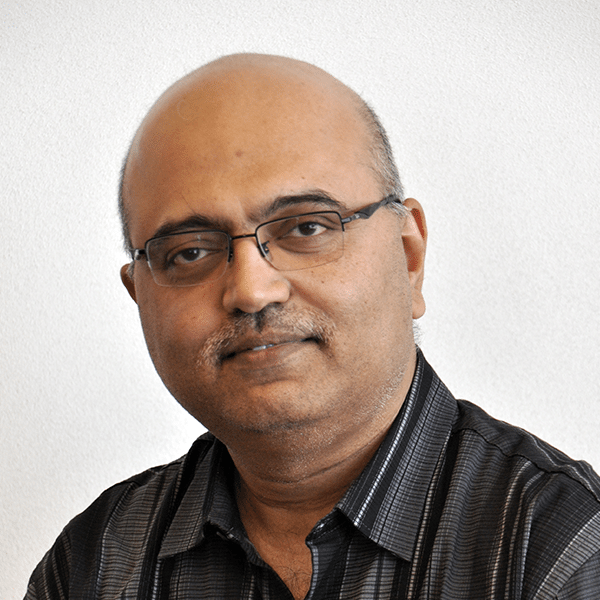
Hari Koul

A urology researcher at Louisiana State University lost his post as department chair after a misconduct investigation, Retraction Watch has learned. But he eventually moved on to be department chair at a different LSU campus — where he remains today.

In June, we reported that the work of urology researcher Hari Koul had been investigated by his former employer, the University of Colorado, following a recommendation by LSU. But between the time the misconduct investigation concluded in 2014 and the publication of our story, only three of nine papers by Koul that Colorado recommended for corrections or retractions had been amended in any way. More of those publications have been retracted following our story, the reporting of which was how some editors learned of the issues.

Now, via a public records request, we’ve gained access to the inquiry at LSU which led to the investigation at CU Denver and includes notes from interviews with Koul and his postdoc. The Denver investigation didn’t find Koul guilty of misconduct, but it found many errors in his published work, leading LSU’s Health Science Center in Shreveport to demote him in 2016. After several years of apparently unrelated legal battles with LSU’s Health Science Center in Shreveport, Koul moved to a different LSU institution, LSU Health Sciences Center in New Orleans, last year.

Continue reading Exclusive: Urology researcher demoted after misconduct investigation — then becomes chair at another school

Exclusive: Six years after a misconduct investigation, more than half of suspect papers remain unflagged

Hari Koul

When the University of Colorado at Denver completed an investigation in 2015 into the work of a former faculty member, the school recommended that nine papers be corrected or retracted.

But six years after the close of that investigation, the researcher, urologist Hari Koul, has had just two papers retracted and one corrected. 

Multiple journal editors told Retraction Watch they had not been informed that papers published in their journals were recommended for retraction or correction, according to documents obtained by Retraction Watch via a public records request. And emails show Koul was still negotiating the retraction of at least one of the papers last year.

Continue reading Exclusive: Six years after a misconduct investigation, more than half of suspect papers remain unflagged

Exclusive: Ohio State researcher kept six-figure job for more than a year after a misconduct finding

Mingjun Zhang

In 2016, Mingjun Zhang, a biomedical engineering researcher at The Ohio State University, along with collaborators, published a paper that explored the mechanism behind ivy’s impressive adhesive strength. In it, the authors claimed to report the genetic sequences of the proteins making up the adhesive.

The paper, entitled “Nanospherical arabinogalactan proteins are a key component of the high-strength adhesive secreted by English ivy” appeared in PNAS on June 7 and attracted some media attention.

But shortly after publication, an anonymous whistleblower sent a letter to OSU and PNAS simultaneously: “The authors have knowlingly [sic], intentionally, repeatedly, and substantially misrepresented data in order to publish the manuscript.”

Continue reading Exclusive: Ohio State researcher kept six-figure job for more than a year after a misconduct finding

Exclusive: University of Arizona says former researcher committed misconduct by plagiarizing figure

Palash Gangopadhyay

A former researcher in the University of Arizona’s optics school engaged in “a serious case of research misconduct,” Retraction Watch has learned.

Palash Gangopadhyay, who until 2019 was a research scientist at Arizona, used a figure from a 2003 paper by other authors when he co-authored a 2018 paper in Optics Letters titled “High sensitivity magnetometer using nanocomposite polymers with large magneto-optic response,” Wyant College of Optical Sciences dean Thomas Koch wrote to colleagues in an email obtained by Retraction Watch. The 2003 paper appeared in an obstetrics journal.

Figure 4b of 2018 paper
From Figure 3 of 2003 paper

The 2018 paper has been cited nine times, according to Clarivate Analytics’ Web of Science.

Koch wrote:

Continue reading Exclusive: University of Arizona says former researcher committed misconduct by plagiarizing figure

Exclusive: King’s College London finds “poor research practices” but no misconduct in two recent cases

King’s College London (KCL) found evidence of poor research practices by three of its faculty, but “no intention to deceive” and no misconduct, according to documents obtained by Retraction Watch.

One case involves work by cancer biologists Farzin Farzaneh and Ghulam Mufti, while the other involves work by Mahvash Tavassoli, also a cancer researcher. Both involve problems with images and were brought to the attention of KCL in January of this year by pseudonymous whistleblower Claire Francis.

In the Farzaneh and Mufti case, writes Tim Newton, KCL’s dean of research governance, ethics and integrity in an October 31 letter:

Continue reading Exclusive: King’s College London finds “poor research practices” but no misconduct in two recent cases