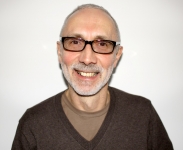
The University of Glasgow is requesting the retraction of multiple papers by a pharmacology researcher who held various positions there for more than a quarter century.
The story begins in December 2016, when biostatistician Steven McKinney posted on PubPeer about a paper by the researcher, Miles Houslay, in the Journal of Biological Chemistry. That paper was eventually retracted in August 2020, but not before McKinney posted a comment on Retraction Watch that caught the eye of the pseudonymous Clare Francis.
Francis pointed us to comments about a total of eight of Houslay’s papers at that time. And in August 2020, when the JBC retraction appeared, Francis forwarded those to the King’s College, London, where Houslay is listed as having a faculty position, and the University of Glasgow, which he left in 2011.
Yesterday, Amanda McKenna, the University of Glasgow’s research policy and integrity officer, thanked Francis for bringing the issues to the university’s attention, and wrote:
The investigating panel has upheld the allegations and we are seeking retraction of all papers involved.
It is unclear which papers the university will seek to have retracted — we have asked McKenna but it was already late in the day in Scotland, so have not heard back — but here are the papers that come up in the PubPeer search whose link Francis sent the university last year:
- “Scanning peptide array analyses identify overlapping binding sites for the signalling scaffold proteins, beta-arrestin and RACK1, in cAMP-specific phosphodiesterase PDE4D5,” published in Biochemical Journal and cited 119 times, according to Clarivate Analytics’ Web of Science (PubPeer link)
- “Integrating cardiac PIP3 and cAMP signaling through a PKA anchoring function of p110γ,” published in Molecular Cell and cited 134 times (PubPeer link)
- “Cross talk between phosphatidylinositol 3-kinase and cyclic AMP (cAMP)-protein kinase a signaling pathways at the level of a protein kinase B/beta-arrestin/cAMP phosphodiesterase 4 complex,” published in Molecular and Cellular Biology and cited 51 times (PubPeer link)
- “Phosphodiesterase-4 influences the PKA phosphorylation status and membrane translocation of G-protein receptor kinase 2 (GRK2) in HEK-293beta2 cells and cardiac myocytes,” published in Biochemical Journal and cited 32 times (PubPeer link)
- “RNA silencing identifies PDE4D5 as the functionally relevant cAMP phosphodiesterase interacting with beta arrestin to control the protein kinase A/AKAP79-mediated switching of the beta2-adrenergic receptor to activation of ERK in HEK293B2 cells,” published in the Journal of Biological Chemistry and cited 165 times (PubPeer link)
- “beta-Arrestin-mediated PDE4 cAMP phosphodiesterase recruitment regulates beta-adrenoceptor switching from Gs to Gi,” published in PNAS and cited 279 times (PubPeer link)
Houslay, who is listed as Principal Scientific Advisor and Chair of the Scientific Advisory Board of Mironid, a biotech company, did not immediately respond to a request for comment.
Like Retraction Watch? You can make a tax-deductible contribution to support our work, follow us on X or Bluesky, like us on Facebook, follow us on LinkedIn, add us to your RSS reader, or subscribe to our daily digest. If you find a retraction that’s not in our database, you can let us know here. For comments or feedback, email us at [email protected].
Thank you Claire Francis. My protestations carry no weight!
The University of Glasgow should also look into publications by George Baillie who as Editor in Chief of Cellular Signalling is not interested in dealing with problems in his own paper.
https://pubpeer.com/publications/0B3BEE57627CCD1EAAB700F13423CF
If Claire Francis could have a go at this one, we could clean up some more of the scientific literature.
Concerning a paper mentioned about where I am the senior and corresponding author: “Crosstalk between PI3-Kinase and cAMP-Protein Kinase A signaling pathways at the level of a Protein Kinase B/β-arrestin/cAMP phosphodiesterase-4 complex,” Molecular Cell and Biology, 2010 this is research done in my lab at University of Oslo and not at University of Glasgow.
I was contacted by the MCB after University of Glasgow contacted the journal (of note University of Glasgow has not contacted me as the senior and corresponding author of the paper). I contacted the Medical Faculty at the University of Oslo about the allegations made and their Research Integrity Commission at the request of the Dean conducted an investigation and found the figure in question to be authentic.
We have published a correction in MCB showing where splicing occurred in all panels and also a statement about author contributions. See: https://journals.asm.org/doi/10.1128/mcb.00556-21?url_ver=Z39.88-2003&rfr_id=ori:rid:crossref.org&rfr_dat=cr_pub%20%200pubmed
See also my comment on PubPeer: https://pubpeer.com/publications/950D8FA42695F2F9595A3D8273CE81
Another one to add to the list of Houslay and Baillie papers with obvious image manipulation:
“Phosphorylation of PDE4A5 by MAPKAPK2 attenuates fibrin degradation via p75 signalling” (DOI: https://doi.org/10.1093/jb/mvz016)
At least 3 instances of an original image being used for two different experimental conditions after cropping, flipping/rotating and resizing.
https://pubpeer.com/publications/4500EAFC5C40497347E63F88238BF6
This paper was finally retracted in October 2022.
https://doi.org/10.1093/jb/mvac074
“The corresponding author is retracting this article following an institutional investigation into the authenticity of the figures in the paper. The institution ultimately determined Figure 3 was not authentic and the scientific integrity of the article had been compromised.”
https://twitter.com/gbma25
Baillie seems to be on Twitter. Perhaps someone can reach out to him there.