In a February 2018 editorial, Rod Rohrich, a plastic surgeon and the former president of the World Association of Medical Editors, blasted predatory journals for “the damage that these illegitimate open access journals do to the reputation of legitimate, credible ones.”
Two years later, he wrote about how his team at Plastic and Reconstructive Surgery–Global Open, the journal he founded in 2013, had demonstrated to authors and readers that they had created a rigorous peer-review process and were “advancing patient safety and outcomes and elevating the science of plastic surgery globally.”
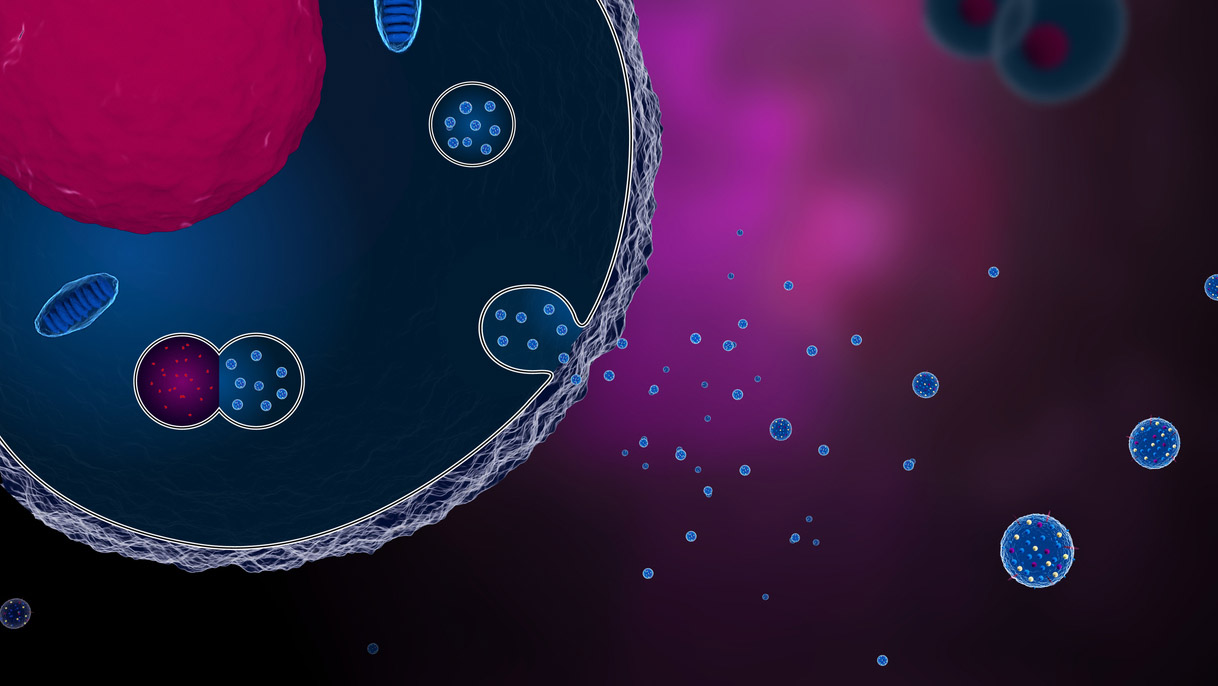
But an investigation by Retraction Watch raises questions about the way Rohrich, who is now editor emeritus at the journal, has promoted preliminary and sometimes misleading research about products to which he has financial ties. That includes exosomes, which are often derived from stem cells and have increasingly been touted — with limited evidence — for skin care, hair loss and wound healing.
Paul Knoepfler, a cell biologist at the University of California, Davis and publisher of the stem cell blog The Niche, said the field of exosomes is a “hugely hyped area” rife with dubious research: According to the Retraction Watch Database, 181 papers on the topic have been retracted for issues including image duplication, unreliable data, compromised peer review and links to paper mills.
“I get concerned when I see papers being published by journals where one or more authors have or have had leadership roles at the same journal,” Knoepfler told Retraction Watch, in response to Rohrich’s publications on exosomes and his role at the journal. “At a minimum it raises questions about how that connection could have potentially impacted editorial decisions and peer review.”
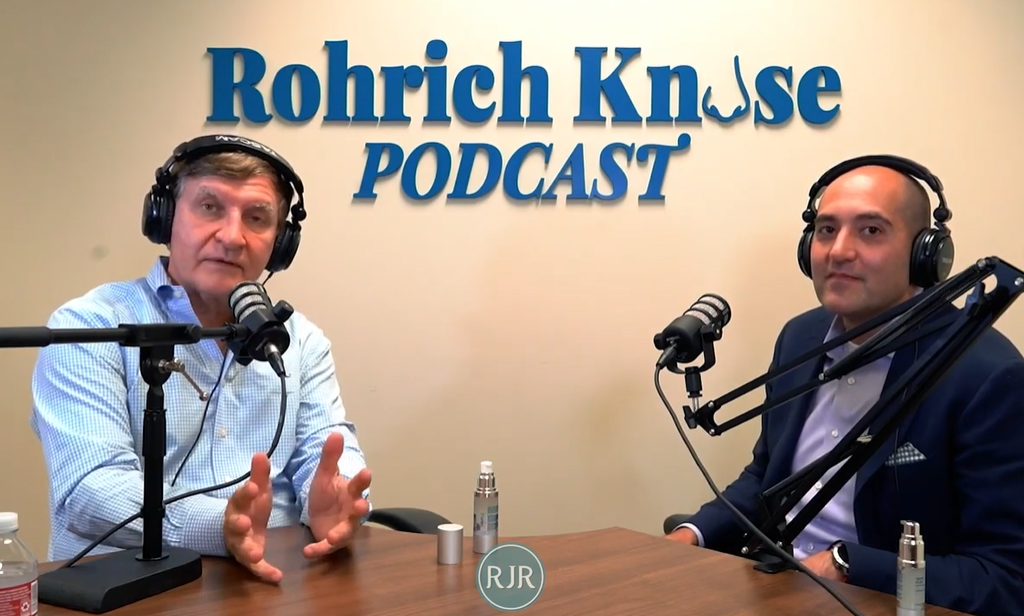
Rohrich, who founded the Dallas Plastic Surgery Institute, has served as a consultant for Rion, a Mayo Clinic spinoff that has been testing platelet exosomes for therapeutic applications in clinical trials, but is already marketing its “plated” skin care line for cosmetic purposes. “In Dallas, we’re going to be the first practice to ever use exosomes in skincare,” he said on his podcast during a 2022 interview with Rion’s founder, Atta Behfar. “Tell us about this amazing new product and what it’s going to do for our skin.”
Three years later, a review paper Rohrich wrote with Behfar received an award from his journal. A report on a clinical trial of the product Rohrich and Behfar published the following year appears to contain “serious design errors” and “misleading analyses,” according to one expert who reviewed it for Retraction Watch. Meanwhile, a third study on exosomes by a different research group, which the journal’s social media feed publicized, has since been retracted.
In an email to Retraction Watch, Rohrich pushed back against the criticism of his work and reiterated his support for sound science. “I welcome legitimate scientific criticism … and strongly support an accurate and appropriately measured account of what these publications do and do not establish,” he wrote. “I remain optimistic about the potential of regenerative medicine, but optimism is not a substitute for evidence.”
Rohrich is one of the best-known plastic surgeons in the country. He once earned more than $1.75 million per year as the chairman of the Department of Plastic Surgery at the University of Texas Southwestern Medical Center in Dallas, making him one of the highest paid public employees in the state.
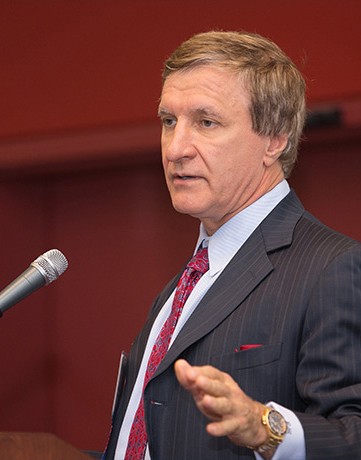
In 2004, he became the president of the American Society of Plastic Surgeons and the editor-in-chief of its journal, Plastic and Reconstructive Surgery. He launched PRS Global Open in April 2013 and strove to make it “the best peer-reviewed open-access plastic surgery literature in the world.”
Three years later, he departed the university after it emerged that he had an affair with a former patient. The woman’s husband accused the pair of secretly selling a $1 million diamond to fund travel and marketing expenses related to a book about plastic surgery they wrote, Navigate your Beauty: Smart and Safe Plastic Surgery Solutions.
“Once the gem is on a woman’s finger, it is there forever,” Rohrich wrote in a blog post after his departure. “It technically belongs to his wife and she can sell it whenever she wants to.”
Now at the Dallas Plastic Surgery Institute, he has maintained a high profile through his podcast Rohrich Knose, which has 12,000 subscribers on YouTube, his role organizing the popular Dallas Cosmetic Medicine and Rhinoplasty Meetings, and his work as a journal editor.
He has also been an informal mentor to Ankur Khajuria, a prolific British surgeon who joined the journal’s resident advisory board in 2020. The two have authored three papers together, and Rohrich wrote a foreword to Khajuria’s book, Landmark Papers in Plastic Surgery.
As Retraction Watch previously reported, Khajuria has offered guaranteed publications to students in his research academy, and has published 29 papers in the two plastic surgery journals Rohrich once ran. One of those papers, which claimed to test one of his own products, was retracted by the editors in September due to “the unreliability of the reported results.”
“I was concerned to learn that questions had been raised about that paper,” Rohrich told us. None of his own articles with Khajuria has been called into question. “I would characterize my relationship with Dr. Khajuria as supportive and professional, but not as a formal or close mentorship,” he said.
Khajuria, who was the first author of the retracted study, did not respond to a request for comment on our original story, which was published in January. Through more recent correspondence facilitated by his attorney, he told us he did not have access to the underlying dataset and that he received “pre-calculated p-values in a statistical summary file” from the Korean hospital where the experimental work took place and incorporated them into the manuscript in “good faith.”
Rohrich’s interest in exosomes developed after stepping into the editor emeritus role in December 2020 and subsequently becoming a consultant for Rion. In 2022, he and Behfar, a Mayo Clinic cardiologist focused on regenerative medicine, first spoke about the topic on Rohrich’s podcast.
Two years later, they were coauthors of a review paper in PRS Global Open, which detailed the benefits of Rion’s formulation of platelet-derived exosomes (“a room temperature-stable final drug product”) in comparison to the traditional exosomes derived from mesenchymal stem cells (“pro-oncogenic” and suffer from “lot-to-lot variability”).
“In the authors’ experience, identification of antioxidant enzymes and proangiogenic cytokines contained within platelet exosomes have been essential for their therapeutic utility,” they wrote, citing another Rion-funded study in Cosmetic Medicine.
But the only sentence in that study about antioxidant enzymes and angiogenic growth factors includes the tag “data not shown.” (That paper’s abstract also claimed Rion’s platelet-derived exosomes combined with a standardized skin care regimen increased skin health by 224% without noting that number referred only to the “top-quartile cohort.”)
In his email to Retraction Watch, Rohrich agreed that the “supporting reference could have been more precise” and offered other examples from the literature. He said he believed the review nevertheless offered a balanced description of exosomes from multiple sources and that it “repeatedly emphasizes the current limitations of the field.”
The review received PRS Global Open’s “Best Research Paper” award in 2025. The journal told us Rohrich “has not been involved in PRS Global Open editorial operations since his term ended in December 2020” and that awards are based on “readership and citation data.” The review has been cited 12 times, according to Clarivate’s Web of Science.
Rohrich and Behfar followed that paper with a clinical trial, published last March in PRS Global Open, showing Rion’s hair serum “improves hair density, volume fullness, and hair and scalp health.” Although Behfar and several of the authors disclosed their relationships to Rion, Rohrich did not.
“It’s a phenomenal skin care product, and it seemed natural to transition it to hair and that’s what we did in a double-blind study, placebo-control with nine months duration,” Rohrich said in a video posted on plated’s Instagram page. “The results were absolutely amazing.” Rohrich said his failure to disclose his relationship to Rion was “an oversight” he will correct.
But the clinical trial departed from widely accepted practice in assigning only eight of the 39 participants to the placebo group. Even if the placebo and treatment groups showed the same increase in hair growth over time, those differences would be more likely to be statistically significant due to the larger treatment group, according to experts.
In fact, the placebo group ended up with a slightly higher average increase in the number of hair follicles and the strength and quality of their hair, but the researchers found statistically significant increases only among subjects who received the exosomes.
“The authors made serious study design errors by using a minimum-power minimum-precision allocation ratio that is far from 1:1,” said Frank Harrell Jr., a biostatistician at Vanderbilt University Medical Center in Nashville. In addition, he said, they “jettisoned the actual design in favor of ad hoc and misleading analyses.” As one commenter on PubPeer explained, these errors will tilt “the study toward a positive result.”
Rohrich disputed that the study was misleading and said the “80:20 allocation was intentionally selected to provide greater exposure to the active formulation for initial efficacy and safety evaluation.” He said he agrees “a larger, more evenly powered trial is suggested to further confirm and extend these findings.”
The tentative nature of the findings hasn’t stopped companies from touting the product as a treatment.
“This is not a quick ‘shine serum’ — it’s a treatment,” reads the product description at The Swell Score, a wellness marketplace that claims to “vet everything for what’s clean and what actually works.”
Mayo Clinic’s store is more cautious in its own wording, noting the substance “supports hair follicle proliferation and a healthy growth cycle.” Neither Behfar, Rion, nor the Mayo Clinic’s media relations team responded to multiple requests for comment.
Knoepfler, the cell biologist, said topical formulations of exosomes, such as the product from Rion, fall into a “regulatory gray area” for the Food and Drug Administration and have been a way for companies to get their products on the market more quickly than injections.
PRS Global Open has also promoted another paper on a topical exosome product that was subsequently retracted. In October 2025, the journal published a study testing what it called “adipose-derived stem-cell exosomes” on four adults with chronic wounds on their legs.
The study’s authors included Hee-Jin Ahn, the director of Primoris International, the Korean company that makes the product, dubbed Exo-HL. “Exosome therapy was well tolerated and associated with rapid granulation, improved perfusion, and durable closure of refractory chronic ulcers,” the authors wrote in their abstract.
Soon after, the journal’s social media editor, plastic surgeon Roy Kim, who has touted exosomes in his own practice for skin rejuvenation and hair restoration and has discussed Korean skincare on Rohrich’s podcast, posted a video about the new study on the journal’s Instagram feed.
“The patients had remarkable wound healing,” he said. “It’s a very interesting study on how exosomes can be used to help patients.”
In November, an anonymous commenter on PubPeer noted that none of the patients’ ages in a table matched their descriptions in the text and the article lacked any financial disclosures. In addition, the commenter pointed out that the study had no control group and chronic wounds can heal on their own.
“Without a comparator group no valid conclusions can be drawn about treatment efficacy,” the commenter wrote.
Ahn and the other authors requested the paper be retracted the following month. The retraction notice indicates only that they learned the product was made from cultured plant cells rather than human stem cells. “This discrepancy compromises the validity of the findings and conclusions,” the editors wrote.
Kim has not updated his Instagram post on the journal’s feed and referred questions about the selection to the journal. The journal said articles are highlighted based on “general interest, clinical relevance, and the availability of engaging visual content” and that the social media post directs readers to the article’s official version of record, which notes the retraction.
The authors revised the paper to make the ages of their patients consistent (and added an additional patient), and JPRAS Open, an Elsevier journal, published it in April. The new paper removed its quantitative findings related to blood flow to the tissue and emphasized that the study was a “small, uncontrolled series” and that the results were “hypothesis-generating rather than confirmatory.”
The authors did not respond to multiple requests for comment.
Rohrich, for his part, remains proud of his work as an editor, researcher, and mentor.
“My commitment throughout my career — including in founding Plastic and Reconstructive Surgery–Global Open — has been to encourage transparent, evidence-based discussion and to improve the quality of plastic surgery research worldwide,” he said.
Like Retraction Watch? You can make a tax-deductible contribution to support our work, follow us on X or Bluesky, like us on Facebook, follow us on LinkedIn, add us to your RSS reader, or subscribe to our daily digest. If you find a retraction that’s not in our database, you can let us know here. For comments or feedback, email us at [email protected].
Not to paint with too broad a brush, but running a podcast does reduce your credibility by at least 30%.