Exclusive: Committee recommended pulling several papers by former Cornell med school dean

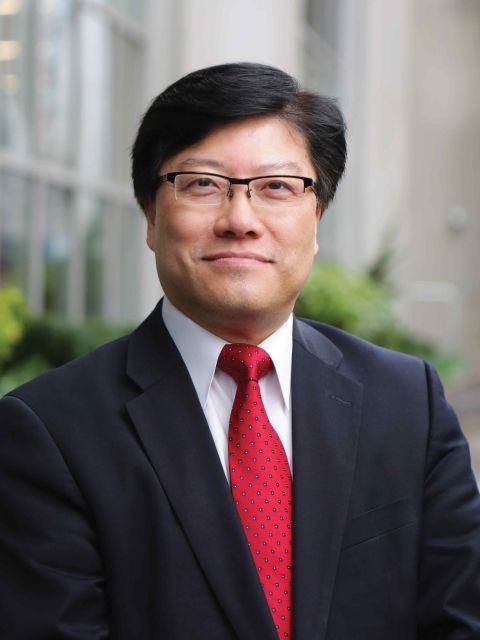
Augustine M. K. Choi

Following an investigation launched by Cornell University, a committee recommended pulling several papers by lung-disease researcher Augustine M. K. Choi, who served as dean of Weill Cornell Medicine until this year, Retraction Watch has learned.

Choi’s latest retraction, which brings him up to three so far,  came on March 15, when The Journal of Clinical Investigation pulled “UCP2-induced fatty acid synthase promotes NLRP3 inflammasome activation during sepsis.” The paper has been cited 178 times, according to Clarivate’s Web of Science. 

The retraction notice reads: 

Continue reading Exclusive: Committee recommended pulling several papers by former Cornell med school dean

Exclusive: Australia space scientist made up data, probe finds

Joachim Schmidt

A space scientist formerly based at the University of Sydney made up data in an unpublished manuscript, an investigation by the institution has found. 

The researcher, Joachim Schmidt, “utilised Adobe Photoshop to make up results,” according to a letter dated Feb. 15, 2023, from Emma Johnston, deputy vice-chancellor of research at the University of Sydney, to scientists at the University of Michigan who reported complaints in late 2019 about work by Schmidt and his former professor Iver Cairns to the Australian institution. 

“Given the above, the Panel found there had been breaches of the Research Code on the part of Dr Schmidt. The breaches were viewed as serious, and the Panel considered them to be sufficiently serious to warrant a finding of research misconduct as defined in the Australian Code for the Responsible Conduct of Research,” the letter, obtained by Retraction Watch, stated. 

Continue reading Exclusive: Australia space scientist made up data, probe finds

Exclusive: Prof stole former student’s identity to edit two journal special issues

A university investigation in Hong Kong found that a professor used the email account of a former student to conduct all the correspondence needed to edit special issues of two journals, Retraction Watch has learned. 

The two special issues, which were published last year, are full of articles with the hallmarks of paper mills, said Dorothy Bishop, an Oxford psychologist and scientific sleuth who flagged the matter to the institution involved in the case. 

Last November, Bishop emailed the president of Hong Kong Polytechnic University (PolyU) with the information that Kaifa Zhao, a PhD student at the university, was listed as the lead editor for two special issues of the Journal of Environmental and Public Health and Computational Intelligence and Neuroscience, both journals published by Hindawi. The nearly 300 articles in the special issues were “mostly meaningless gobbledegook” that suggested they came from a paper mill, she wrote. 

The episode is the latest of many problems involving questionable peer review of special issues – and subsequent retractions – we’ve covered.  

Continue reading Exclusive: Prof stole former student’s identity to edit two journal special issues

Exclusive: Deepfake pioneer to lose two papers after misconduct finding of faked data

Hao Li

Two papers coauthored by a computer scientist whose work on visual effects has been credited in big-name Hollywood movies will soon be retracted after a publisher’s investigation found falsification of data in the articles. 

Retraction Watch has also learned that the University of Southern California (USC) found that Hao Li “falsely presented his research” in the two publications while he was a professor there. The articles, both published in journals of the Association for Computing Machinery (ACM), describe a system to create a 3D digital avatar head from a person’s photo using artificial intelligence. 

Li co-founded and is CEO of Pinscreen, a startup which is commercializing that technology. On its website, Pinscreen touts its products as “the most advanced AI-driven versatile avatars.” Besides personalized avatars for use in virtual or augmented reality systems, Pinscreen offers the ability to replace a person’s face in videos, creating what’s known as “deepfakes.” 

Continue reading Exclusive: Deepfake pioneer to lose two papers after misconduct finding of faked data

Exclusive: UCLA found a longtime researcher faked data – but made a strange mistake in its report

UCLA

A few years ago, funding for the UCLA pathology lab where Janina Jiang had worked since 2010 was running out. 

The head of the lab was grateful when another scientist offered to chip in $50,000 to keep Jiang on for six more months. 

But some of the experiments Jiang – perhaps feeling that her job was on the line, a colleague speculated – ran for that scientist raised suspicions. Other experiments didn’t corroborate her results, and Jiang failed to provide all her raw data. 

Jiang’s benefactor asked another staff scientist to review and reanalyze her work. 

What he found spurred an institutional investigation, which in July 2021 found Jiang faked data representing flow cytometry experiments in several figures included in 11 grant proposals, resulting in 19 counts of research misconduct. 

Continue reading Exclusive: UCLA found a longtime researcher faked data – but made a strange mistake in its report

Exclusive: Elsevier retracting 500 papers for shoddy peer review

Elsevier is retracting 500 papers from a journal dedicated to conference proceedings because “the peer-review process was confirmed to fall beneath the high standards expected,” Retraction Watch has learned.

As we reported a month ago, “data thug” James Heathers “found at least 1,500 off-topic papers, many with abstracts containing ‘tortured phrases’ that may have been written by translation or paraphrasing software, and a few with titles that had been previously advertised with author positions for sale online.” 

Shortly thereafter, Elsevier told us they were beginning an investigation of the title, Materials Today: Proceedings. Yesterday, they said the retractions were beginning.

Continue reading Exclusive: Elsevier retracting 500 papers for shoddy peer review

Exclusive: Hindawi and Wiley to retract over 500 papers linked to peer review rings

After months of investigation that identified networks of reviewers and editors manipulating the peer review process, Hindawi plans to retract 511 papers across 16 journals, Retraction Watch has learned. 

The retractions, which the publisher and its parent company, Wiley, will announce tomorrow in a blog post, will be issued in the next month, and more may come as its investigation continues. They are not yet making the list available. 

Hindawi’s research integrity team found several signs of manipulated peer reviews for the affected papers, including reviews that contained duplicated text, a few individuals who did a lot of reviews, reviewers who turned in their reviews extremely quickly, and misuse of databases that publishers use to vet potential reviewers. 

Continue reading Exclusive: Hindawi and Wiley to retract over 500 papers linked to peer review rings

Exclusive: NIH researcher resigned amid retractions, including Nature paper

A tenure-track investigator at the National Institute of Environmental Health Sciences (NIEHS), a division of the National Institutes of Health, resigned in March, as questions mounted about her work, Retraction Watch has learned. 

Jennifer Martinez has retracted at least two papers, including a 2016 Nature paper with the chair of the immunology department at St. Jude Children’s Research Hospital in Memphis, Tenn., and has another marked with an expression of concern.  

The retraction is the first for Douglas R. Green of St. Jude, although he’s had a handful of corrections and two other papers he published in Nature have been questioned by scientists who couldn’t replicate the results. 

After a postdoc at St. Jude, Martinez led an independent research program at NIEHS in Research Triangle Park, North Carolina since 2015, according to an online CV. She resigned from NIEHS in March and a federal research watchdog is looking into her work, a spokesperson told us:

Continue reading Exclusive: NIH researcher resigned amid retractions, including Nature paper

Exclusive: Cancer researcher sues med school for retaliation after research misconduct finding

Stacy Blain

A breast cancer researcher at SUNY Downstate in Brooklyn has sued the university for sex discrimination and retaliation after an institutional investigation found she committed research misconduct. 

Stacy Blain, an associate professor in the departments of pediatrics and cell biology at Downstate, has alleged that the university violated the Equal Pay Act by paying her less than her male colleagues; discriminated against her based on her sex since she joined the faculty in 2002, including by conducting multiple investigations into her lab’s work; and used the latest investigation and its finding that she committed research misconduct to retaliate against her for accusing the university of sex discrimination. 

From the lawsuit

Continue reading Exclusive: Cancer researcher sues med school for retaliation after research misconduct finding

Exclusive: PLOS ONE to retract more than 100 papers for manipulated peer review

In March, an editor at PLOS ONE noticed something odd among a stack of agriculture manuscripts he was handling. One author had submitted at least 40 manuscripts over a 10-month period, much more than expected from any one person. 

The editor told the ethics team at the journal about the anomaly, and they started an investigation. Looking at the author lists and academic editors who managed peer review for the papers, the team found that some names kept popping up repeatedly. 

Within a month, the initial list of 50 papers under investigation expanded to more than 300 submissions received since 2020 – about 100 of them already published – with concerns about improper authorship and conflicts of interest that compromised peer review. 

Continue reading Exclusive: PLOS ONE to retract more than 100 papers for manipulated peer review