Finnish institute finds no evidence to support misconduct in diabetes paper

VTT Research CentreAn investigation at the VTT Technical Research Centre of Finland has found no evidence of misconduct by one of its former researchers in a diabetes paper.

We previously reported on the case after the VTT was accused of cutting corners in a previous investigation into Matej Orešič (now based at the Steno Diabetes Center in Gentofte, Denmark)In 2014, the VTT concluded that there was no evidence of falsification or data tampering on the part of Orešič in the 2008 paper published in the Journal of Experimental Medicine (JEM). The proceedings came into the public domain through a news article published in the Finnish media outlet Helsingin Sanomat in February 2016, which prompted the VTT to reopen the case.

Now, the same people who questioned the previous investigation told us they have doubts about the latest conclusions, noting the probe should not have focused on a single paper, but rather on alleged problems within the plasma and serum metabolomics group, previously led by Orešič.

Orešič sent us this report, which the VTT released on June 15, outlining their decision. The VTT confirmed the legitimacy of the report, which says: Continue reading Finnish institute finds no evidence to support misconduct in diabetes paper

Doctor who participated in fake chocolate study fined for violating code of conduct

Source: AKA
Source: AKA

A German district attorney has fined a doctor who participated in a bogus study showing chocolate helps weight loss, designed to illustrate how shady science can make the news, arguing it was unethical to ask people to participate unknowingly in such a scam.

As soon as the study was published, critics raised questions over whether it was appropriate to include volunteers in a bogus clinical trial, which included giving blood. Recently, a German district attorney for professional conduct of physicians ruled that it was not.

In an anonymized version of a decision from the district attorney – who investigates on possible violations of the physicians’ professional law – he fined the doctor who participated in a bogus study about the health benefits of chocolate 500 Euros for not obtaining proper consent from the people who volunteered to participate, and for not involving an ethics committee. Continue reading Doctor who participated in fake chocolate study fined for violating code of conduct

Amid controversial Sarepta approval decision, FDA head calls for key study retraction

FDAThe head of the U.S. Food and Drug Administration (FDA) has called for the retraction of a study about a drug that the agency itself approved earlier this week, despite senior staff opposing the approval.

On September 19, the FDA okayed eteplirsen to treat Duchenne muscular dystrophy (DMD), a rare genetic disorder that results in muscle degeneration and premature death. Several of its top officials disagreed with the drug’s approval, questioning how beneficial it will be for patients, as Forbes, MedPage Today and others reported.

In a lengthy report Commissioner Robert Califf sent to senior FDA officials on September 16 — that was made public on September 19 — he called for the retraction of a 2013 study published in Annals of Neurology funded by the seller of eteplirsen, which showed beneficial effects of the drug in DMD patients. Califf writes in the report:

Continue reading Amid controversial Sarepta approval decision, FDA head calls for key study retraction

Correction cites “unreliable” data in paper by researchers at center of Duke lawsuit

Journal of Biological ChemistryA researcher charged with embezzlement — and now the subject of a multi-million dollar lawsuit — has earned another correction, again citing “unreliable” data.
But this doesn’t appear to be a run-of-the-mill correction notice.

Firstly, it affects a paper co-authored by Erin Potts-Kant and William Foster, former Duke employees now being sued (along with Duke) for including fraudulent data in $200 million worth of federal grants. Secondly, the notice in the Journal of Biological Chemistry is four paragraphs long, and includes six figures — it would normally be considered a “mega-correction.” But lastly, even though the notice is labeled a “correction,” it’s not immediately apparent which aspects of the paper are being changed.

Here are some excerpts from the newest notice: Continue reading Correction cites “unreliable” data in paper by researchers at center of Duke lawsuit

Researcher who sued to stop retractions earns his 8th

Mario Saad
Mario Saad

Mario Saad, a diabetes researcher who once sued to stop a publisher from retracting his papers, has just received his eighth retraction.

Critical Care has retracted a 2012 paper about treating sepsis, citing extensive similarities between figures within the paper and 10 others.

Here’s the full notice for “Diacerhein attenuates the inflammatory response and improves survival in a model of severe sepsis:” Continue reading Researcher who sued to stop retractions earns his 8th

Two more retractions bring bone researcher’s total to 12

jbmrA bone researcher based in Japan with 10 retractions under his belt has retracted two more papers for similar reasons — problems with the underlying data, and including co-authors who didn’t participate in the project.

In both notices, Yoshihiro Sato is pegged as responsible for the content of the papers. The newly retracted research covers a long timespan — one paper was published in 2000, the other in 2013.

Here’s the first notice, issued by the Journal of Bone and Mineral ResearchContinue reading Two more retractions bring bone researcher’s total to 12

How can we improve preclinical research? Advice from a diabetes researcher

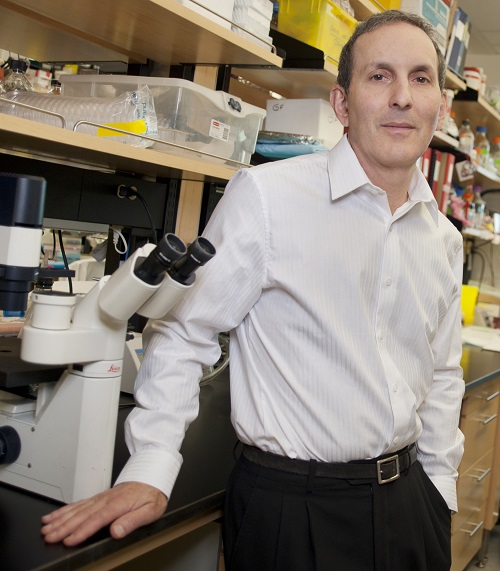
Daniel Drucker
Daniel Drucker

By all accounts, science is facing a crisis: Too many preclinical studies aren’t reproducible, leading to wasted time and effort by researchers around the world. Today in Cell Metabolism, Daniel Drucker at the Lunenfeld-Tanenbaum Research Institute of Mount Sinai Hospital in Toronto details numerous ways to make this early research more robust. His most important advice: more transparent reporting of all results (not just the positive findings), along with quantifying, reporting, tracking, and rewarding reproducibility, for both scientists and journals and universities/research institutes.

Retraction Watch: Which of your recommendations will researchers most object to, and why? Continue reading How can we improve preclinical research? Advice from a diabetes researcher

Author objects to retraction of heart study, implies industry played role

JACC

The Journal of the American College of Cardiology (JACC) has retracted a recently published paper that questioned the effectiveness of a treatment for irregular heartbeat, against the last author’s wishes. 

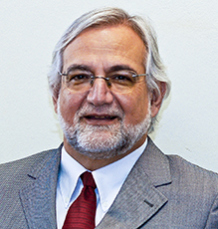
Andrea Natale, the study’s last and corresponding author and Executive Medical Director of Texas Cardiac Arrhythmia at Austin, took to social media today to express his frustration in the retraction of the July paper, which showed electrical rotors were less effective at fixing irregular heartbeat than other treatments. On Twitter, Natale implied industry played a role in its demise.

However, according to the retraction notice, the paper was felled by problems with randomization; Natale has admitted that some patients were removed from the analysis after one center included them incorrectly.

Here’s the retraction notice for “Impact of Rotor Ablation in Nonparoxysmal Atrial Fibrillation Patients Results From the Randomized OASIS Trial:” Continue reading Author objects to retraction of heart study, implies industry played role

Despite apology, bagpipes study not slated for retraction

Thorax

It’s not often that a paper elicits an apology — but that’s just what happened when family members first learned a bagpipe musician died from inhaling mold and fungi from a case study reported in a journal. The hospital has since apologized; the journal, however, told us it is not planning to issue a retraction.

The University Hospital of South Manchester NHS Foundation Trust in Wythenshawe, UK, has apologized and launched an internal investigation into the case report after the family’s distress was extensively covered by the UK’s mainstream media, such as The BBC, The Independent, The Daily Mail, and The Telegraph.

There seem to be conflicting accounts over whether any consent was obtained to publish the report. The Thorax paper says the patient gave consent, and according to Gisli Jenkins, co-editor-in-chief of the journal and a professor of experimental medicine at Nottingham University in the UK, consent was sought from the family. But the patient’s daughter told us that neither the next of kin nor the patient were approached for consent. 

The release of the report on August 22 was “completely unethical,” said Erin Tabinor, daughter of musician Bruce Campbell and a makeup artist in Liverpool, UK. Tabinor told us that the family wasn’t aware that playing bagpipes was the cause of Campbell’s death: Continue reading Despite apology, bagpipes study not slated for retraction

Peer review manipulation fells another study

Spectrochimica ActaA spectroscopy journal has retracted a 2016 study after concluding that its editors had been misled by a fake review.

According to the retraction notice, the journal — Spectrochimica Acta Part A: Molecular and Biomolecular Spectroscopy — accepted the paper due to positive feedback from someone assuming the identity of an expert reviewer, using an email address provided by the author of the study.

An official from the author’s institution in Turkey informed us that it will conduct an investigation. 

Here’s the retraction notice for “Diagnosis of cervical cancer cell taken from scanning electron and atomic force microscope images of the same patients using discrete wavelet entropy energy and Jensen Shannon, Hellinger, Triangle Measure classifier:” Continue reading Peer review manipulation fells another study