Are there foxes in Tasmania? Follow the poop

Stephen Sarre, based at the University of Canberra in Australia, has made a career out of collecting and analyzing poop.

It’s a tough job, but someone’s got to do it. Part of his work is designed to answer a multi-million dollar question: Is Tasmania home to foxes, a pest that carries rabies and other diseases and can ravage local wildlife? According to the Australian news outlet ABCthe Tasmanian and Australian governments have spent $50 million (AUD) on hunting foxes on the island since 2001 — even though many have debated whether they are even there.

In 2012, after analyzing thousands of fecal samples, Sarre published a paper in the Journal of Applied Ecology which boldly claimed that “Foxes are now widespread in Tasmania.” But many outside researchers didn’t buy it, and quickly voiced their criticisms of the paper, namely that there may be problems with false positives and the methodology used to analyze the samples. Recently, the journal issued an expression of concern for the paper, citing an ongoing investigation into the allegations.

Here’s the expression of concern (paywalled, tsk tsk):

Continue reading Are there foxes in Tasmania? Follow the poop
The retraction countdown: How quickly do journals pull papers?

After Tina Wenz was found guilty of scientific misconduct, how long did it take for journals to retract the problematic papers?  The answer: Between three and nine months.

In September 2016, the University of Cologne found that Wenz had committed scientific misconduct in six papers and requested they all be retracted. From that point on, the retraction clock was ticking.

We’ve explored how long it takes a journal to act over the years, and we’ve found that the time between identifying a problem to retracting the paper can vary — and sometimes last years.

In Wenz’s case, one of the papers—published in Cell Metabolism in 2009—had already been retracted in 2015. Three of the remaining five were retracted in December 2016—a 2008 paper in Cell Metabolism, a 2009 paper in Proceedings of the National Academy of Sciences (PNAS), and a 2009 paper in the Journal of Applied Physiology.

In January 2017, the journal IUBMB Life pulled a 2014 paper flagged in the investigation. And just over nine months after Wenz was found guilty of misconduct, the last paper—published in 2013 in Mitochondrion—has been retracted.

The most recent notice states that the University of Cologne requested the retractions, after determining that the data had been “inappropriately manipulated.”

Here’s the retraction notice in Mitochondrion:

Continue reading The retraction countdown: How quickly do journals pull papers?

Fake peer review, forged authors, fake funding: Everything’s wrong with brain cancer paper

The paper had everything: Fake peer review, forged authors, even a fake funder.

In other words, it had nothing.

A 2015 paper is the latest retraction stemming from an investigation into fake peer review by Springer, which has now netted more than a hundred papers.

According to a spokesperson at Springer: Continue reading Fake peer review, forged authors, fake funding: Everything’s wrong with brain cancer paper

Historian returns prize for high-profile book with 70+ corrections

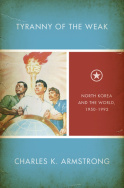
A historian based at Columbia University has returned a 2014 prize after criticisms prompted him to issue more than 70 corrections to his prominent book about North Korea.
Charles Armstrong told Retraction Watch he returned the 2014 John K. Fairbank Prize he received for “Tyranny of the Weak” due to “numerous citation errors.” The book has faced heavy criticism, including allegations of plagiarism and using invalid sources.

The American Historical Society, which issues the Fairbank Prize, released a statement last week:

Continue reading Historian returns prize for high-profile book with 70+ corrections

“The correct values are impossible to establish:” Embattled nutrition researcher adds long fix to 2005 paper

A Cornell food researcher who has pledged to re-analyze his papers following heavy criticism of his work has issued a major correction to a 2005 paper.


The correction tweaks two tables, a figure, and the description of the methodology — and notes in two instances the correct findings are unknown, since the original data are unavailable. Andrew Gelman, a statistician at Columbia University and critic of Brian Wansink’s work, has dubbed the notice the “best correction ever.”

The paper, about whether changing the name of food influences its taste, was not among the batch of papers initially flagged by critics last year. Since then, researchers have raised additional questions about Wansink’s work; one of his papers was retracted in April. That same month, an internal review by Cornell University concluded that Wansink made numerous mistakes, but did not commit misconduct.

When we contacted Wansink about the correction, we received this statement from the Cornell Food and Brand Lab, which Wansink directs:

Continue reading “The correct values are impossible to establish:” Embattled nutrition researcher adds long fix to 2005 paper

Researcher who tangled with CrossFit loses two more papers

An exercise scientist who ran a study of the CrossFit exercise program without an approved human subjects protocol has lost two more papers to retraction.

Both papers were retracted on June 26 by the editors of the International Journal of Exercise Science (IJES) with the agreement of last author Steven Devor, a former professor at The Ohio State University. Both have been retracted because the studies were carried out without proper IRB approval.

Earlier in June, another paper from the CrossFit study — which is still at the center of a legal battle between CrossFit and a competitor in the market for exercise instructor licensing — was retracted by the Journal of Strength and Conditioning Research (JSCR) for improper IRB approval. Devor resigned from OSU the day after the first retraction.

Only one of the newly retracted papers had anything to do with the CrossFit study: Published in April 2014, this paper suggested that the so-called “paleo” diet — a diet focused on meat and vegetables — is associated with “unfavorable” changes in cholesterols and other blood-based cardiovascular biomarkers. In addition to following the diet, subjects also participated in a CrossFit exercise program. Continue reading Researcher who tangled with CrossFit loses two more papers

Inclusion of “personal correspondence” in evolution paper prompts retraction, new journal policy

Hearsay is not admissible as evidence in court — and it doesn’t seem to go very far in science, either.

A pair of researchers in the field of human evolution have lost a paper which contained data from “personal correspondence” that the providing party apparently did not enjoy seeing in print.

The article, “Early hominin biogeography in Island Southeast Asia,” was published in the September/October 2015 issue of Evolutionary Anthropology. The authors, Roy Larick and Russell Ciochon, are paleoanthropologists and co-founders of the Iowa-Bandung Java Project — a 20-year old collaborative effort to study the origins of early humans in Indonesia. Continue reading Inclusion of “personal correspondence” in evolution paper prompts retraction, new journal policy

“An evolving and inconsistent tale:” Biochemist barred from federal grants for five years

In 2013, Frank Sauer blamed “visual distortion” for problems with the images in his papers and grant applications. That explanation gave way to the production in 2016 of a mysterious and ominous letter from an unnamed researcher claiming that they’d sabotaged Sauer’s work in a plot of revenge. Soon after, Sauer was claiming that a mysterious cabal was plotting to undermine the output of German researchers.
Whatever Sauer was selling, Leslie Rogall, an administrative law judge for the U.S. Department of Health and Human Services’ Departmental Appeals Board, wasn’t buying.

Rogall has concluded that the Office of Research Integrity acted properly in 2016 when it found Sauer — a former faculty member in biochemistry at the University of California, Riverside — guilty of misconduct. His offense: doctoring images in three published papers and seven grant applications to the National Institutes of Health.

In a May 22 decision first posted today, she writes (italics hers):

Continue reading “An evolving and inconsistent tale:” Biochemist barred from federal grants for five years

Fake peer review strikes again for pair of authors

Two authors who had a paper retracted for fake peer review in 2015 have lost another for the same reason.

Elsevier recently retracted the second paper by the duo, a 2015 paper in a cancer journal, after finding evidence of fake peer review. The paper was submitted in October 2014 and accepted just a week before our piece on fake peer review appeared in Nature.

According to the notice, after investigating the paper, which appeared in Cancer Letters, the publisher concluded that it was accepted “based upon the positive advice of at least two faked reviewer reports.” The notice also explained that the identities of several authors “could not be confirmed.” Continue reading Fake peer review strikes again for pair of authors

Plagiarism costs author five papers in five different journals

An engineering researcher has written about models tackling a range of complex issues — security problems in Iraq, poverty in Europe, and emergency responses to humanitarian crises. But there may be some limits to his expertise: Between 2016 and 2017, five journals have retracted five of his papers, citing plagiarism.

Some of the notices describe the plagiarism as “extensive,” “significant,” and “substantial.” One journal editor, who retracted one of Kubilay Kaptan’s papers last year, told us the paper “was simply a direct copy from an existing one.”

The editor noted that Kaptan — who lists his affiliation as the Civil Engineering Department at Beykent University in Istanbul — claimed to be “the victim of a personal smear campaign, which involved submitting plagiarised manuscripts in his name.” We reached out to Kaptan several times by phone and email to verify this claim, but did not hear back.

Here’s the most recent retraction, for a 2016 paper published in Journal of Refugee Studies  Continue reading Plagiarism costs author five papers in five different journals