‘Tin Man Syndrome’ case plagiarized from hoax, sleuths say

A comparison of the images and an overlay, provided by a sleuth.

On April Fools’ Day 10 years ago, radiologist Matt Skalski took part in a website’s annual challenge to prank the radiology community by posting the case of a man with “ectopia cordis interna,” or “Tin Man Syndrome.” Unlike the fictitious metal character from the Wizard of Oz, Skalski’s satirical patient had a heart — in his abdomen. 

Now a group of researchers say they encountered the disease in real life, in a 22-year-old patient they claim has “no significant medical history.” 

The researchers based in Iraq published their “rare case report” in Medicine in July. 

Continue reading ‘Tin Man Syndrome’ case plagiarized from hoax, sleuths say
High school student who volunteered at NASA-sponsored lab gets retraction 

An astronomical society journal has issued its first retraction in its 10-year history — for work done by a NASA researcher and a high school student. The duo set out to confirm an astrophysics law using calculations that assumed the law was true.

The journal, Research Notes of the AAS, is published by the American Astronomical Society. It is not peer-reviewed, nor is it indexed in Clarivate’s Web of Science. The retraction has prompted the journal to revise its policies on reviewing work before publication.

One of the two authors on the retracted 2024 article is Jadon Lam, who at the time was a student at Pleasant Grove High School in Elk Grove, California. Lam is now at the California Institute of Technology in Pasadena studying astrophysics, according to his LinkedIn profile

Continue reading High school student who volunteered at NASA-sponsored lab gets retraction 

Fighting coordinated publication fraud is like ‘emptying an overflowing bathtub with a spoon,’ study coauthor says

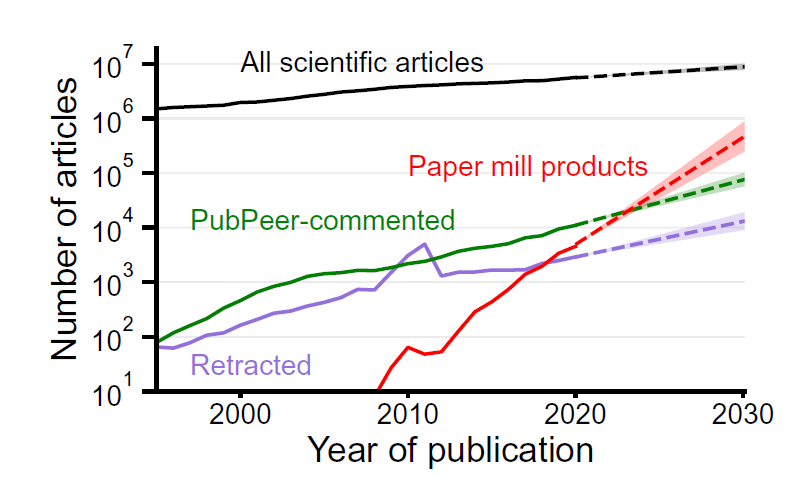
The observed and forecasted growth rate of paper mill papers outpaces corrective measures, a new study finds. R. Richardson et al./PNAS 2025

Systematic research fraud has outpaced corrective measures and will only keep accelerating, according to a study of problematic publishing practices and the networks that fuel them. 

The study, published August 4 in Proceedings of the National Academy of Sciences, examined research fraud carried out by paper mills, brokers and predatory publishers. By producing low quality or fabricated research, selling authorship and publishing without adequate quality control and peer review, respectively, these three groups were well known to produce a large volume of fraudulent research. 

“This is a great paper showing how much fraud there is in the scientific literature. The paper also looks at different methods on how to detect problematic papers, networks and editors,” Anna Abalkina, a researcher at Freie Universität Berlin and creator of the Retraction Watch Hijacked Journal Checker, said. 

Continue reading Fighting coordinated publication fraud is like ‘emptying an overflowing bathtub with a spoon,’ study coauthor says

Microbiome company CEO who linked COVID vaccine to bacterial decline now has four retractions

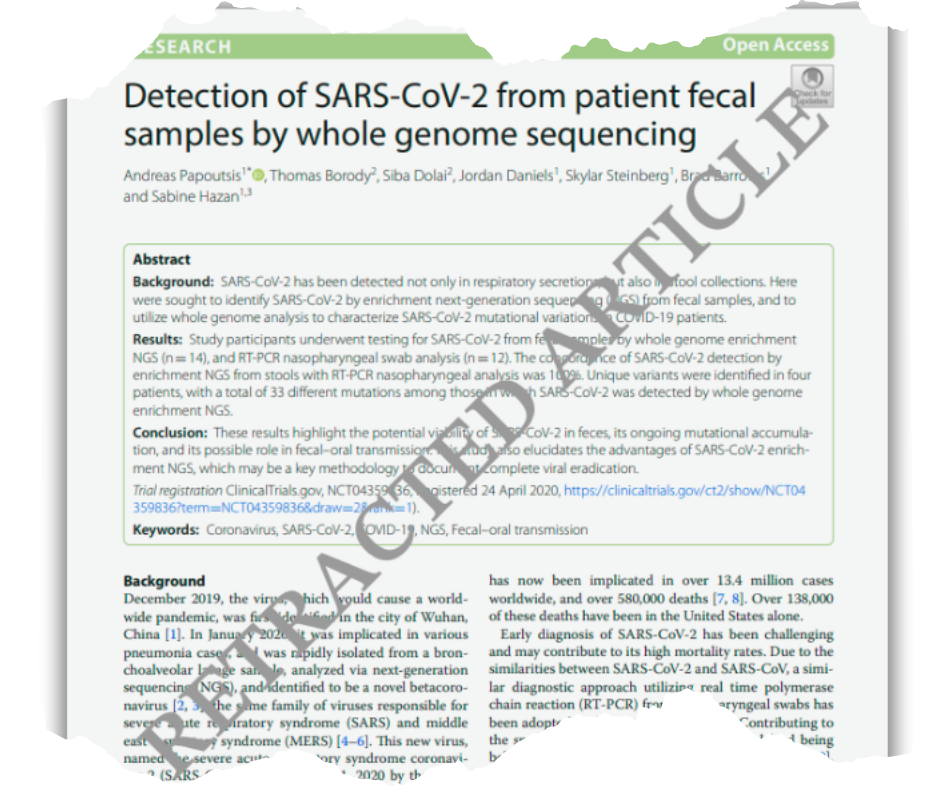
A gastroenterologist and microbiome researcher who has promoted hydroxychloroquine and ivermectin as COVID treatments has lost a paper after a sleuth reported differences between the article and the registered protocol of the clinical trial it purported to describe. 

The retracted article, on detecting SARS-CoV-2 in fecal samples, was published in Gut Pathogens in January 2021. It marks the fourth retraction for study coauthor Sabine Hazan.

Hazan is founder and CEO of ProgenaBiome, a laboratory in Ventura, Calif., advertising clinical trials exploring the role of the gut microbiome in conditions including autism and Alzheimer’s disease, as well as COVID. She is also CEO of Ventura Clinical Trials, which lists dozens of pharmaceutical and biotech companies among its clients.  

Continue reading Microbiome company CEO who linked COVID vaccine to bacterial decline now has four retractions

Do men or women retract more often? A new study weighs in

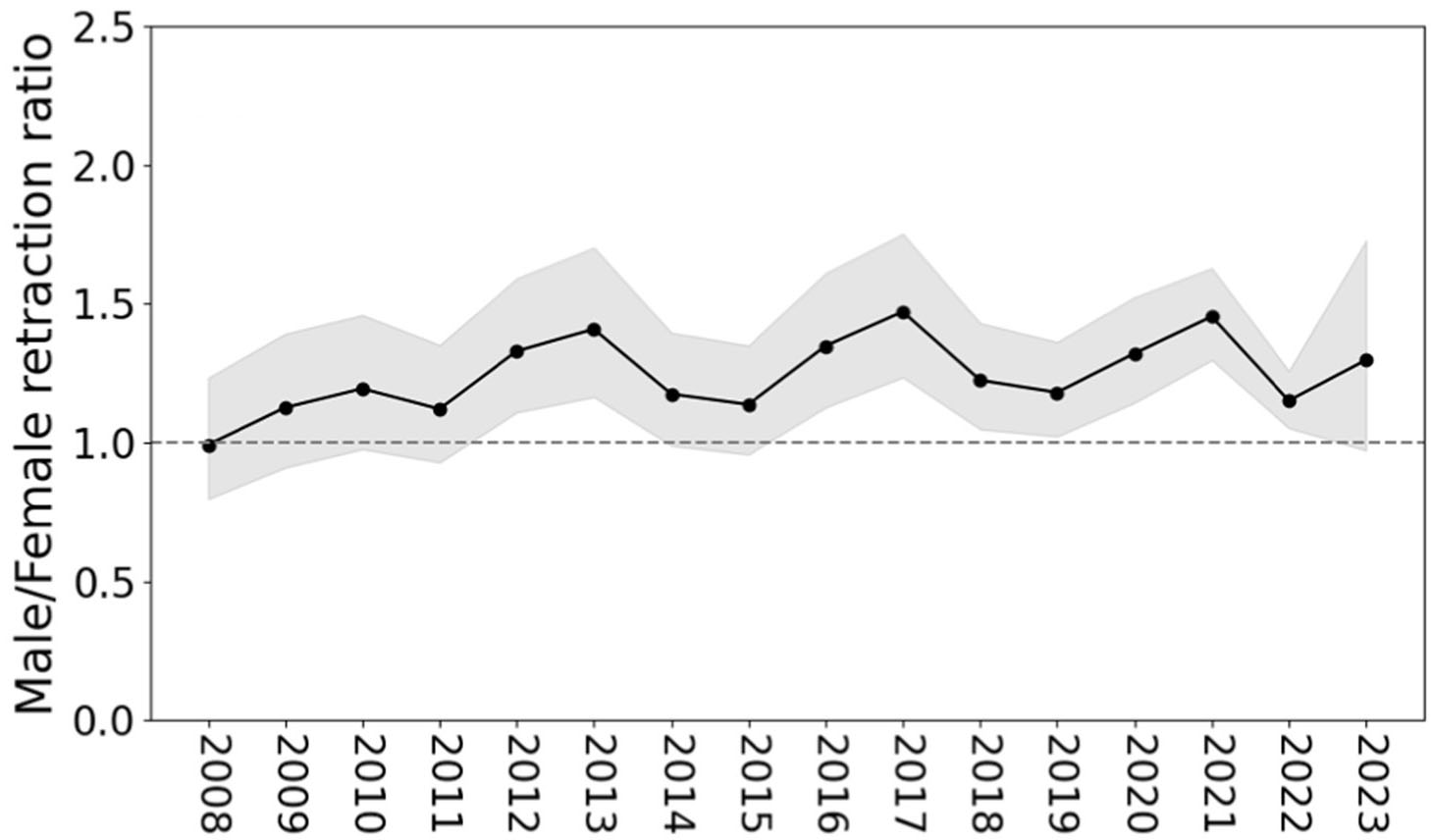
The male/female retraction ratio for Zheng and colleagues’ dataset showed that male first authors have a higher retraction rate than females.  Source: E-T Zheng et al/J of Informetrics 2025

When you look at retracted papers, you find more men than women among the authors. But more papers are authored by men than women overall. A recent study comparing retraction rates, not just absolute numbers, among first and corresponding authors confirms that men retract disproportionally more papers than women. 

The paper, published May 20 in the Journal of Informetrics, is the first large-scale study using the ratio of men’s and women’s retraction rates, said study coauthor Er-Te Zheng, a data scientist at The University of Sheffield. The researchers also analyzed gender differences in retractions across scientific disciplines and countries.

Zheng and his colleagues examined papers from a database of over 25 million articles published from 2008 to 2023, about 22,000 of which were retracted. They collected the reasons for retraction from the Retraction Watch Database, and used several software tools to infer each author’s gender based on name and affiliated country. 

Continue reading Do men or women retract more often? A new study weighs in

Slovak science academy ‘strictly condemns’ government official’s paper on mRNA vaccines

Peter Kotlár

Slovakia’s national science academy has issued a strong critique of a paper on mRNA vaccines coauthored by a member of the country’s parliament. The group called the work “insufficiently detailed” and “lacking controls,” with data that “may be misleading” and conclusions “not supported by sufficiently robust data.” 

Peter Kotlár, the paper’s second author, is an orthopedist and represents the far-right Slovak National Party. He is also the commissioner for a review of resource management during the COVID-19 pandemic for the government of populist prime minister Robert Fico, himself known for questioning the science around COVID-19.

The paper appeared May 13 in the Journal of Angiology and Vascular Surgery, published by Herald Scholarly Open Access. “The journal in which the study of Peter Kotlár was published, is not evidenced in databases Web Of Science and Scopus,” a spokesperson for the Slovak Academy of Sciences, Monika Tináková, told us. The issues with the paper reflect “the fact that the journal in which it was published is classified as a so-called predatory journal,” the statement, issued last month, reads. 

Continue reading Slovak science academy ‘strictly condemns’ government official’s paper on mRNA vaccines

Springer Nature psycholinguistics journal retracts over a dozen articles for authorship, peer review issues

A journal has retracted 16 papers after a whistleblower flagged it for “irregularities” in peer review, among other concerns. 

The Journal of Psycholinguistic Research, a Springer Nature title, published the papers between 2021 and 2024. The articles covered research ranging from studies of the work of Haruki Murakami and Kazakh literature to English reading fluency and the teaching competence of parents of children with cochlear implants.

Thirteen of the 16 articles have been cited one to five times, according to Clarivate’s Web of Science; one article has been cited 19 times, the highest of the bunch. 

Continue reading Springer Nature psycholinguistics journal retracts over a dozen articles for authorship, peer review issues

‘More of the same’: Journals, trade website refuse to correct critiques of book on Alzheimer’s fraud

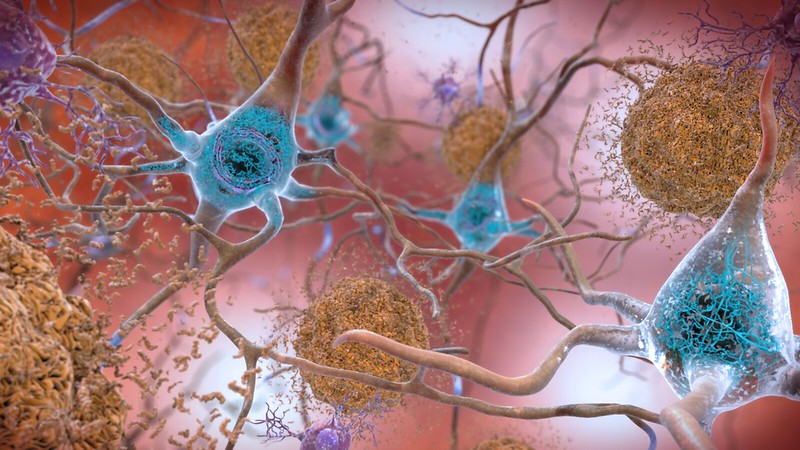
Amyloid-beta plaques (brown) and tau protein tangles (blue). Credit: National Institute on Aging/NIH

Investigative journalist Charles Piller’s latest book, Doctored: Fraud, Arrogance, and Tragedy in the Quest to Cure Alzheimer’s, came out in February. It details the work of Matthew Schrag, a neurologist at Vanderbilt University in Nashville, Tenn., and other sleuths who uncovered evidence of problems in hundreds of research papers about the neurologic condition. 

Most reviews and coverage have been positive, Piller said. But some Alzheimer’s researchers have criticized the book in reviews published in JAMA, The Lancet Neurology, and the website Alzforum, which hosts news and commentary on Alzheimer’s research. 

Piller and Schrag say they respect that others are entitled to their opinions, but expressed concern that some of these reviews contain inaccuracies that downplay their findings. And the journals and Alzforum have refused to publish responses they submitted or make corrections they requested. 

Continue reading ‘More of the same’: Journals, trade website refuse to correct critiques of book on Alzheimer’s fraud

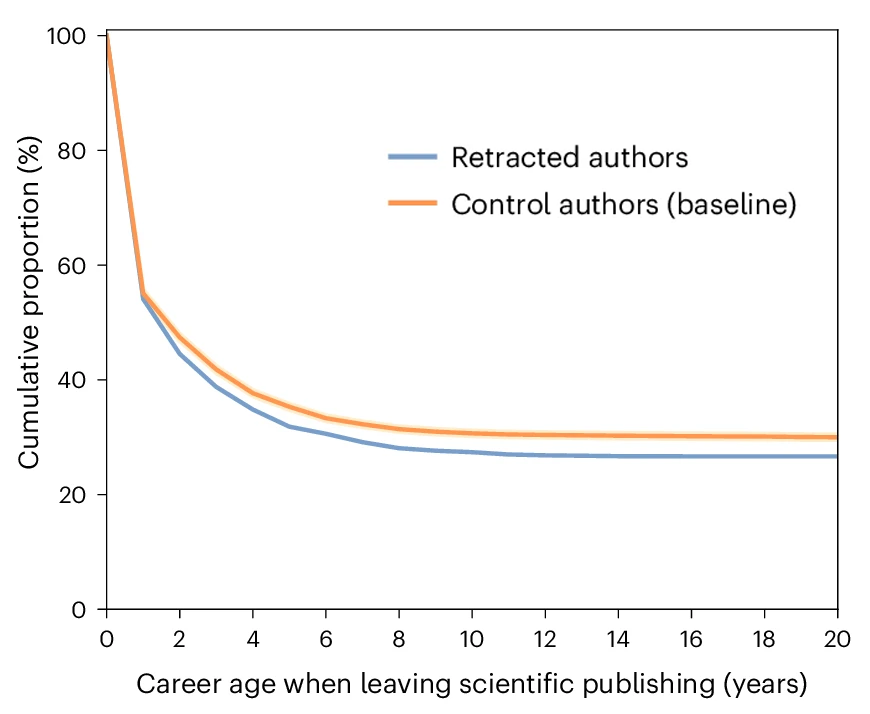
How do retractions impact researchers’ career paths and collaborations?

About 46% of authors leave their publishing careers around the time of a retraction, a new study has found.
SA Memon et al/Nat Hum Behav 2025

Several studies have tackled the issue of what effect a retracted paper has on a scientist’s reputation and publication record. The answer is, by and large, it depends: The contribution the researcher made on the paper, their career stage, the field of study and the reason for the retraction all play a role.

Three researchers from New York University’s campus in Abu Dhabi wanted to  better understand how a retraction affects a scientist’s career trajectory and future collaborations. Using the Retraction Watch Database, they looked at papers retracted between 1990 and 2015, and merged that data with Microsoft Academic Graph to generate information on researchers’ pre- and post-retraction publication patterns, as well as their collaboration networks. They also looked at Altmetric scores of retractions to factor in the attention a retraction got.

From that data, they extrapolated if and when researchers with retracted papers left scientific publishing, and looked for trends in researchers’ collaboration networks before and after the retraction.

Continue reading How do retractions impact researchers’ career paths and collaborations?

Journal investigating placebo effect study following Retraction Watch inquiry

An Elsevier journal is investigating a paper by a controversial author after a Retraction Watch inquiry about the article. The article concluded that “placebo effects have a significant impact on observed outcomes” in both placebo and treatment groups in clinical trials. 

The senior author of the paper is Harald Walach, whose name may be familiar. In one paper, now retracted, Walach and his coauthors claimed COVID-19 vaccines killed two people for every three deaths they prevented. In a different paper, also retracted, Walach and his colleagues claimed children’s masks trap carbon dioxide; they later republished the article in a different journal. He lost two papers and a university affiliation in 2021. 

One of his latest papers, “Treatment effects in pharmacological clinical randomized controlled trials are mainly due to placebo,” appeared online December 27 in the Journal of Clinical Epidemiology

Continue reading Journal investigating placebo effect study following Retraction Watch inquiry