Child psychiatrist’s research was suspended “indefinitely” following probe

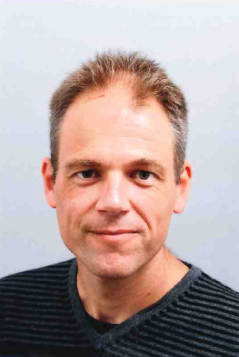
Mani Pavuluri

The University of Illinois at Chicago (UIC) permanently suspended all research activities for a child psychiatrist years ago following an inquiry into her work, Retraction Watch has learned.

In 2015, a UIC spokesperson told us the university had suspended Mani Pavuluri’s clinical research in 2013, after a child in one of her studies had been hospitalized for exhibiting an increase in irritability and aggression. This prompted the university to launch a misconduct probe, and send letters to approximately 350 families of children participating in the research, notifying them of what happened. Now, a spokesperson has informed us that after the institution concluded its probe, it suspended her research “indefinitely.”

Continue reading Child psychiatrist’s research was suspended “indefinitely” following probe
Infamous case of fraud by protein crystallographer ends in 10-year funding ban

In 2009, a university announced a prominent researcher in the field of protein crystallography had likely fabricated nearly a dozen protein structures. Nine years later, the U.S. Office of Research Integrity (ORI) has upheld the results — and announced a relatively long sanction, by the agency’s standards.

Today, the ORI placed a 10-year ban on Federal funding for H.M. Krishna Murthy, a former research associate professor at the University of Alabama at Birmingham (UAB), noting he “falsified and/or fabricated” research in nine papers and multiple structures added to a widely used database. Four of the papers have already been retracted; two others have been flagged with an expression of concern by the journal. Three remain otherwise intact.

The announcement was a long time coming — after the ORI provided Murthy with its initial finding and proposed sanctions, he appealed. On January 19, 2018, and Administrative Law Judge declined to move forward with the appeal, allowing the agency to proceed. Today’s finding was accompanied by a rare message from the interim office of the director, Wanda Jones, in which she notes today’s announcement:

Continue reading Infamous case of fraud by protein crystallographer ends in 10-year funding ban

Caught Our Notice: Researcher who once threatened to sue Retraction Watch now up to 19 retractions

Title: Curcumin-Free Turmeric Exhibits Activity against Human HCT-116 Colon Tumor Xenograft: Comparison with Curcumin and Whole Turmeric

What Caught Our Attention: We haven’t heard much about Bharat Aggarwal since his seven retractions in 2016 propelled him onto our leaderboard (and long after he threatened to sue Retraction Watch for our reporting). There was a whisper of a mention, when his name was listed as one of the organizers of a cancer conference from which MD Anderson (his former employer) had to publicly distance themselves as a co-sponsor. Continue reading Caught Our Notice: Researcher who once threatened to sue Retraction Watch now up to 19 retractions

Caught Our Notice: 54 problems in three scientific images equals one expression of concern

Title: Effects of microRNA-223 on morphine analgesic tolerance by targeting NLRP3 in a rat model of neuropathic pain

What Caught Our Attention: Usually, an Expression of Concern (EOC) offers general language about “concerns regarding the validity of the data” or “concerns regarding the integrity of the study.” Here the language is anything but, saying that 54 Western blot bands within three figures have problems such as “visible pasted joints,” “square border,” and numerous “appear to be the same band.”  According to the notice, the authors have not responded to requests for the original blots, so the editors are allowing the article to remain intact, choosing instead “to alert readers to these issues and allow them to arrive at their own conclusions regarding the figures.” Continue reading Caught Our Notice: 54 problems in three scientific images equals one expression of concern

Authors retract, replace highly cited paper on ADHD in kids

Researchers have retracted and replaced a 2014 paper in JAMA Psychiatry, exploring a new way to classify attention deficit hyperactivity disorder (ADHD) in children, after discovering errors in the data.

Some experts have criticized the current diagnostic criteria for ADHD—noting, in some cases, it could inflate the rate of diagnosis. Sarah L. Karalunas, the paper’s corresponding author, told Retraction Watch that the aim of the study was to look beyond current criteria and “demonstrate an approach that could be used to better delineate the boundaries of ADHD and other psychiatric diagnostic categories.”   Continue reading Authors retract, replace highly cited paper on ADHD in kids

Highly cited paper by dep’t chair at Sloan Kettering is corrected — three times

A radiology journal has published an addendum to a 2005 review on cancer imaging techniques, alerting readers to figure duplication.

But that’s not what caught our attention about this case. The addendum, published in January, is the third notice that The British Journal of Radiology (BJR) has issued for the 2005 review by Hedvig Hricak, chair of the Department of Radiology at Memorial Sloan Kettering in New York City. The notices, published between 2014 and 2018, all describe duplication.

Why the series of notices, all describing a similar problem? Continue reading Highly cited paper by dep’t chair at Sloan Kettering is corrected — three times

Caught Our Notice: Researcher who sued PubPeer commenter up to 21 retractions

Titles: 1) Notch-1 induces Epithelial-mesenchymal transition consistent with cancer stem cell phenotype in pancreatic cancer cells

2) Sensitization of squamous cell carcinoma to cisplatin induced killing by natural agents

What Caught Our Attention: Regular readers will be familiar with the saga involving Fazlul Sarkar and PubPeer: In 2014, Sarkar sued anonymous commenters on the site, claiming defamation (and that damaging comments may have cost him a new job). Although Sarkar won an initial ruling, it was overturned by an appeals court. In the midst of that, the ACLU (which represented PubPeer in the case) released a copy of a misconduct investigation report compiled by Sarkar’s institution, Wayne State University, which concluded that he had committed enough misconduct to warrant retracting 40 papers. The two latest notices, both of which cite Wayne State’s investigation, bring Sarkar’s total to 21.   Continue reading Caught Our Notice: Researcher who sued PubPeer commenter up to 21 retractions

Can soil science research dig itself out from a citation stacking scandal?

Jan Willem van Groenigen

Last year, the soil science community was rocked by reports that an editor, Artemi Cerdà, was accused of citation stacking — asking authors to cite particular papers — boosting his profile, and that of journals where he worked. (Cerdà has denied the allegations.) The case had some major fallout: Cerdà resigned from two journals and the editorial board of Geoderma, additional editors resigned from their posts, and a university launched an investigation. In the midst of the mess, a group of early career scientists in the field released an open letter, urging the leaders of the community “to establish a clear road map as to how this crisis will be handled and which actions will be taken to avoid future misconducts.” Today, Jan Willem van Groenigen, Chair of the Editors in Chief of Geoderma, along with other editors at the journal, published a response to those letter-writers — including a list of the 13 papers that added 83 citations the journal has deemed “unwarranted.” The editorial includes a list of “actions we have taken to prevent citation stacking from recurring and to further strengthen the transparency of the review process” — including monitoring editors and showing authors how to report suspicious conduct.

Retraction Watch: It’s been nine months since the young researchers released their open letter — why respond now?

Continue reading Can soil science research dig itself out from a citation stacking scandal?

McGill dept chair says she was blindsided by coauthor’s plagiarism

When Parisa Ariya was invited to write a review for a special issue of the journal Atmosphere, she asked one of her former doctoral students to take the lead. But she soon regretted that decision after discovering Lin (Emma) Si had plagiarized and duplicated significant portions of the review.

Ariya, chair of the Department of Atmospheric and Oceanic Sciences at McGill University in Montreal, told Retraction Watch that she believes it’s important to foster the careers of young women in science and was excited for her former student, Si, to take on the challenge of writing her first review. (Si was cc’d on our email communications with Ariya, but did not respond to our individual request for comment.)
Continue reading McGill dept chair says she was blindsided by coauthor’s plagiarism

Caught Our Notice: Climate change leads to more…neurosurgery for polar bears?

Title: Internet Blogs, Polar Bears, and Climate-Change Denial by Proxy

What Caught Our Attention: There’s a lot going on here, so bear with us. (Ba-dum-bum.)

First, there was the paper itself, co-authored by, among others, Michael Mann and Stephan Lewandowsky. Both names may be familiar to Retraction Watch readers. Mann is a prominent climate scientist who has sued the National Review for defamation. A study by Lewandowsky and colleagues of “the role of conspiracist ideation in climate denial” was the subject of several Retraction Watch posts when it was retracted and then republished in a different form. And the conclusion of the new paper, in Bioscience, seemed likely to draw the ire of many who objected to the earlier work: Continue reading Caught Our Notice: Climate change leads to more…neurosurgery for polar bears?