A researcher’s unusually high h-index gives a window into an expansive citation network

dem10/istock

With an h-index of 75, computer scientist Thippa Reddy Gadekallu ranks among the world’s most highly cited researchers. But the speed and means of his ascent to those lofty heights of scholarship has been as remarkable as the achievement itself. 

In less than a decade, Gadekallu, a professor at Zhejiang A&F University in China,  has managed to bootstrap himself from scientific obscurity by collaborating with colleagues around the world who cite each other’s work in ways that have raised questions. In some years, Gadekallu received more citations than Yoshua Bengio, a pioneer in artificial intelligence and the top-rated computer scientist on Google Scholar.

Earlier work uncovered a network of reviewers on papers Gadekallu edited who frequently suggested adding citations to his work. A closer look by Retraction Watch shows the impact of that strategy on Gadekallu’s h-index, and reveals additional possible collaborators in the network.

Continue reading A researcher’s unusually high h-index gives a window into an expansive citation network

Reviewer finds ‘top pharmaceutical scientist’ has a self-citation problem

Daniel Bar-Shalom, a pharmacist at the University of Copenhagen, was incensed.

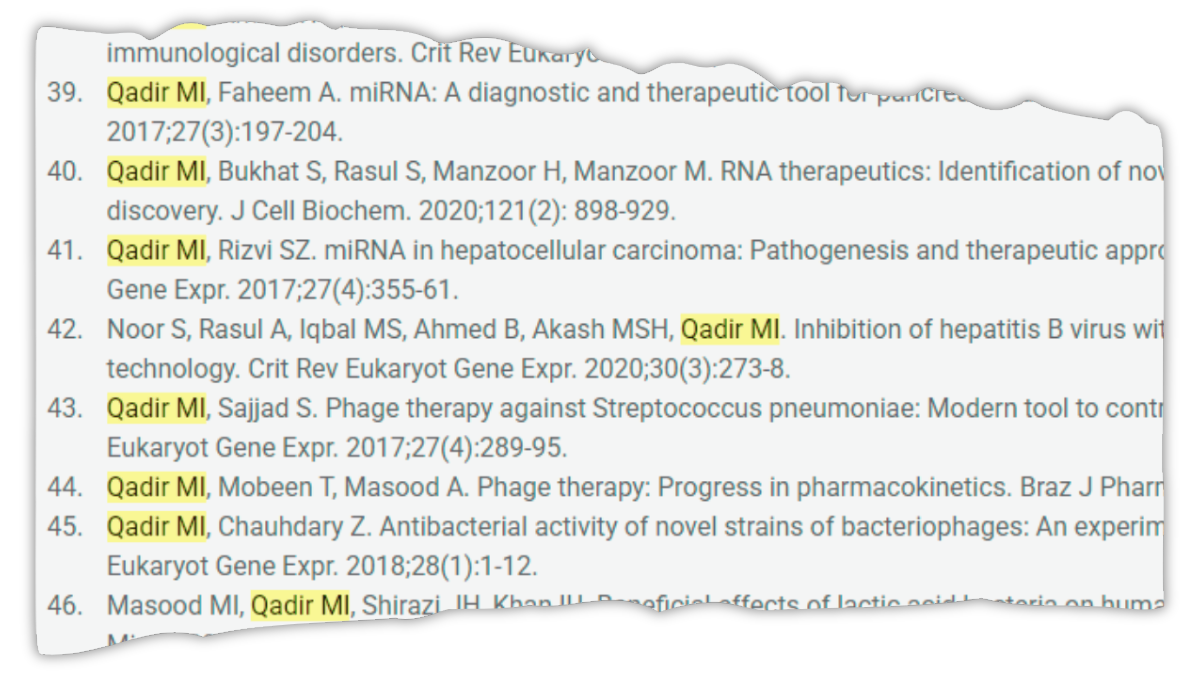
He’d been asked to review a manuscript by Muhammad Imran Qadir, an associate professor at Bahauddin Zakariya University in Multan, Pakistan. According to his institution’s website, Qadir was the “top pharmaceutical scientist” in the country. But Bar-Shalom thought the introduction to the paper felt like it could have been written by a student. The real problems started in the middle of the article, however, in what Bar-Shalom came to think of as “the fill of a shit sandwich.”

There, sprinkled throughout the text, were several irrelevant and trivial sentences. “Novel drugs and vaccines are being made or designed by scientists,” read one. “Genomics and proteomics have been longstanding tools in the creation of novel drugs,” another stated.

Continue reading Reviewer finds ‘top pharmaceutical scientist’ has a self-citation problem

Swiss court clears sleuth in defamation case, awards him legal costs

iStock

An appeals court in Switzerland has overturned a 2025 defamation conviction against a sleuth who had identified dozens of conference proceedings with signs of citation manipulation. The ruling orders the plaintiff to pay the sleuth’s legal expenses. 

The judgment clears Solal Pirelli, a software engineer in Lausanne, in a lawsuit filed against him in 2023 by Shadi Aljawarneh, a computer scientist at the Jordan University of Science and Technology. 

The case stemmed from a blog post Pirelli published in January 2023 summarizing problems with the proceedings of conferences organized under the auspices of the Association for Computing Machinery (ACM). Aljawarneh was the chair of most of the conferences, and the proceedings included signs of citation stuffing in Aljawarneh’s favor. 

Continue reading Swiss court clears sleuth in defamation case, awards him legal costs

How to juice your Google Scholar h-index, preprint by preprint

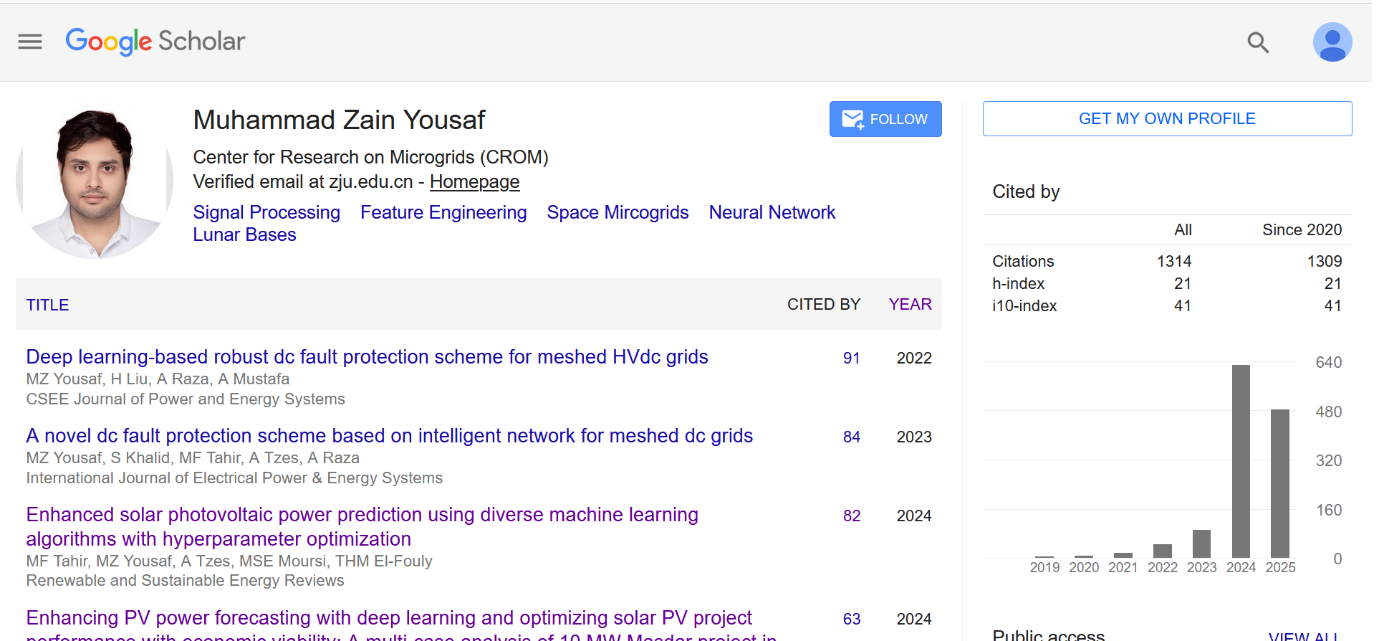
A screenshot of Yousaf’s Google Scholar profile before it was removed.

Muhammad Zain Yousaf, a postdoc at Zhejiang University in Hangzhou, China, became a scholar of note overnight. Or so it would seem, based on his now-defunct Google Scholar profile: From a modest 47 in 2022 and around 100 in 2023, Yousaf’s citations jumped to 629 in 2024. His h-index, a measure combining publication and citation numbers, took off accordingly, reaching levels typical of a senior academic.

But another researcher smelled a rat and took a closer look at Yousaf’s publications. In just two days, Yousaf had uploaded 10 short documents to TechRxiv, a preprint server hosted by the U.S.-based Institute of Electrical and Electronic Engineers, or IEEE. Each of the documents was chock-full of self-citations. In five cases, Yousaf was an author on all 37 papers in the reference list; the rest of the time, his publications made up nearly two-thirds of the reference list.

“Many of these documents appear to be low quality, as evidenced by their lack of coherence and technical quality,” the concerned researcher, who asked to remain anonymous, said of the preprints in an email to TechRxiv last December.

Continue reading How to juice your Google Scholar h-index, preprint by preprint

Exclusive: ‘Highly problematic’ policy has Saudi university pressuring faculty to cite its research 

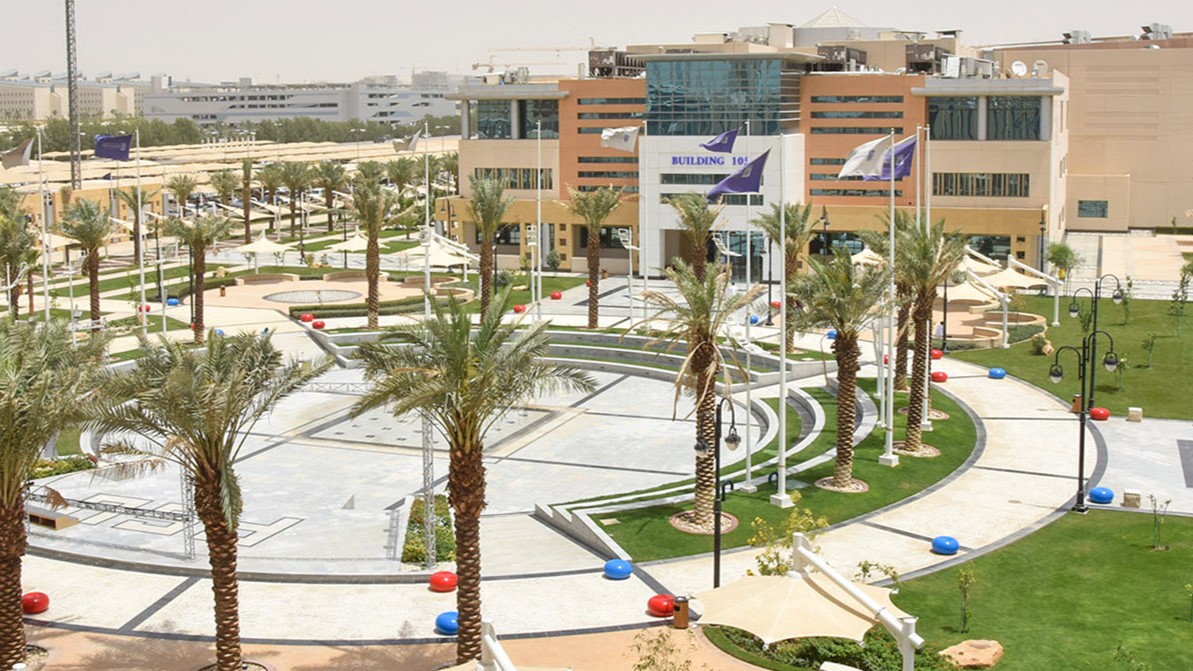
Prince Sultan University

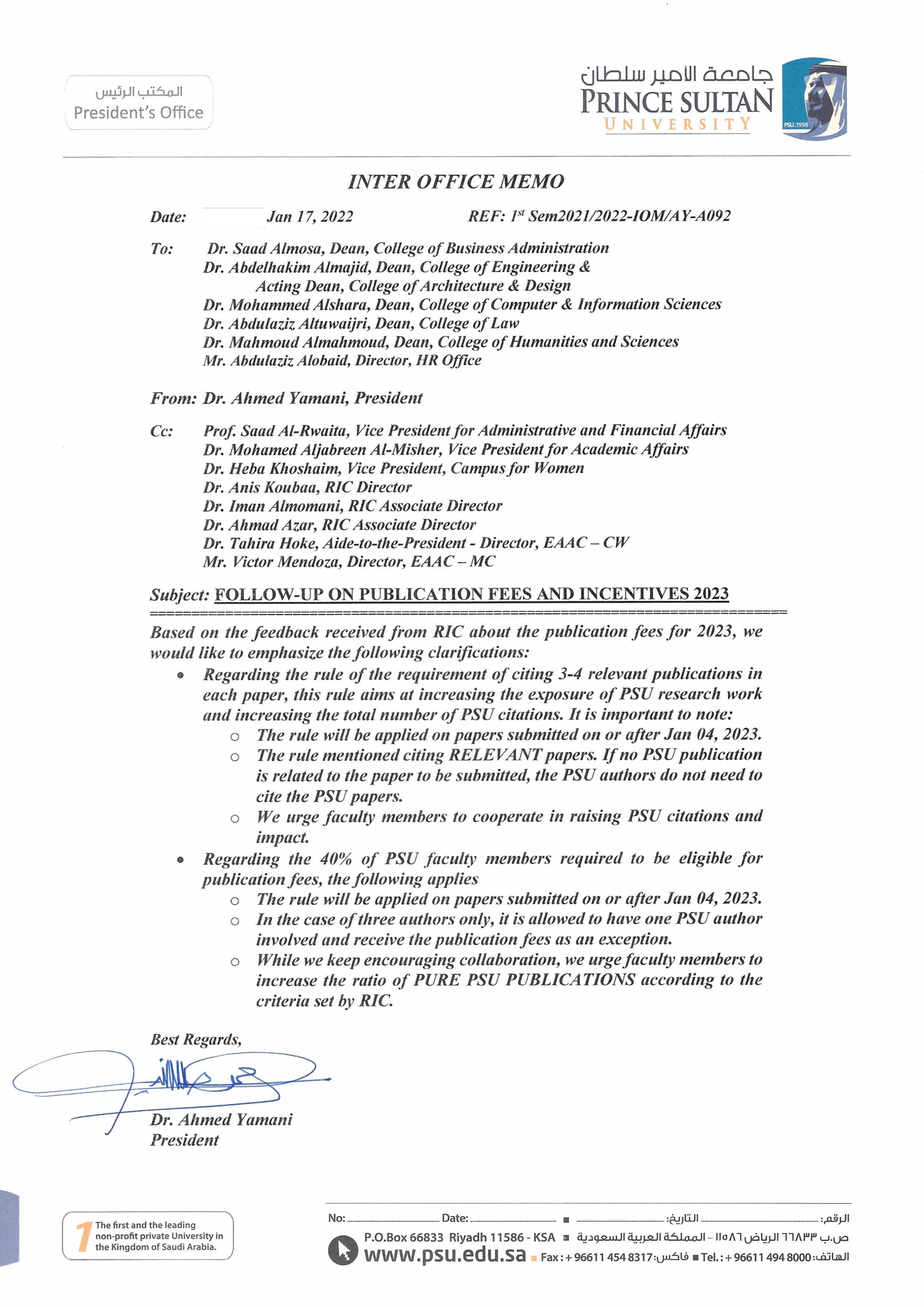
At Prince Sultan University in Saudi Arabia, faculty members must help raise their school’s academic standing not by doing impactful work, but by citing the institution’s research in their papers, according to a document Retraction Watch has obtained.

In an interoffice memo from 2022, Ahmed Yamani, president of the Riyadh-based institution, referred to “the rule of the requirement of citing 3-4 relevant publications in each paper” whose aim was “increasing the exposure of PSU research work and increasing the total number of PSU citations.”

Coordinated citation efforts can boost the rankings of institutions and individual researchers. The Committee on Publication Ethics considers citation manipulation unethical

Continue reading Exclusive: ‘Highly problematic’ policy has Saudi university pressuring faculty to cite its research 

Computing society pulls works for ‘citation falsification’ months after sleuth is convicted of defamation

Solal Pirelli

An international computing society has begun retracting conference papers for “citation falsification” only months after the sleuth who flagged the suspect articles was convicted for defamation in a lawsuit filed by one of the offending authors.

So far, the Association for Computing Machinery (ACM) has pulled at least 27 of the papers, but dozens more remain, according to Solal Pirelli, a software engineer in Lausanne, Switzerland, who raised concerns about the articles more than two years ago. Some of the proceedings allegedly include plagiarized works, while others are plagued by citation stuffing.

The retraction notices from September 10 state:

Continue reading Computing society pulls works for ‘citation falsification’ months after sleuth is convicted of defamation

Math is back as Clarivate boosts integrity markers in Highly Cited Researchers list

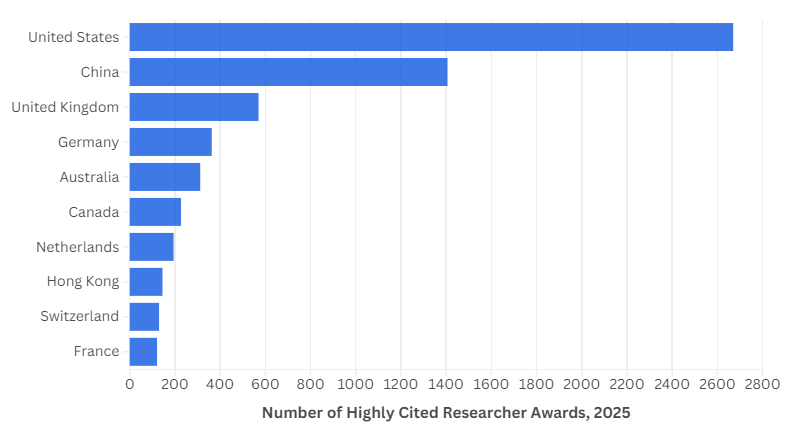
This year’s Highly Cited Researchers are from 61 countries and regions, but 86 percent of them work in the top 10.

The analysis behind this year’s Highly Cited Researchers list, released today by indexing giant Clarivate, includes several tweaks aimed at reducing attempts to game the metric and excluding researchers who engage in questionable publication practices.

Those changes include removing highly cited papers from the calculations authored by researchers excluded from last year’s list for integrity issues. The company also applied specific removal criteria — including excessive self-citation rates, papers retracted for integrity concerns, and prolific publication rates — more comprehensively this year. In past years, the company had done so manually for particular geographic areas or disciplines.

“We’re trying to make sure that the indicators are valid and reliable, which means we have to include these kinds of filters or screens and quantitative tests that indicate some kind of quality, qualitative character,” David Pendlebury, head of research analysis at the Institute for Scientific Information at Clarivate, told Retraction Watch.

Continue reading Math is back as Clarivate boosts integrity markers in Highly Cited Researchers list

Exclusive: Iraqi university forcing students to cite its journals to graduate

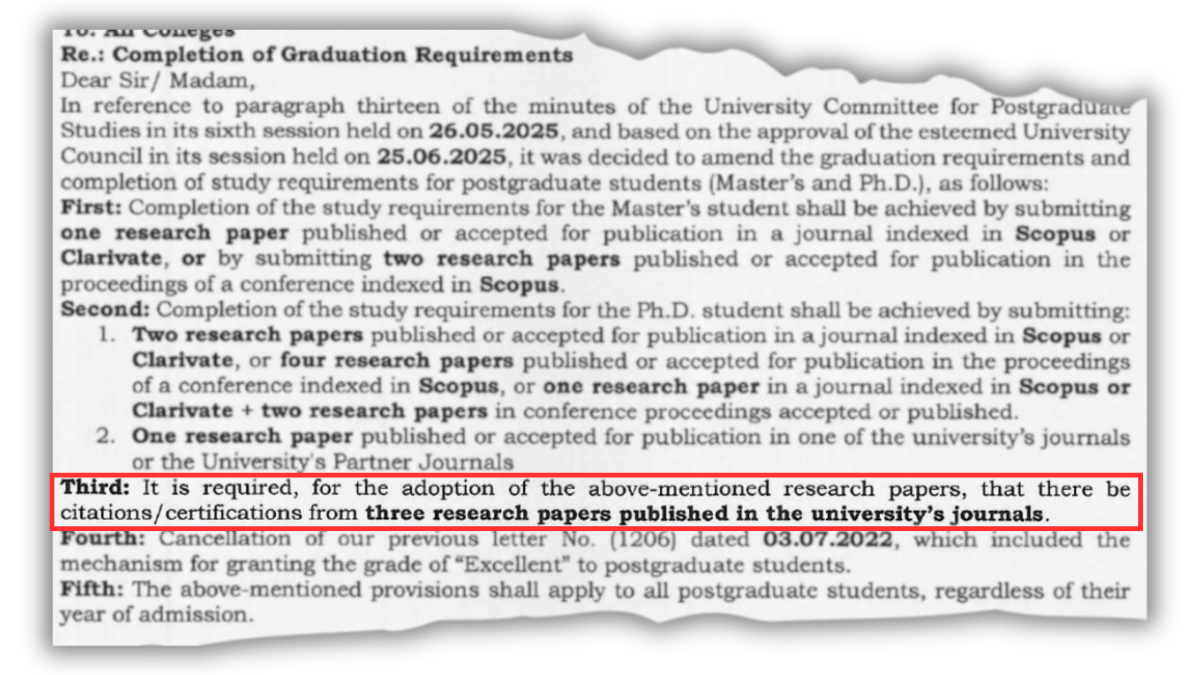
To earn their degrees, graduate students at the University of Technology in Baghdad not only must publish research in indexed journals. They also are required to cite articles in their school’s own publications, a document obtained by Retraction Watch shows.

Experts who reviewed the document called the citation requirement “deceptive and despicable” and said it could carry a steep price for the journals involved, one of which is indexed in Scopus.

Coercive citation is widespread in academia and can help boost the rankings of publications, institutions and individual researchers. The practice is considered unethical and may trigger heavy penalties.

Continue reading Exclusive: Iraqi university forcing students to cite its journals to graduate

Soil scientist previously named in citation scandal appointed to editor role at Elsevier journal

Artemi Cerdà

A soil scientist who resigned from several journals in 2017 after being linked to manipulated citations has been appointed to the editorial board of a journal copublished by Elsevier and China Science Publishing & Media.

International Soil and Water Conservation Research announced in April that Artemi Cerdà would serve as an editorial board member, describing him as a “renowned researcher” in the field of soil erosion and land management. The appointment comes eight years after Cerdà, of the University of Valencia, in Spain, was found to have manipulated citations in favor of his own work and journals with which he was associated. 

While Cerdà has not responded to our questions about his appointment, a spokesperson for Elsevier acknowledged Cerdà’s history but defended the decision, writing that researchers “grow into their roles through participation and learning.” The spokesperson continued:

Continue reading Soil scientist previously named in citation scandal appointed to editor role at Elsevier journal

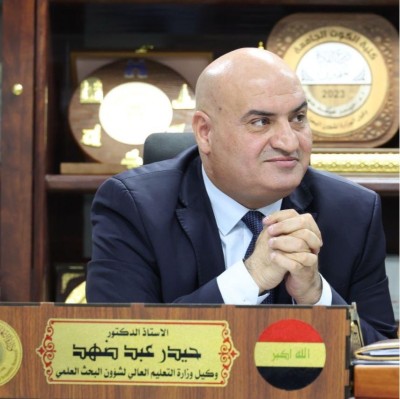
Deputy minister in Iraq losing papers with signs of paper mill involvement

Hayder Abed Dhahad

A high-ranking official at Iraq’s Ministry of Higher Education and Scientific Research has earned six retractions over the past two years for issues including citation stuffing and “suspicious” authorship changes after articles were accepted.

Both practices are warning signs of a paper mill at play. At least two of the official’s retracted works appeared in a special issue edited by an academic who has been accused of being part of authorship-for-sale networks.

But Hayder Abed Dhahad, Iraq’s deputy minister for scientific research affairs, who was a corresponding author on two of the articles and a coauthor on the rest, told us the “retractions were not due to fabricated results or research misconduct on my part.” He added that “as a public figure currently involved in national projects,” he had been the target of “politically motivated campaigns aimed at damaging my reputation.”

Continue reading Deputy minister in Iraq losing papers with signs of paper mill involvement