UNLV English professor fired for plagiarizing Updike, Said, Zizek, and more

via UNLV.
Mustapha Marrouchi, via UNLV

An English professor at the University of Nevada, Las Vegas, has been fired after the discovery that a huge portion of his work from the last two decades contains material lifted wholesale from some of the world’s best writers and thinkers.

Mustapha Marrouchi was first accused of plagiarism in 1992, when he ripped off an essay by W.J.T. Mitchell in the London Review of Books. Then in 1999, a letter by lecturer Stephen Howe appeared in the LRB, accusing Marrouchi of an “almost verbatim” theft of one of Howe’s book reviews: Continue reading UNLV English professor fired for plagiarizing Updike, Said, Zizek, and more

Psych paper falls afoul of journal’s plagiarism policy (hint: don’t plagiarize)

jcpharmacopharmThe Journal of Clinical Psychopharmacology has retracted a 2011 paper on depersonalization disorder by a pair of authors in Azerbaijan who got a bit too familiar with their source material without proper attribution. And the journal has offered its readers a handy — if depressingly obvious — admonition about publication ethics.

The article, “Lamotrigine in the immediate treatment of outpatients with depersonalization disorder without psychiatric comorbidity. Randomized, double-blind, placebo-controlled study,” by researchers at the Central Mental Clinic for Outpatients of Baku City, purported to find that: Continue reading Psych paper falls afoul of journal’s plagiarism policy (hint: don’t plagiarize)

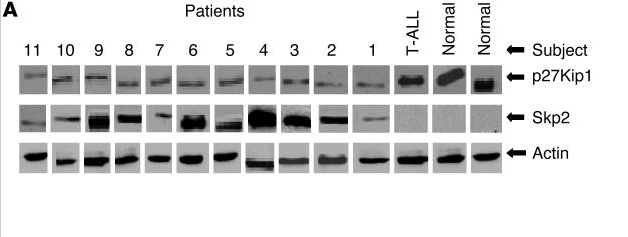
PubPeer strikes again: Leukemia paper retracted for image duplications

bbaIn July, a PubPeer commenter called out a paper in Biochimica et Biophysica Acta for image duplication; by September, the paper was retracted for the exact reason detailed in the anonymous comment.

Here’s the notice for “Effect of ST3GAL 4 and FUT 7 on sialyl Lewis X synthesis and multidrug resistance in human acute myeloid leukemia,” a paper initially published in June: Continue reading PubPeer strikes again: Leukemia paper retracted for image duplications

Plagiarism charge bites authors of oral pain paper

jiohheader_imgThe Journal of International Oral Health has retracted a 2014 paper on dental pain by a group from India. Although the ostensible reason was plagiarism, we wonder if the offending authors might gone a bit further.

The article, “Sniffing out pain: An in vivo intranasal study of analgesic efficacy,” purported to be a study of 20 patients receiving different therapies for emergency oral pain. It has yet to be cited, according to Thomson Scientific’s Web of Knowledge. Here’s the abstract: Continue reading Plagiarism charge bites authors of oral pain paper

Retraction appears for social psychologist Jens Förster

forster-j-a1
Jens Förster

A retraction has appeared for Jens Förster, the former University of Amsterdam social psychologist whose work has come under serious scrutiny by two official committees.

Here’s the notice for 2012’s “Sense Creative! The Impact of Global and Local Vision, Hearing, Touching, Tasting and Smelling on Creative and Analytic Thought,” a paper which first appeared in Social Psychological and Personality Science:
Continue reading Retraction appears for social psychologist Jens Förster

Nanoparticle paper earns retraction for lack of reproducibility

issue 1 - RSC Advances_2012.inddA nanoparticle article published earlier this year has been retracted by RSC Advances for lack of reproducibility, although we haven’t been able to get more details about what happened.

Here’s the notice for “Sonochemical synthesis of poly(methyl methacrylate) core–surfactin shell nanoparticles for recyclable removal of heavy metal ions and its cytotoxicity” (freely available but requires sign-in): Continue reading Nanoparticle paper earns retraction for lack of reproducibility

“I’m so done with it”: Conservationist speaks out against sexism in science

Amanda Stanley
Amanda Stanley

Last week, we wrote about conservationist Stuart Pimm receiving criticism for casual sexism in a recent book review.

The journal did not retract the review, but it released an editor’s note condemning the language Pimm used, including quoting a movie scene in which a man told a woman “I don’t take whores in taxis.” Some readers have questioned whether this is really an instance of sexism, including here in the Retraction Watch comments.

So we reached out to Amanda Stanley, a conservation scientist who was so troubled by the book review that she wrote a letter to the editor, to be published soon in Biological Conservation. Here’s her powerful explanation of where this fits in the overall conversation about sexism in science:
Continue reading “I’m so done with it”: Conservationist speaks out against sexism in science

‘‘I don’t take whores in taxis”: Casual sexism in scientific journal leads to editor’s note

Author Stuart Pimm.
Author Stuart Pimm

The Elsevier journal Biological Conservation has put out an apology, but not a retraction, after outcry over a bizarre, misogynistic non sequitur in a book review by Duke conservation biologist Stuart Pimm.

Here’s the introduction to Pimm’s review of Keeping the Wild: Against the Domestication of Earth, which went online in October ahead of its December print publication: Continue reading ‘‘I don’t take whores in taxis”: Casual sexism in scientific journal leads to editor’s note

Can you hear me now? Neuroscience paper sunk by audio stimulus error

j neurophysHave you ever noticed that hearing something read aloud as you follow along helps you remember what you’re reading better?

Two bioengineers at Trinity College Dublin, Michael Crosse and Edmund Lalor, decided to investigate the underlying reason for the phenomenon. Unfortunately, after they published their findings in the Journal of Neurophysiology earlier this year, they tried to recreate the experiments and discovered that their equipment didn’t line up the audio and visual stimuli properly.

They did the right thing and contacted the journal for a retraction. Here’s the notice for “The cortical representation of the speech envelope is earlier for audiovisual speech than audio speech”: Continue reading Can you hear me now? Neuroscience paper sunk by audio stimulus error

Updated: Former Vanderbilt scientist faked nearly 70 images, will retract 6 papers: ORI

ori logoA former Vanderbilt University biomedical engineer committed fraud on a massive scale, according to a new Office of Research Integrity (ORI) report.

Igor Dzhura is banned from receiving federal funding for three years, and is retracting six papers, which have been cited more than 500 times. Since leaving Vanderbilt, he has worked at SUNY Upstate Medical University, and now works at Novartis.

According to the ORI, Dzhura was a busy boy at Vanderbilt, faking images and drastically inflating the number of experiments he conducted by duplicating computer files and saving them in nested folders. The total body count from his work includes: Continue reading Updated: Former Vanderbilt scientist faked nearly 70 images, will retract 6 papers: ORI