Psychological society wants end to posting error-finding algorithm results publicly

dgpA leading psychology research society in Germany has called for the end of PubPeer postings based on a computer program that trawls through psychology papers detecting statistical errors, saying it is needlessly causing reputational damage to researchers.

Last month, we reported on an initiative that aimed to clean up the psychology literature by identifying statistical errors using the algorithm “statcheck.” As a result of the project, PubPeer was set to be flooded with more than 50,000 entries for the study’s sample papers — even when no errors were detected.

On October 20, the German Psychological Society (DGPs) issued a statement criticizing the effort, expressing concern that alleged statistical errors are posted on PubPeer before authors of original studies are contacted. The DGPs also claimed when mistakes that are detected by statcheck and posted on PubPeer turn out to be false positives, it still results in damage to researchers that is “no longer controllable,” as entries on PubPeer cannot be easily removed.

Today, statcheck’s creators, led by Michèle Nuijten — a PhD student at Tilburg University in the Netherlands, who we’ve previously interviewed about statcheck — responded to DGPs’ critcisms, saying that there is value in Continue reading Psychological society wants end to posting error-finding algorithm results publicly

Should journals abolish word limits for papers?

Source: Jonathan Joseph Bondhus

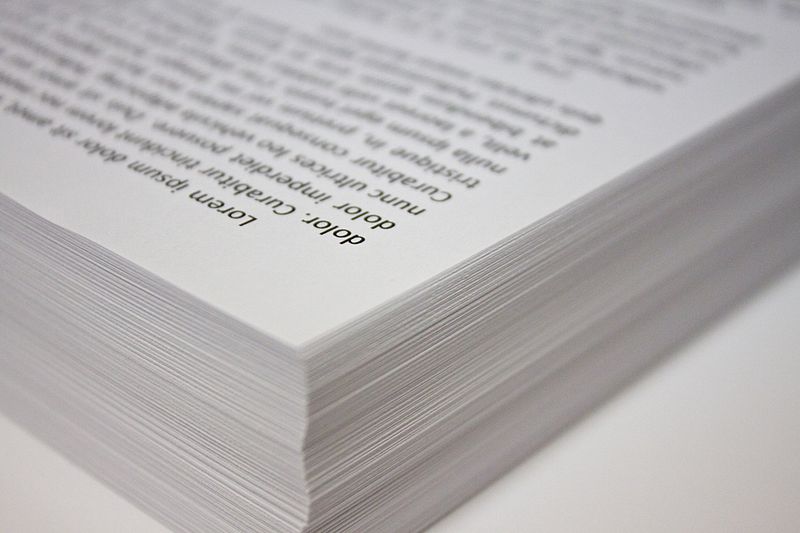
We’re asking ourselves that question after reading a recent paper which shows that — in the ecology literature, at least — longer papers gather more citations.

In “Citations increase with manuscript length, author number, and references cited in ecology journals,” Charles Fox at the University of Kentucky and his colleagues found exactly what the title specifies — ecology papers published between 2009 and 2012 received more citations if they were longer, included more authors, and/or had a longer list of references.

It wasn’t a big difference, the authors note in Ecology and Evolution: Continue reading Should journals abolish word limits for papers?

Retracted paper linking HPV vaccine to behavioral issues republished after revisions

immunological-researchA retracted study linking the vaccine for human papillomavirus (HPV) to behavioral problems in mice has been republished by a different journal.

The paper has been significantly revised, an author told us, but it still comes the same conclusions. 

In February, the journal Vaccine temporarily removed the study without explanation, and told the authors the editor had asked for further review. Later that month, Vaccine retracted the paper, citing “serious concerns regarding the scientific soundness of the article,” and “seriously flawed” methodology. 

In July, another journal — Immunologic Research — republished the paper. The new version of the paper has been significantly changed, co-author Christopher Shaw from the University of British Columbia (UBC) told Retraction Watch:

Continue reading Retracted paper linking HPV vaccine to behavioral issues republished after revisions

Researcher pegged for misconduct in 11 papers earns 2nd retraction

clinical-cancer-researchA cancer journal has retracted a paper by a researcher who doctored data in 11 studies, according to a report by the U.S. Office of Research Integrity (ORI).

According to an investigation report released by the ORI last year, all 11 studies co-authored by Girija Dasmahapatra, formerly based at Virginia Commonwealth University (VCU) in Richmond, will either be retracted or corrected. In April, Dasmahapatra lost the first of the 11 papers flagged by the ORI in the journal Leukemia. Earlier this month, a second paper from the list was pulled by Clinical Cancer Research.

Dasmahapatra isn’t the only VCU researcher who’s been busy correcting the literature. All 11 papers mentioned in the ORI report list Steven Grant as last author; Paul Dent is a co-author of nine of these studies. Last month, we reported on a retraction in the Journal of Biological Chemistry (JBC) and a mega-correction in Molecular Pharmacology issued for papers by Grant and Dent due to problems with images. Neither paper included Dasmahapatra as a co-author.

We’ve also previously reported on four other errata for image-related issues for papers by Dent (one of which lists Grant as a co-author). Now, we’ve come across another correction in JBC for the pair, which was published last month.

First, here’s the new retraction notice from Clinical Cancer Research, which includes Grant and Dent as co-authors: Continue reading Researcher pegged for misconduct in 11 papers earns 2nd retraction

Chem paper “the product of intentional, knowing, or reckless falsification, fabrication, and plagiarism”

rsc-advancesA journal has retracted a study after an institutional investigation concluded that it was riddled with misconduct.

According to the retraction notice in RSC Advances, the first author submitted the paper without the knowledge of the other two co-authors, and the paper was falsified, fabricated, and plagiarized. The notice cites a probe at the University of Tennessee (UT) at Knoxville — where all three listed authors are based — that concluded the study’s findings were invalid.

We asked a UT spokesperson if the first author, Sammy Eni Eni, was still based at the institution, and received this response: Continue reading Chem paper “the product of intentional, knowing, or reckless falsification, fabrication, and plagiarism”

Scientist embroiled with PubPeer engaged in “widespread research misconduct,” investigation finds

Fazlul Sarkar
Fazlul Sarkar

An investigation into a scientist suing PubPeer commenters over criticisms of his work has concluded that the researcher engaged in widespread misconduct and should retract 42 papers.

The investigation report by Wayne State University, obtained by The Scientist, reveals that Fazlul Sarkar created a research environment that encouraged productivity but cut corners when it came to integrity: Continue reading Scientist embroiled with PubPeer engaged in “widespread research misconduct,” investigation finds

Ohio State, CrossFit gym make six-figure settlement over corrected paper’s injury claims

Mitch Potterf
Mitch Potterf

The Ohio State University (OSU) has settled a lawsuit with a CrossFit affiliate over allegations that a study had defamed the gym.

As first reported by Columbus Underground, the university has agreed to pay Mitchell Potterf, owner of Fit Club in Columbus, Ohio, $145,000 to settle claims that a 2013 paper by OSU researchers included false data about injuries suffered by 11 athletes who took part in a fitness challenge. According to a statement filed by Potterf and his attorney, Ken Donchatz, in the Ohio Court of Claims, based on depositions, Continue reading Ohio State, CrossFit gym make six-figure settlement over corrected paper’s injury claims

Cancer paper flagged due to “credible” concerns over its reliability, journal says

rsc-advancesA journal has issued an expression of concern (EOC) for a cancer study after the publisher received what it called a “credible” tip that its results may not be reliable.

According to the EOC, published in RSC Advances, the paper is now under investigation.

Here’s the EOC for “Filled and peptide-modified single-walled carbon nanotubes: synthesis, characterization, and in vitro test for cancer cell targeting:” Continue reading Cancer paper flagged due to “credible” concerns over its reliability, journal says

“The results were so perfect” — and now they’re being retracted

journal-of-photochemistry-and-photobiologyRecently, François-Xavier Coudert, a researcher at the Research Institute of Chemistry of Paris in France, noticed something strange: A nearly perfect image in a chemistry paper, with none of the typically expected “noise.”

Last week, he started a thread on PubPeer, alerting readers to his concerns — namely, that a microscopy image showed hexagons with crisp edges. The author responded that the students had been working to obtain a “perfect hexagonal structure,” and had adjusted the contrast of the image to make it seamless. But, the author noted, the paper was being retracted for other reasons.

Indeed, a spokesperson for Elsevier, which publishes the Journal of Photochemistry and Photobiology B: Biology (JPB), has confirmed to us the paper will be retracted. Here’s the upcoming notice for “Influence of humic acid on the stability and bacterial toxicity of zinc oxide nanoparticles in water,” which cites image duplication as the reason: Continue reading “The results were so perfect” — and now they’re being retracted

“Bats are really cool animals!” How a 7-year-old published a paper in a journal

a_martin1-200x240
Alexandre Martin

The scientific literature has seen its share of child prodigies – such as a nine-year-old who published a study in JAMA, and a group of eight-year-olds who reported on bumblebees in Biology Letters. But Alexandre Martin of the University of Kentucky sought to help his seven-year-old son get published in a non-traditional way – by submitting his school report to a journal on Jeffrey Beall’s predatory list, the (now-defunct) International Journal of Comprehensive Research in Biological Sciences. They recount the story in a recent paper in Learned Publishing, giving young Martin his first taste of academic publishing, and helping his father expose its flaws.

Retraction Watch: As part of your experiment, you reformatted a booklet written by your seven-year-old about bats. In an excerpt in your paper, one line says “Bats are really cool animals!” The entire paper was only 153 words, according to The Times Higher Education. Did you think the paper would be accepted by the journal? Continue reading “Bats are really cool animals!” How a 7-year-old published a paper in a journal