Carrion, my wayward son: Vulture paper from Spanish researcher suspected of misconduct retracted

Back in March, we wrote about the doubts that had emerged in Spain about the work of a prominent local veterinary scientist, Jesús Ángel Lemus, suspected of being a data fabricator and inventor of co-authors (one in particular).

We hadn’t heard anything since about Lemus — who specialized in the effects of environmental toxins on birds — until now.

The Proceedings of the Royal Society B has retracted a 2009 paper by Lemus and a (legitimate) c0-author, Guillermo Blanco, of the National Museum of Natural History, and issued an expression of concern about another article on which both men appeared.

The retracted paper, “Cellular and humoral immunodepression in vultures feeding upon medicated livestock carrion,” has been cited seven times, according to Thomson Scientific’s Web of Knowledge, and purported to find that: Continue reading Carrion, my wayward son: Vulture paper from Spanish researcher suspected of misconduct retracted

ORI findings lead to two retractions — nearly 17 years later

Well, it only took 17 years.

As two retraction notices in the September 15 issue of the Journal of Immunology note:

On October 19, 1995, the Office of Research Integrity at the National Institutes of Health found that Weishu Y. Weiser, Ph.D., formerly of the Harvard Medical School at Brigham and Women’s Hospital, committed scientific misconduct by falsifying data in biomedical research supported by two Public Health Service grants. As a result, she agreed to submit a letter to The Journal of Immunology to retract this article. The offices of The Journal of Immunology have no record of receiving such a letter and hence the article is now being retracted.

The retractions, for “Recombinant Migration Inhibitory Factor Induces Nitric Oxide Synthase in Murine Macrophages” and “Human Recombinant Migration Inhibitory Factor Activates Human Macrophages to Kill Leishmania donovani,” both say the same thing.

“Recombinant Migration Inhibitory Factor Induces Nitric Oxide Synthase in Murine Macrophages” has been  cited 66 times, according to Thomson Scientific’s Web of Knowledge — 40 of those times since the ORI’s report was released. The numbers for the Leishmania paper are almost identical: Continue reading ORI findings lead to two retractions — nearly 17 years later

Retraction count for Dipak Das rises to 17

We have four more retractions by Dipak Das, the disgraced UConn researcher found by the university to have committed 145 counts of misconduct. All appear in the Journal of Molecular and Cellular Cardiology (we left the journal off when we initially posted, as commenters noted):

“Redox regulation of angiotensin II preconditioning of the myocardium requires MAP kinase signaling,” cited 28 times, according to Thomson Scientific’s Web of Knowledge:
Continue reading Retraction count for Dipak Das rises to 17

Former Tokyo Tech materials researcher sanctioned after bringing forward evidence of data fabrication

A materials researcher faced three months without salary, retired from his research position and may have to return a portion of a grant worth $1 million US as punishment after a postdoc in his lab was caught fabricating data.

Seizo Miyata, formerly a materials researcher at the Tokyo Institute of Technology, headed a group that worked on carbon alloy catalysts. Last year, Miyata told Retraction Watch, he found evidence that postdoc Wu Libin had fabricated data.

Reached by Retraction Watch by phone, Miyata didn’t say who uncovered the evidence, nor how, but when he confronted Libin, the postdoc confessed. Miyata said he alerted Texas Tokyo Tech administrators last year, and requested the retraction of “Preparation of carbon-based catalysts for PEFC cathodes from aromatic polyamide with Fe compound,” which appeared in Applied Catalysis A: General in July 2011. That retraction notice reads: Continue reading Former Tokyo Tech materials researcher sanctioned after bringing forward evidence of data fabrication

And then there were 20: Diederik Stapel retraction count keeps growing

Although he’s in no danger of breaking the current record of 172 likely retractions, Diederik Stapel now has 20 to his, um, credit.

The September 2012 issue of the Journal of Personality and Social Psychology features these seven: Continue reading And then there were 20: Diederik Stapel retraction count keeps growing

Author retracts PNAS paper about alleged Pliocene cheetah fossil that critics said was a fake

A paper about an alleged cheetah fossil from the Pliocene epoch, dogged by questions since its publication in 2008, has been retracted after one of the authors acknowledged it wasn’t what they thought it was.

Here’s the notice for the paper, “A primitive Late Pliocene cheetah, and evolution of the cheetah lineage:” Continue reading Author retracts PNAS paper about alleged Pliocene cheetah fossil that critics said was a fake

Seeing red (wine): Another retraction for Dipak Das, making count 13

Today’s Retraction Watch, to paraphrase Sesame Street, is brought to you by the number 13.

Earlier, we reported on several retractions from Diederik Stapel that bring his total to that number, and now we’ve learned about number 13 for Dipak Das. Das is of course the UConn researcher who was found to have committed 145 counts of misconduct in his studies of the red wine compound resveratrol and other subjects.

Here’s the notice, from The Journal of Nutritional Biochemistry, for “Resveratrol, a unique phytoalexin present in red wine, delivers either survival signal or death signal to the ischemic myocardium depending on dose:” Continue reading Seeing red (wine): Another retraction for Dipak Das, making count 13

We’re up to 13: Retractions keep coming for Diederik Stapel

The retraction count is up to 13 for Dutch psychology fraudster Diederik Stapel, with four more in the publications the Journal of Consumer Research, Motivation & Emotion, Psychology & Marketing, and Social Cognition.

Here are the notices: Continue reading We’re up to 13: Retractions keep coming for Diederik Stapel

Boldt inquiry concludes: False findings in at least 10 studies, but no harm to patients

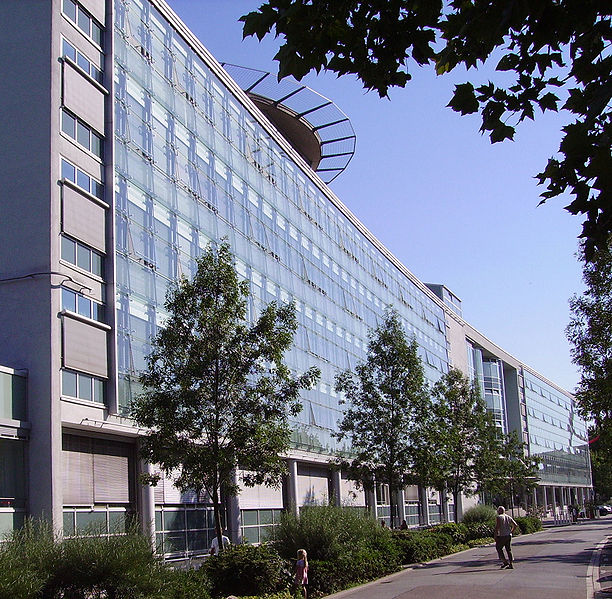
Ludwigshafen Hospital, via Wikimedia http://bit.ly/Qnt9wS

It has been a while since we heard about Joachim Boldt, the German anesthesiologist whose 90-odd retractions briefly put him at the top of the heap until Yoshitaka Fujii kicked him off earlier this year.

Now, Boldt’s former institution, the Klinikum Ludwigshafen, has released a report on its investigation into the disgraced critical care expert, and the results aren’t pretty. Here’s a press release about the report, in its entirety: Continue reading Boldt inquiry concludes: False findings in at least 10 studies, but no harm to patients

Three more retractions for Diederik Stapel

We apologize for what must seem like a constant drip, drip, drip, but we have three more retractions from Diederik Stapel to report, all from the European Journal of Social Psychology.

The first, in order of publication date, involves a 2006 paper by Stapel and co-author Camille Johnson — whose name has appeared on several other of Stapel’s retracted papers — titled “When nothing compares to me: How defensive motivations and similarity shape social comparison effects.”

The notice reads: Continue reading Three more retractions for Diederik Stapel