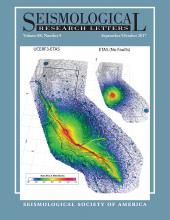
 In 2016, three researchers published data they had collected on a series of devastating earthquakes that hit Japan earlier that year.
But, in late September 2017, one of the authors—Hiroyuki Goto—revealed that the Kumamoto Earthquake data contained “wide reaching errors”—and an outside expert had warned him the data might be problematic nine months earlier.
Goto, an associate professor in the Disaster Prevention Research Institute at Kyoto University, issued two statements in which he acknowledged the errors, but did not indicate how they occurred. According to The Japan Times, Japan’s Ministry of Education, Culture, Sports, Science and Technology is investigating whether the data “was falsified or fabricated due to inconsistencies with other readings taken nearby.” A report in another Japanese paper, The Mainichi, notes that Osaka University—where one of the authors, Yoshiya Hata, works—is looking into the matter as well.
Continue reading Researcher apologizes for ignoring early warnings about earthquake data



 A journal has published an expression of concern (EoC) for a paper on cancer genetics in mice, over a concern about data in some gel panels.
  A biologist is crying foul at a journal’s decision to correct (and not retract) a paper he claims plagiarized his work — and one of his colleagues has resigned from the journal’s editorial board as a result.
 A journal has withdrawn an essay