‘Disappointed’: Cochrane journal asked researchers to publish article, then retracted it for conflicts

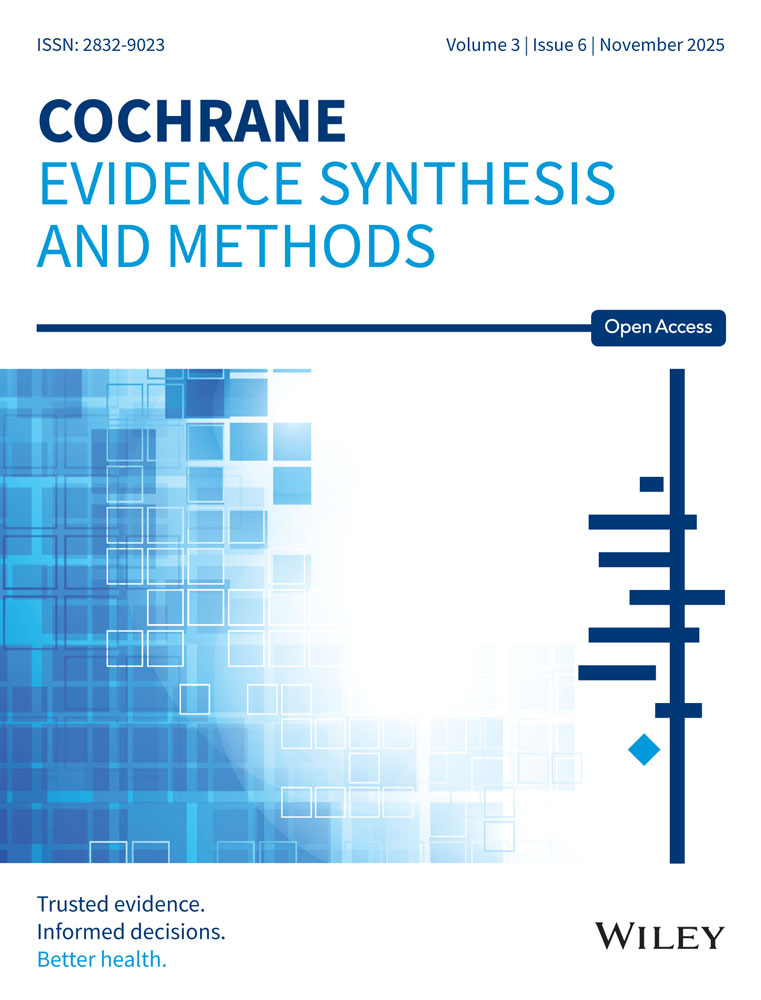
A developer of an AI tool for conducting literature reviews said he and his team were “excited and honored” when a Cochrane journal had extended a “specific and individual invitation” in January 2025 to submit an article describing their system.

Kevin Kallmes, the chief executive officer at and founder of Nested Knowledge, and five of his colleagues wrote the manuscript and submitted their paper describing the procedure for using AutoLit. They included their affiliations and a note they held equity in the company. Cochrane Evidence Synthesis and Methods published the paper in October.

A few months later, the journal retracted it. 

Continue reading ‘Disappointed’: Cochrane journal asked researchers to publish article, then retracted it for conflicts
Former acting director of national research lab in India adds another retraction

A cancer journal has retracted a paper by a former acting director of an institute in India, bringing her retraction total to nine.

Chitra Mandal, a former senior researcher at the Centre for Scientific and Industrial Research’s Indian Institute of Chemical Biology (CSIR-IIC) at Kolkata, served as acting director in 2014-15. She also headed the CSIR’s Innovation complex between 2010 and 2015. She received multiple awards, and was also appointed a Science and Engineering Research Board Distinguished Fellow in 2018. 

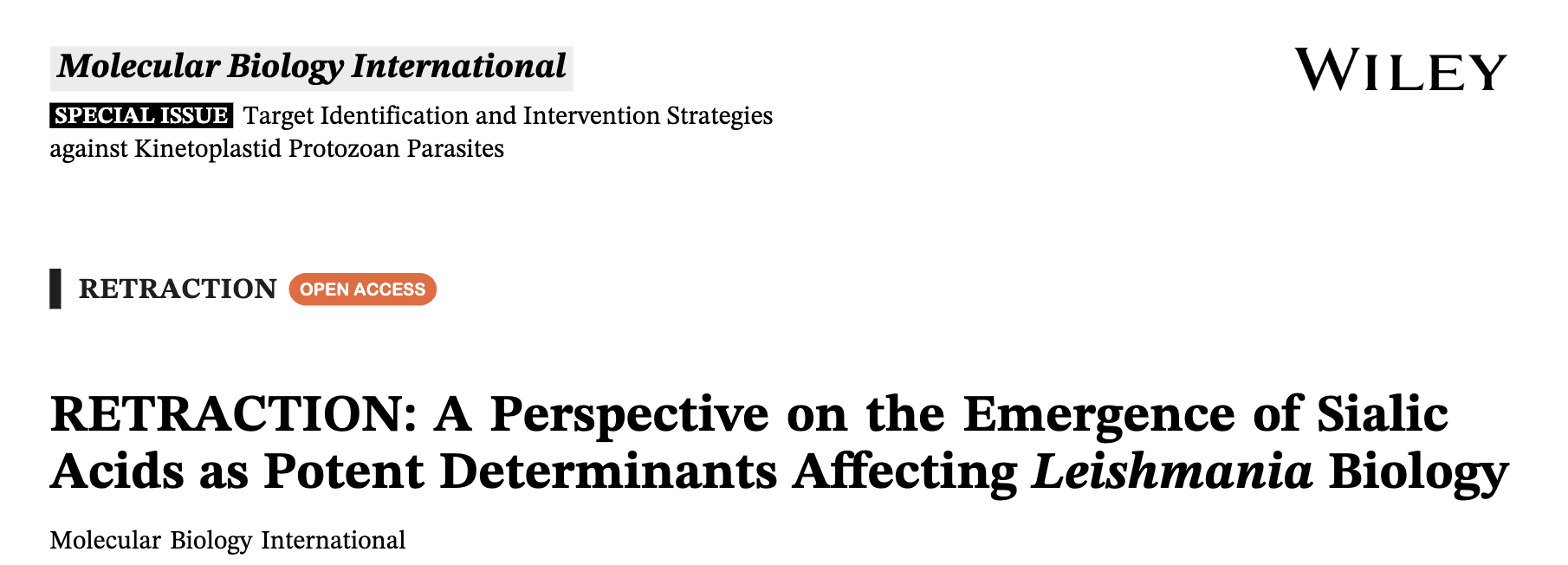
Mandal has now lost nine articles to retraction and more than two dozen of her papers have been flagged on PubPeer, most for image irregularities or data issues in graphs. In March, Wiley’s Molecular Biology International retracted a 2011 article Mandal coauthored, also for image issues. We previously wrote about an expression of concern on a 2016 paper in which Mandal was a co-author. 

The latest retraction involves  a 2011 paper in Leukemia Research about the movement of lymphoblasts from the bone marrow to peripheral blood in childhood leukemia. The journal retracted the paper on May 30, citing concerns that some of the data in figures appear to have been manipulated.

Continue reading Former acting director of national research lab in India adds another retraction

Editors of Courant math journal to leave Wiley, establish new roots with independent publisher

Editors of a journal run by a prestigious math institute will close up shop and form a new journal with an independent publisher, with one editor citing Wiley’s increased oversight as the reason behind the move.

Communications on Pure and Applied Mathematics is the journal for the Courant Institute of Mathematics at New York University. The journal has been published in partnership with Wiley for over 75 years, and all the editors of the journal are affiliated with Courant. 

In emails Retraction Watch has seen, the editorial board notified Wiley in January that the institute would not be renewing its contract with the publisher once it expired at the end of 2026. 

Continue reading Editors of Courant math journal to leave Wiley, establish new roots with independent publisher

A prolific evolutionary biologist caught faking data decades ago notches a new retraction

A study claiming a tenfold decrease in bugs splattered on evolutionary biologist Anders Møller’s windshield over two decades has been retracted.
shanecotee / iStock

Anders Møller, an influential evolutionary biologist from Denmark, somehow survived the blow to his reputation after a high-profile retraction and a finding of scientific misconduct more than 20 years ago.

But a new retraction is once again raising the question of whether that fraud was just a blip in his impressive publication record or further proof, as some claim, that much of Møller’s work rests on a shaky foundation.

The latest paper to fall: Møller’s 2019 study in the journal Ecology and Evolution that reported a tenfold decline in the bugs splattered on his car windshield over two decades. The journal’s editors wrote in their retraction notice that the dataset contained “duplications” and “inconsistencies” that invalidate its conclusions. 

Continue reading A prolific evolutionary biologist caught faking data decades ago notches a new retraction

How the media hypes “research that is absurd on its face”

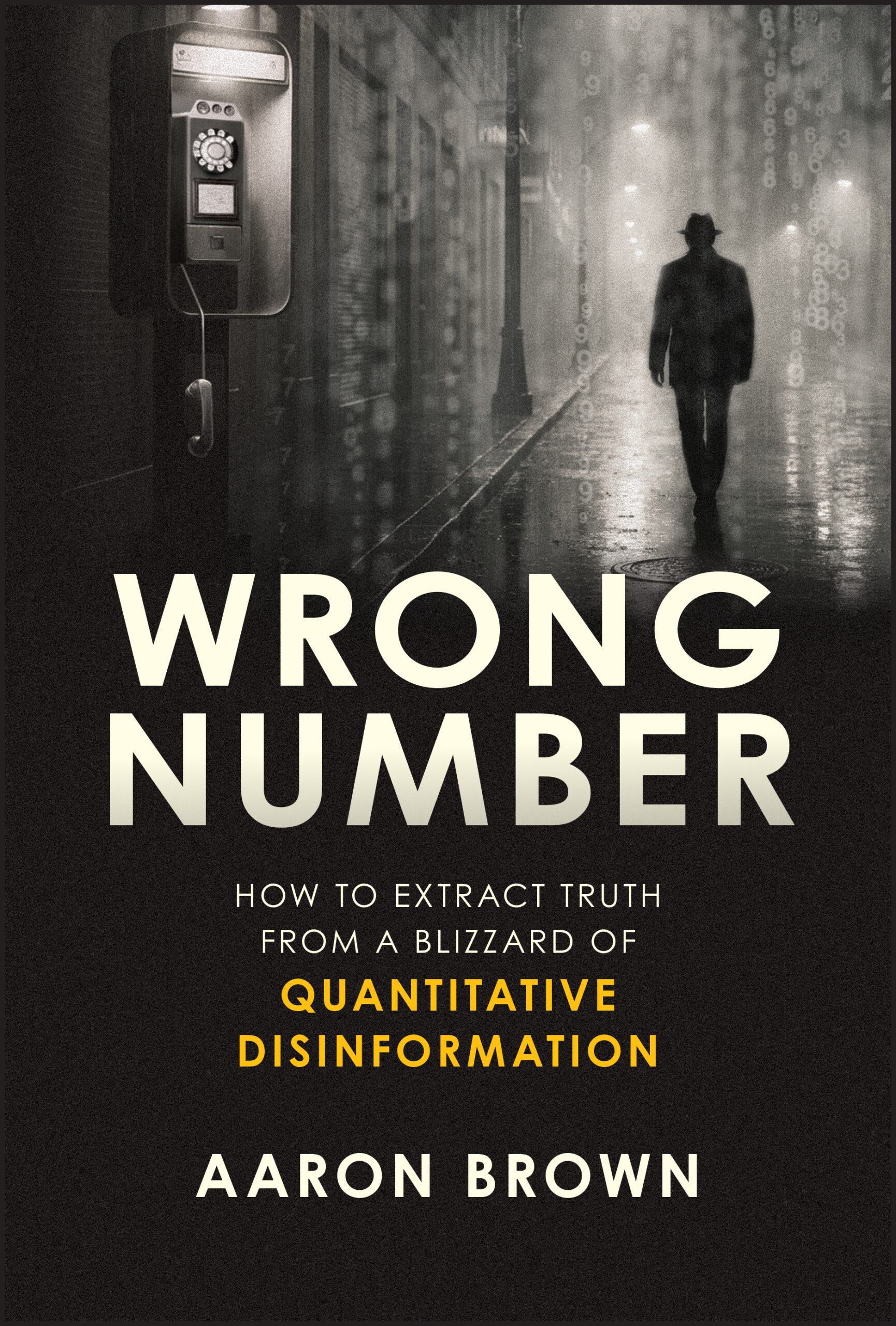
Aaron Brown says his new book, Wrong Number: How to Extract Truth from a Blizzard of Quantitative Disinformation, “isn’t an exposé of fraud—Retraction Watch covers that ground. It’s about legitimate-looking research that is absurd on its face.” 

Published this month by Wiley, Brown uses dozens of case studies to show “why widely reported and influential studies in top journals are not just wrong, but obviously and egregiously illogical or contrary to simple fact. My focus is less on the policy and statistical errors than on why no one seems to care,” he says.

Brown is a risk manager working in hedge fund management. He also teaches statistics at New York University and the University of California San Diego and writes columns for Reason and Bloomberg, among other outlets. We asked him to tell us more about how he thinks about the nexus of science, journalism and the publish-or-perish system that also pushes researchers to engage with non-experts to promote their work.

Continue reading How the media hypes “research that is absurd on its face”

Elsevier retracts the least and reinstates the most, new analysis finds

Frequencies of reasons 10 publishers have given for retracting articles (source).

While Elsevier outcompetes other publishers in terms of sheer volume, it also has the lowest retraction rate and highest rate of reinstating articles among nine top publishers of scholarly articles, a recent study has found. The study also found a tenth publisher to be an outlier in terms of reasons for retraction. 

“Every publisher has their own retraction profile and retraction rates vary by two orders of magnitude,” Jonas Oppenlaender, author of the February preprint and a researcher at the University of Oulu in Finland, told Retraction Watch. “This reflects different editorial cultures and detection strategies, not just different levels of misconduct.”

Oppenlaender examined data from the Retraction Watch Database spanning 1997 to early 2026 to identify the top nine publishers with the most retractions. He also included the Association for Computing Machinery (ACM), “because it is a major professional-society publisher that has not previously been examined in cross-publisher retraction studies,” he wrote in the preprint.

Continue reading Elsevier retracts the least and reinstates the most, new analysis finds

Exclusive: Unrest at Wiley journal whose EIC is cited in more than half of its papers

Timothy Lee of Macau University of Science and Technology was named editor-in-chief of the International Journal of Tourism Research in 2023.

On Feb. 18, a researcher in Italy sent a disgruntled email to the editorial board of a Wiley tourism journal. Salvatore Bimonte had waited more than a year for his manuscript to be peer-reviewed, he complained, and then months more while the editor-in-chief was “actively working on” the revised version Bimonte submitted. 

When Bimonte’s paper was finally rejected after 18 months — for reasons such as the topic not being “highly suitable” and the work not being submitted in the form of a case study — the researcher felt compelled to vent his frustration to the entire editorial board of the International Journal of Tourism Research (IJTR).

“Maybe, I would have been treated better if I had cited some of the editor in chief’s papers,” Bimonte, of the University of Siena, wrote in boldface in the email, which we have seen. Two days later, an unhappy editor at the journal quit, Retraction Watch has learned.

Continue reading Exclusive: Unrest at Wiley journal whose EIC is cited in more than half of its papers

Former Australian science agency ecology researcher loses two papers

One of the retracted papers proposed an epigenetic clock to estimate the age of sea turtles.
Brocken Inaglory/Wikimedia Commons (CC BY-SA 3.0)

A molecular ecology researcher has lost two papers and received an expression of concern for a third after coauthors flagged data issues with the papers. 

All three papers appeared in Molecular Ecology Resources and describe the use of DNA methylation as an epigenetic clock to predict the age of different animals. The journal retracted two of the studies in July. The first, published in June 2021, estimated ages for three threatened fish species. The second appeared in April 2022 and proposes a clock for predicting the age of sea turtles. The articles have been cited 41 and 32 times, respectively, according to Clarivate’s Web of Science.

The lead author on those two studies was Benjamin Mayne, formerly a researcher at Australia’s national science agency, the Commonwealth Scientific and Industrial Research Organization (CSIRO), based in Canberra. 

Continue reading Former Australian science agency ecology researcher loses two papers

‘Cosmic magnet’ study retracted after cleaning agent wipes away results

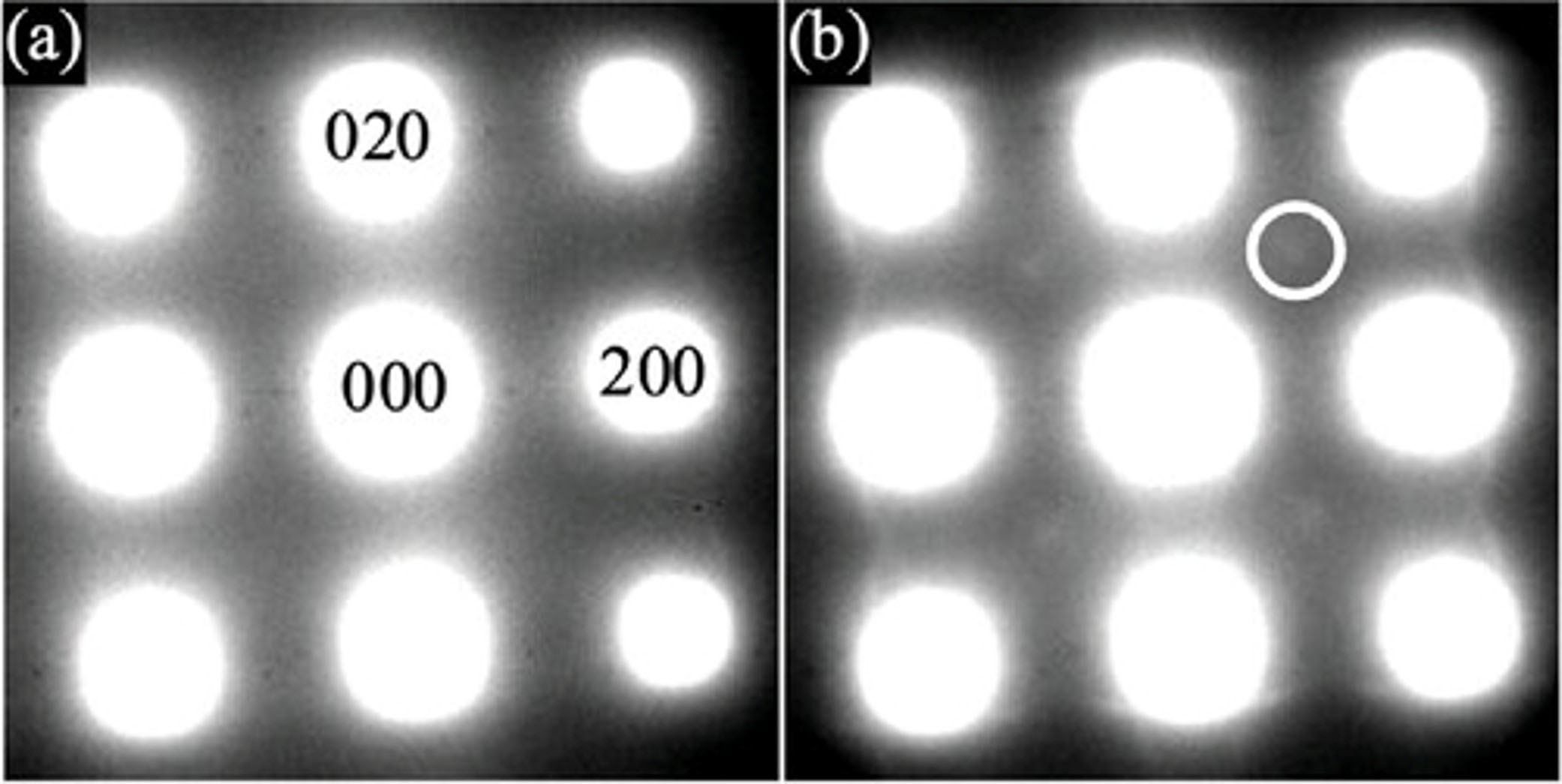
Electron diffraction patterns of an alloy before (left) and after (right) cleaning revealed the cleaning agent was was responsible for reflections (circle, right) reported in the original study. O.S. Houghton et al/Adv. Sci. 2024

When measuring the properties of a particular material, you want to make sure your sample is as clean as possible. But sometimes a well-intentioned effort to purify can make things worse.

Just ask Lindsay Greer, a professor of materials science at the University of Cambridge. He and his colleagues discovered measurements they reported in 2022 were actually an artifact of a cleaning agent used to prepare their sample.

Greer became aware of the issue during unsuccessful attempts to replicate his lab’s discovery of magnetic properties in an alloy their collaborators had made. Instead, they found oxidation from a cleaning product had contaminated their original results. The error led to a retraction, a declined grant, a commentary describing their troubleshooting — and a story about science working as it should. 

Continue reading ‘Cosmic magnet’ study retracted after cleaning agent wipes away results

Wiley retracts study stolen by reviewer, following Retraction Watch coverage

A Wiley journal has retracted a paper more than a year after a researcher reported the work was hers and had been stolen by a reviewer for another journal.

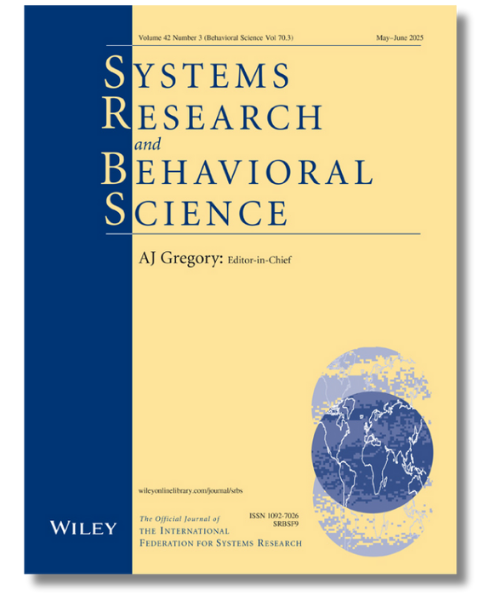
As we reported in July, Shafaq Aftab, now a lecturer at the University of Central Punjab in Pakistan, contacted Wiley in September 2024 after discovering a paper published in one of its journals, Systems Research and Behavioral Science (SRBS), was the exact work she submitted to a different journal a year earlier.  

The retraction notice, issued October 1, states an investigation found “significant unattributed overlap with an unpublished manuscript” and data the authors provided to the journal were “insufficient to resolve the concerns.” Subsequently, “additional scientific errors were identified in the manuscript,” according to the notice.  

Continue reading Wiley retracts study stolen by reviewer, following Retraction Watch coverage