“Game-changer” breast cancer study retracted as Indiana researcher out of his post

A group of cancer researchers whose work has been questioned by sleuths has been hit with their third retraction in less than a year.  

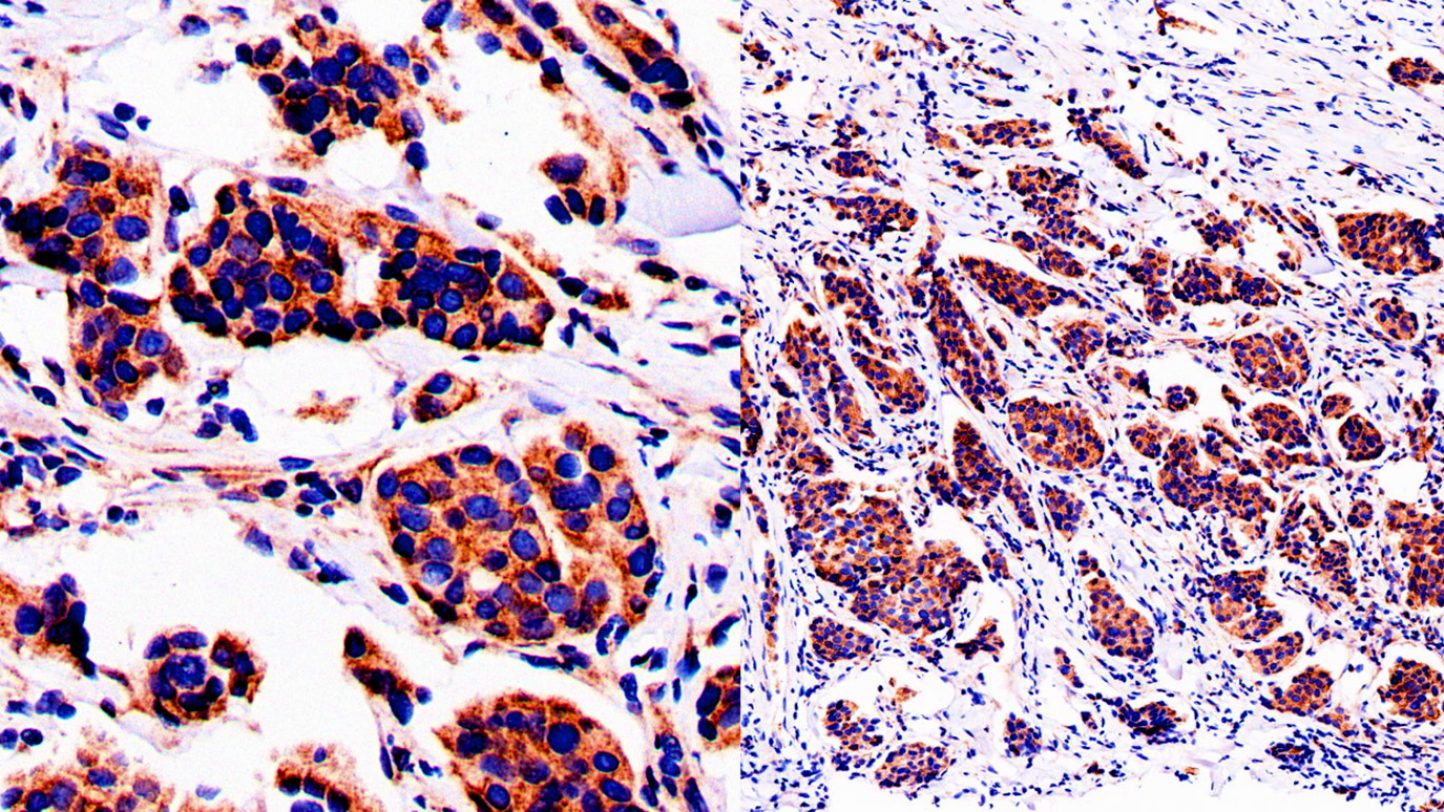
Today, Science Translational Medicine (STM) withdrew a 2021 breast cancer study by former Indiana University researcher Yujing Li and 12 other authors for image falsification. The immunotherapy study had been described by senior author Xiongbin Lu as a “game-changer” for triple negative breast cancer in a 2021 IU press release

The paper’s April 15 retraction notice states that a joint research misconduct investigation involving Indiana University, The Ohio State University, and the University of Maryland, College Park determined “falsification occurred during creation of figure S9C.” The institutions alerted the American Association for the Advancement of Science of the misconduct late last year and requested the paper’s retraction, according to Meagan Phelan, a spokesperson for AAAS, which publishes STM.

Continue reading “Game-changer” breast cancer study retracted as Indiana researcher out of his post

Scientist who alleged COVID cover-up circulated a faked NIH email, agency says

Ariel Fernández

A scientist charged with research misconduct used a fake email communication with an NIH researcher’s address to support his claims of governmental retaliation, Retraction Watch has learned.  

Last month, we reported on the upholding of a proposed 15-year debarment by a U.S. Department of Health and Human Services appeals judge against Argentine chemist Ariel Fernández for falsifying research while a professor at Rice University in Houston. Administrative law judge Margaret G. Brakebusch based that May 2025 decision on findings by Rice sent to the Office of Research Integrity in 2010 and conclusions from ORI’s independent review completed in 2022. 

Fernández denied the misconduct allegations and told us the findings were retaliation by the government for a 2021 paper he wrote supporting a lab origin of SARS-CoV-2. As evidence of the contention, Fernández showed us an email purportedly from National Institutes of Health researcher Joshua Cherry dated June 2021. The email, which appeared to be from Cherry’s NIH address, threatened to resurrect Fernández’s ORI case if he didn’t remove the paper. We could not independently verify the email’s authenticity at the time.  

Continue reading Scientist who alleged COVID cover-up circulated a faked NIH email, agency says

Judge tosses lawsuit over controversial Paxil ‘Study 329’

A judge has dismissed a legal challenge aimed at forcing Elsevier to retract a long-criticized study that concluded the antidepressant Paxil was safe and effective for teens.

The 2001 paper, published in the Journal of the American Academy of Child & Adolescent Psychiatry (JAACAP), has faced scrutiny for more than 20 years by critics who say the study has led to unwarranted and potentially harmful prescribing of the drug to youth. As we reported last October, the journal placed an expression of concern on the paper shortly after a lawsuit was filed by attorney George W. Murgatroyd III against the journal’s owner, the American Academy of Child and Adolescent Psychiatry (AACAP), and Elsevier, which publishes the title.

In his complaint, filed in the Superior Court of the District of Columbia, Murgatroyd claimed the journal is violating the D.C. Consumer Protection Procedures Act (CPPA) by continuing to “publish, distribute, and sell a fraudulent scientific article that contains material facts” that mislead the public and endanger adolescent mental health and safety. AACAP and Elsevier are profiting from the article by charging readers to buy access to the paper, according to the complaint. 

Continue reading Judge tosses lawsuit over controversial Paxil ‘Study 329’

Jury to decide whether Duke retaliated against researcher who reported sexual harassment

Duke University School of Medicine

A jury will soon decide whether leaders at Duke University accused a researcher of misconduct in retaliation for her reporting sexual harassment at the institution. 

U.S. Magistrate Judge Patrick Auld ruled Brahmajothi Mulugu provided enough evidence to show the timing of Duke’s misconduct investigation against her may have been retaliatory, allowing Mulugu’s legal challenge to proceed. In his Jan. 16 decision, Auld denied a motion by Duke to end the lawsuit, concluding a jury should weigh whether Mulugu’s sexual harassment report fueled the university’s misconduct actions against the scientist. 

Mulugu, an immunologist in Duke’s Department of Pharmacology and Cancer Biology, sued the university in 2023, alleging leaders conducted an “unjustified” research misconduct investigation after she reported sexual harassment by then-professor Mohamed Bahie Abou-Donia. The university’s Office of Institutional Equity (OIE) substantiated Mulugu’s harassment report in November 2020, and Abou-Donia resigned, according to a case summary in Auld’s decision. 

Continue reading Jury to decide whether Duke retaliated against researcher who reported sexual harassment

Judge upholds 15-year debarment against scientist who once threatened to sue Retraction Watch

iStock

An appeals judge has recommended the U.S. Health and Human Services uphold a proposed 15-year debarment for a scientist accused of research misconduct more than a decade ago. 

In a May 2025 decision, administrative law judge (ALJ) Margaret G. Brakebusch concluded that “undisputed facts” establish Ariel Fernández engaged in research misconduct by falsifying research results in published papers, grant applications and other materials while serving as a professor at Rice University in Houston. Brakebusch recommended HHS affirm the proposed sanctions made by the Office of Research Integrity in a 2022 charging letter — including a 15-year ban from federal funding for Fernández, an Argentine chemist. 

The development is the latest in a lengthy saga involving skepticism over Fernández’s work dating back to 2009. Over the years, scientists have criticized his work, journals have investigated his papers, and Fernández has flip-flopped about the funding sources for some of his articles. Fernández also levied a legal threat against Retraction Watch in the past for reporting on an expression of concern in one of his papers.  

Continue reading Judge upholds 15-year debarment against scientist who once threatened to sue Retraction Watch

Former Mount Sinai postdoc falsified images in grant updates, ORI says

The U.S. Office of Research Integrity has sanctioned a former postdoctoral fellow at the Icahn School of Medicine at Mount Sinai in New York for manipulating images in two grant updates and a manuscript.

Chen-Yeh “George” Ke committed research misconduct by intentionally falsifying images in an unpublished manuscript supported by federal funds and by reporting the fabricated results in two research performance progress reports, according to a summary published March 10 on the ORI website and to be published in the Federal Register.  

Ke, now a manager at Level Biotechnology in Taiwan, according to LinkedIn, did not return messages seeking comment. A spokesperson from Mount Sinai acknowledged our message but did not comment before our deadline. 

Continue reading Former Mount Sinai postdoc falsified images in grant updates, ORI says

Librarian finds ‘preposterous number’ of fake references in paper from Springer Nature journal

Gunnar Ridderström/Pexels

As a hospital librarian, Jessica Waite is typically successful at tracking down elusive articles for clinicians at Royal Hallamshire Hospital in England. So when a colleague couldn’t locate two references in a paper and asked for help, the librarian grew suspicious.

“These were recent references, which usually we have no problem finding,” Waite told us. “I looked at the issues of the journals where the article should have been, and there were completely different articles, so I immediately thought that the articles we had been asked to find were not real.”

The references were from an article exploring mental health integration after bowel diversion surgery published in Digestive Diseases and Sciences (DDS), a Springer Nature title. 

Continue reading Librarian finds ‘preposterous number’ of fake references in paper from Springer Nature journal

Researcher ‘honestly shocked’ to discover name on paper, editor claims misunderstanding

While reviewing her Google Scholar profile to prepare a list of her publications, psychologist Maryam Farhang came across a paper she didn’t recognize. 

The article, in the Journal of Research in Allied Life Sciences, included her name and affiliation, but Farhang hadn’t written or contributed to the paper in any way, she told Retraction Watch.

“I was honestly shocked and very concerned to see my name and affiliation used without my permission,” said Farhang, an associate research professor at Universidad de Las Américas in Chile. “This is not only unethical, but a serious breach of research integrity. As a researcher, authorship comes with responsibility, seeing my name attached to work that I neither wrote nor approved was professionally alarming and personally upsetting.”

Continue reading Researcher ‘honestly shocked’ to discover name on paper, editor claims misunderstanding

Journal retracts GLP-1 study after researcher questions central finding 

Image: iStock

After reading a recent study about GLP-1 treatment in the International Journal of Obesity, David B. Allison immediately became skeptical about the paper’s analysis. The article, published in May 2024, found people who combined a GLP-1 therapy with another weight loss drug lost more weight than patients on a GLP-1 therapy alone.  

“I could not really comprehend exactly what analysis they did,” Allison, chief of nutrition and director of the Children’s Nutrition Research Center at Baylor College of Medicine in Houston, told Retraction Watch. “And more so, I could not comprehend how the analysis they did would give results that would be informative of the conclusions they drew. So I was scratching my head a little bit.”

The IJO paper was a retrospective cohort study of adults with obesity who had been prescribed a GLP-1 therapy, specifically Saxenda and Ozempic. The study compared patients who received a GLP-1 alone with those receiving the GLP-1 therapy and then had bupropion/naltrexone added to their regimen. The Food and Drug Administration approved bupropion/naltrexone in 2014 for chronic weight management in obese adults. 

Continue reading Journal retracts GLP-1 study after researcher questions central finding 

As journal’s retraction count nears 170, it enhances vetting 

A journal is implementing tighter controls for guest editors and peer reviewers after an investigation led to the retraction of more than 160 articles. 

As we reported last month, the American Society For Testing And Materials (ASTM) International started an investigation into its Journal of Testing and Evaluation after an ASTM vendor noticed some “irregular patterns in the peer review” of a special issue. The investigation revealed the peer review process in four special sections or issues had been compromised, resulting in the retraction of 147 articles.

The journal has since pulled 19 more papers, this time from a special section on human-centered artificial intelligence published in 2021.

Continue reading As journal’s retraction count nears 170, it enhances vetting