A cancer journal has retracted a paper by a former acting director of an institute in India, bringing her retraction total to nine.
Chitra Mandal, a former senior researcher at the Centre for Scientific and Industrial Research’s Indian Institute of Chemical Biology (CSIR-IIC) at Kolkata, served as acting director in 2014-15. She also headed the CSIR’s Innovation complex between 2010 and 2015. She received multiple awards, and was also appointed a Science and Engineering Research Board Distinguished Fellow in 2018.
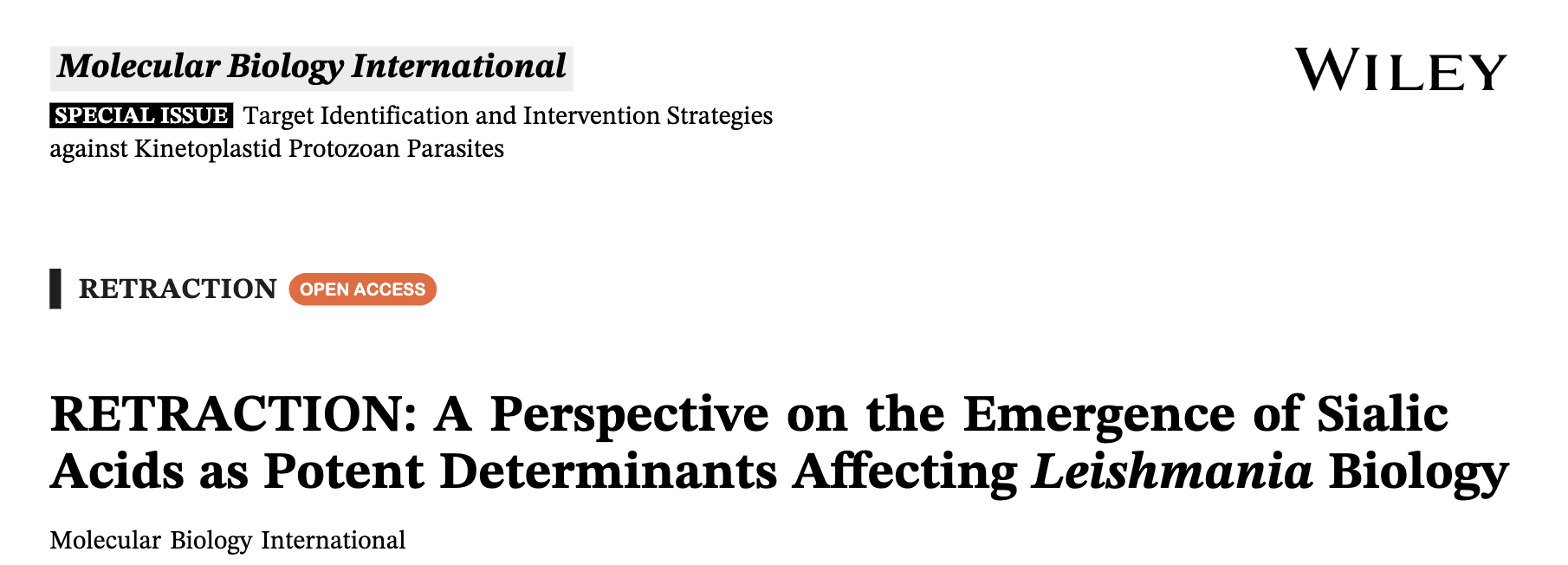
Mandal has now lost nine articles to retraction and more than two dozen of her papers have been flagged on PubPeer, most for image irregularities or data issues in graphs. In March, Wiley’s Molecular Biology International retracted a 2011 article Mandal coauthored, also for image issues. We previously wrote about an expression of concern on a 2016 paper in which Mandal was a co-author.
The latest retraction involves a 2011 paper in Leukemia Research about the movement of lymphoblasts from the bone marrow to peripheral blood in childhood leukemia. The journal retracted the paper on May 30, citing concerns that some of the data in figures appear to have been manipulated.
Continue reading Former acting director of national research lab in India adds another retraction