Decade-long fraud by market survey firm a ‘gut punch’ for researchers

Credit: AndreyPopov/iStock

In April 2025, David Victorson, a psychologist at Northwestern University in Chicago, was polishing several manuscripts for submission when a colleague sent him a link to a press release from the U.S. Department of Justice. “Eight Defendants Indicted in International Conspiracy to Bill $10 Million for Fraudulent Market Survey Data,” the headline read.

Victorson couldn’t believe it. Op4G, a market research company he first worked with more than a decade earlier, was being indicted for selling bogus data between 2014 and 2023. In fact, Victorson had just used them to run an online survey related to meditation as part of a U.S. National Institutes of Health project to create a standardized mindfulness metric. He didn’t yet know whether his own data were compromised, but he knew there was no way he’d be submitting his manuscripts with those data.

“Because they were within the period of the indictment, we scrapped them entirely,” Victorson said. “It took years off our lives.”

Continue reading Decade-long fraud by market survey firm a ‘gut punch’ for researchers

Exclusive: News outlet killed story on plagiarism allegations after Cambridge prof hired law firm

Jason Arday

In September 2025, Times Higher Education had a bombshell story in the works: A star sociology professor at the University of Cambridge had allegedly plagiarized parts of his Ph.D. thesis and several journal articles. In one of the articles, the borrowed text appeared in quotes from subjects the professor, Jason Arday, claimed to have interviewed himself. 

But after Arday enlisted Carter-Ruck, one of the United Kingdom’s leading defamation law firms, to send Times Higher Education a letter, the publication spiked the story, according to three sources who spoke to Retraction Watch.

One of the sources was David Sanders, a biochemist at Purdue University in Indiana, and a sleuth who contributes to the Times Higher Education on topics related to academic misconduct. He reviewed a 63-page dossier of text comparisons prepared by the publication last year and came back with his own findings. “There is no question that there is extensive plagiarism,” Sanders told us.

Continue reading Exclusive: News outlet killed story on plagiarism allegations after Cambridge prof hired law firm

A prolific evolutionary biologist caught faking data decades ago notches a new retraction

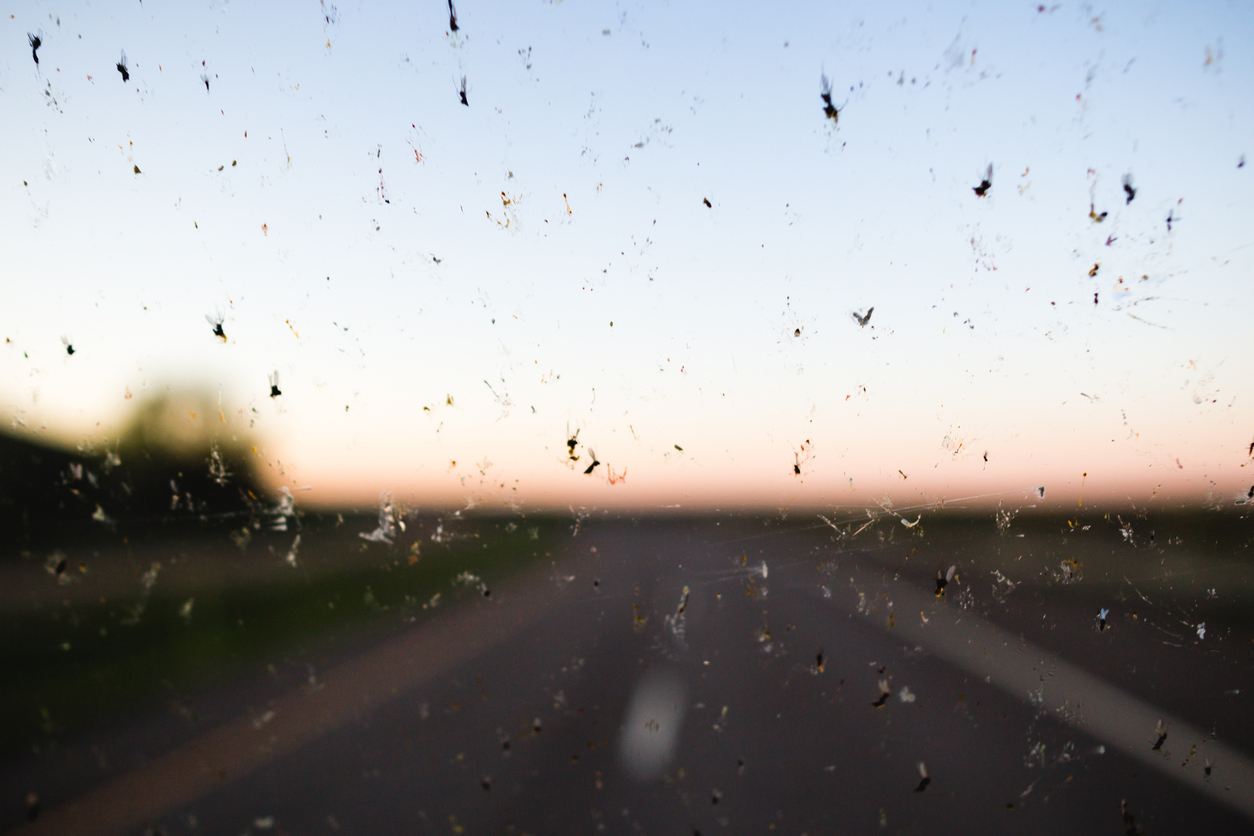
A study claiming a tenfold decrease in bugs splattered on evolutionary biologist Anders Møller’s windshield over two decades has been retracted.
shanecotee / iStock

Anders Møller, an influential evolutionary biologist from Denmark, somehow survived the blow to his reputation after a high-profile retraction and a finding of scientific misconduct more than 20 years ago.

But a new retraction is once again raising the question of whether that fraud was just a blip in his impressive publication record or further proof, as some claim, that much of Møller’s work rests on a shaky foundation.

The latest paper to fall: Møller’s 2019 study in the journal Ecology and Evolution that reported a tenfold decline in the bugs splattered on his car windshield over two decades. The journal’s editors wrote in their retraction notice that the dataset contained “duplications” and “inconsistencies” that invalidate its conclusions. 

Continue reading A prolific evolutionary biologist caught faking data decades ago notches a new retraction

A researcher’s unusually high h-index gives a window into an expansive citation network

dem10/istock

With an h-index of 75, computer scientist Thippa Reddy Gadekallu ranks among the world’s most highly cited researchers. But the speed and means of his ascent to those lofty heights of scholarship has been as remarkable as the achievement itself. 

In less than a decade, Gadekallu, a professor at Zhejiang A&F University in China,  has managed to bootstrap himself from scientific obscurity by collaborating with colleagues around the world who cite each other’s work in ways that have raised questions. In some years, Gadekallu received more citations than Yoshua Bengio, a pioneer in artificial intelligence and the top-rated computer scientist on Google Scholar.

Earlier work uncovered a network of reviewers on papers Gadekallu edited who frequently suggested adding citations to his work. A closer look by Retraction Watch shows the impact of that strategy on Gadekallu’s h-index, and reveals additional possible collaborators in the network.

Continue reading A researcher’s unusually high h-index gives a window into an expansive citation network

U.K. surgeon and inventor’s endeavors include unreproducible data and guaranteed publications for a price

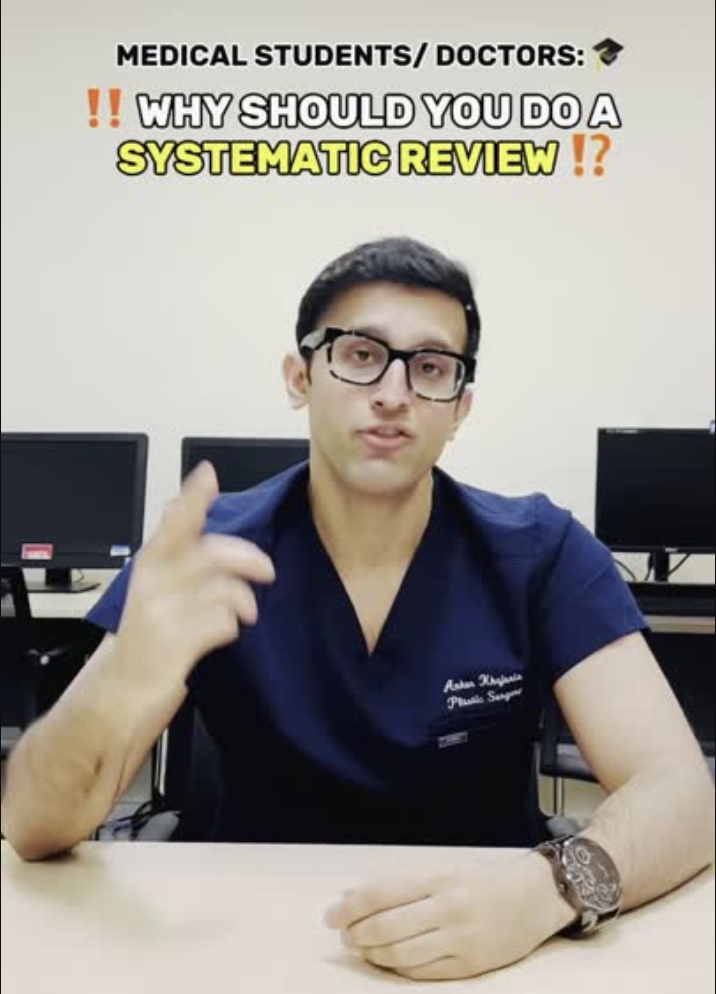
Ankur Khajuria offers a “career-changing course” on conducting reviews, which he markets on LinkedIn to medical students and doctors. (source)

“Research will help you get ahead,” British surgeon Ankur Khajuria told his 16,000 followers in a 2024 Instagram post while seated in scrubs embroidered with his name. “If you want to learn about publishing, check out the research academy at HighYieldUK.com.” 

The company, which offers medical students mentoring in publication, isn’t the only commercial venture for Khajuria, a plastic and reconstructive surgeon in his mid-thirties active in the media, including as a contestant on Squid Game: The Challenge. His entrepreneurship has extended into medical device manufacturing under the banner of Avance Innovations, which he founded and where he is CEO. For his professional efforts, Khajuria has been given a prestigious award and high praise from his colleagues, with one calling him “brilliant.”

But an investigation by Retraction Watch reveals a different view. Khajuria’s academy raises concerns about promises of publication for a price, and his prolific publication record has set off flags on PubPeer, where commenters have raised allegations of plagiarism. And Avance Innovation’s signature surgical device, while marketed for humans, has apparently been tested on only six rats and no people. Close examination by the Medical Evidence Project, an endeavor of The Center for Scientific Integrity (publisher of Retraction Watch), indicates the data in that rat study lack internal consistency, making them questionable.

Continue reading U.K. surgeon and inventor’s endeavors include unreproducible data and guaranteed publications for a price

Replication probe finds ‘statistically improbable data’ tied to institute in Bangladesh

Asad Islam

A Bangladesh-based organization focused on development economics and its founder have been churning out papers filled with misstatements, inconsistencies, ethical lapses and “statistically improbable data,” according to researchers involved in an ongoing effort to replicate the work.

One journal has already retracted a paper for falsely claiming to describe a randomized, controlled trial and data collection that failed to adhere to the journal’s ethical guidelines. The study, published in the European Economic Review, was retracted following a March 11 report from the Institute for Replication, or I4R. The group is conducting a broader probe into the Global Development & Research Initiative (GDRI), the organization that implemented the intervention described in the paper.

GDRI’s founder and the study’s sole author is Asad Islam, a developmental economist at Monash University in Australia. Since 2022, Islam has received over $2 million in funding from the Bill & Melinda Gates Foundation, the World Bank, the Asian Development Bank, and other organizations, according to a copy of his resume. Islam did not respond to multiple requests for comment on the retraction or the broader concerns about the work. But in a statement posted to his now-deleted account on X, he wrote: 

Continue reading Replication probe finds ‘statistically improbable data’ tied to institute in Bangladesh

Exclusive: Embattled dean accused of plagiarism in NSF report

Erick Jones

Erick Jones, the dean of engineering at the University of Nevada in Reno, appears to have engaged in extensive plagiarism in the final report he submitted to the National Science Foundation for a grant, Retraction Watch has learned.

The $28,238 grant partially supported a three-day workshop that Jones and his wife, Felicia Jefferson, held for 21 students in Washington, DC, in April 2022 titled “Broadening Participation in Engineering through Improved Financial Literacy.” Jefferson received a separate award for $21,757.

Jones submitted his final report to the agency in May 2023. Retraction Watch obtained a copy of that report through a public records request to Jones’s previous employer, the University of Texas at Arlington, and identified three published sources of extended passages he used without citation or quotation marks.

Continue reading Exclusive: Embattled dean accused of plagiarism in NSF report

Engineering dean’s journal serves as a supply chain for ‘bizarre’ articles

Erick Jones, by Beronlee

Erick Jones, the dean of the College of Engineering at the University of Nevada in Reno, is under fire for publishing a journal filled with what one academic called “bizarre” and “incoherent” articles.

Jones founded the International Supply Chain Technology Journal in 2015 and served as the publication’s editor-in-chief until September 2022, when he handed off the reins to a former member of his lab. The journal notes that it requires authors to pay an “honorary” charge of $199 to publish their manuscripts.

Jones’s ORCID profile lists 71 articles published in the journal, although an accurate count is difficult because of discrepancies in the journal’s database and the title’s PDF files. The pages of the journal were also filled with articles from his wife, his son, his students and the current editor-in-chief, along with the occasional outside submission.

One of Jones’s papers, published in 2022, is titled “Using Science to Minimize Sleep Deprivation that May Reduce Train Accidents.” In the two-paragraph article, Jones and his coauthors note that “both humans and flies sleep during the night and are awake during the day, and both species require a significant amount of sleep.” After a description of an unrelated study on fly lifespans, they conclude:

Continue reading Engineering dean’s journal serves as a supply chain for ‘bizarre’ articles

War over whistleblower protection for Kansas ecology prof wages on

nsfA contentious case over whether a fired ecologist deserves whistleblower protection is playing out in Kansas, and the National Science Foundation (NSF) has once again weighed in.

For the second time, the NSF has told the researcher, Joseph Craine, that he does not qualify for protection as a whistleblower after he was fired from Kansas State University (KSU) for sharing misconduct allegations with a journal editor.

Craine initially asked the NSF for whistleblower protection status in 2014, arguing that he had been retaliated against for making misconduct allegations to the journal Ecology. The NSF denied Craine’s claim, but Craine appealed to federal court, which found the NSF’s reasoning opaque and remanded the case back to the agency. On June 24, the NSF’s General Counsel Lawrence Rudolph issued a new 11-page letter that lays out the basis for its decision: Continue reading War over whistleblower protection for Kansas ecology prof wages on

A bullshit excuse? My lab notebook “was blown into a manure pit”

CleanA researcher who studies how to turn dairy cattle manure into natural gas falsified and fabricated data in a journal article and failed to declare a commercial conflict of interest, a Washington State University investigation has found.

The study “Evaluation of Co-Digestion at a Commercial Dairy Anaerobic Digester” was published in 2011 in the journal CLEAN: Soil, Air, Water. First author Craig Frear was a Ph.D. student at WSU Pullman when the study was carried out and an assistant professor at the time of the investigation. The editor-in-chief of CLEAN, Prisca Henheik, told us that the retraction is a done deal even though it has not been posted online: Continue reading A bullshit excuse? My lab notebook “was blown into a manure pit”