Retraction appears for faked study of Novartis anti-cancer compound

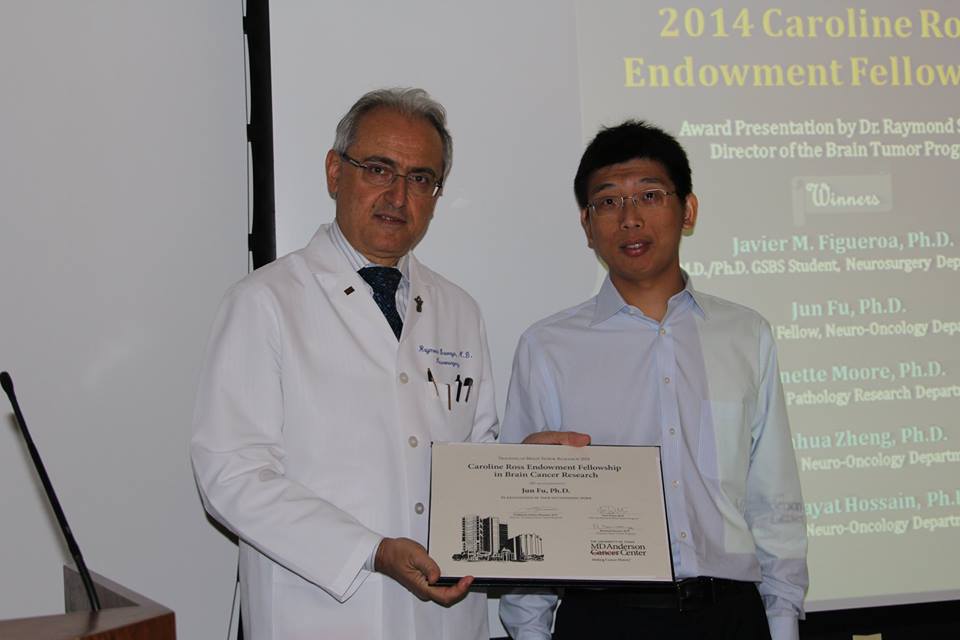
Raymond Sawaya, director of MD Anderson’s brain tumor program, presents Jun Fu with the 2014 Caroline Ross Endowment Fellowship.

A paper by a former postdoc at MD Anderson Cancer Center who “admitted to knowingly and intentionally falsifying” a figure has been retracted.

In August, the Office of Research Integrity announced that it had sanctioned Jun Fu for faking data in a study of the results of a mouse study of NVP-HSP990, a Novartis compound designed to fight brain tumors. Here’s the notice for the study in question, published in Cancer Research:
Continue reading Retraction appears for faked study of Novartis anti-cancer compound

Univ.: No misconduct, but “poor research practice” in mgt prof’s work now subject to 7 retractions

fred-walumbwa
Fred Walumbwa

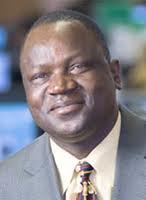
The Leadership Quarterly has retracted a trio of papers by Frederick Walumbwa, an “ethical leadership” guru at Florida International University, whose work has come under scrutiny for flawed methodology. And another journal  has pulled one of his articles for similar reasons. That brings his count – as far as we can tell — to seven retractions and a mega-correction.

Meanwhile, Arizona State University, Walumbwa’s former employer, has found

that the preponderance of evidence does not support the charge of research misconduct by Dr. Walumbwa…

but that he engaged in “poor research practice.”

The bottom line, according to the Leadership Quarterly, which first announced problems with the articles in February:

Continue reading Univ.: No misconduct, but “poor research practice” in mgt prof’s work now subject to 7 retractions

Lancet journal puts ICU paper on watch after authors acknowledge potentially fatal flaw

lancetrmLancet Respiratory Medicine has issued an expression of concern for a meta-analysis on tracheostomy in the intensive care unit that they published earlier this year.

The paper, “Effect of early versus late or no tracheostomy on mortality of critically ill patients receiving mechanical ventilation: a systematic review and meta-analysis“, came from a group at Harvard, Weill Cornell and the University of Athens. The authors purported to find that: Continue reading Lancet journal puts ICU paper on watch after authors acknowledge potentially fatal flaw

“Undeclared competing interest” sinks fish oil takedown by author fined for deceptive claims

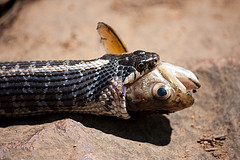
Snake swallowing a whole fish
Image via Jesse Palmer

The Journal of Lipids has retracted an aggressively negative review article called “Why Fish Oil Fails,” written by one Brian S. Peskin, whose bogus health claims have landed him in plenty of hot water in the past.

Here’s the notice: Continue reading “Undeclared competing interest” sinks fish oil takedown by author fined for deceptive claims

“I kind of like that about science:” Harvard diabetes breakthrough muddied by two new papers

douglas_melton
Doug Melton

Harvard stem cell researcher Doug Melton got a lot of press last year for research on a hormone he named betatrophin, after its supposed ability to increase production of beta cells, which regulate insulin.

Now, the conclusions from that paper, which has been cited 59 times, according to Thomson Scientific’s Web of Knowledge, have been called into question by research from an independent group, as well as follow-up work from the original team.

The interest was driven by the hormone’s potential as a new treatment for diabetes. In 2013, Melton told the Harvard Gazette that betatrophin could be in clinical trials within three to five years. Here’s Kerry Grens in The Scientist: Continue reading “I kind of like that about science:” Harvard diabetes breakthrough muddied by two new papers

University of Utah investigation fingers chem engineering grad student for misconduct

acs nanoA second retraction has been issued in a case of research misconduct at the chemistry department of chemical engineering at the University of Utah.

The first retraction, in August of 2013, got a lot of attention for how poorly faked the figures were. At the time, an expression of concern was issued on the paper that has just been retracted.

Today, we exchanged emails with Jeffery Botkin, the research integrity officer at the University of Utah, who ran the investigation into the misconduct. He summarized the report for us below. Continue reading University of Utah investigation fingers chem engineering grad student for misconduct

Lyme disease researchers call for retraction of paper on deer ticks in Texas

Image via Wikimedia Commons

A paper suggesting that 45% of deer ticks in Texas have Lyme disease was raked over the coals in a letter to the editor in a recent issue of Parasites and Vectors, though it doesn’t seem like a retraction is forthcoming. Continue reading Lyme disease researchers call for retraction of paper on deer ticks in Texas

Former NIH lab director faked findings in three papers: ORI

ori logoThe former director  of the X-ray crystallography lab at the National Institute of Arthritis and Musculoskeletal and Skin Diseases, part of the National Institutes of Health, faked findings in three papers, according to the Office of Research Integrity.

Two of the three papers by Bijan Ahvazi were published in 2004, and later retracted in 2007, while the other was rejected: Continue reading Former NIH lab director faked findings in three papers: ORI

Structure error sinks NIH-MIT-SNU peptide paper

CHBIOL_21_9.c1.inddA mistake in structure identification has sunk a paper by researchers at the NIH, MIT, and Seoul National University in the Cell Press journal Chemistry and Biology.

Here’s the notice for “Peptide-Based Inhibitors of Plk1 Polo-box Domain Containing Mono-anionic Phosphothreonine Esters and Their Pivaloyloxymethyl Prodrugs”: Continue reading Structure error sinks NIH-MIT-SNU peptide paper

Scientist sues PubPeer commenters, subpoenas site for names

Fazlul Sarkar, via Wayne State

Last month, we reported that a Wayne State University cancer researcher had threatened legal action involving post-publication peer review site PubPeer, claiming that he had lost a job offer from the University of Mississippi because of comments on the site.

Fazlul Sarkar — who has received $12.8 million in NIH funding and has been an investigator on five clinical trials — has now filed suit against PubPeer’s anonymous commenters, and has demanded that PubPeer release their names and identifying information. The complaint, filed by attorney Nicholas Roumel in Michigan’s Wayne County Circuit Court and which we’ve made available here, details more of the history of the case and of course describes the legal strategy, which we’ll describe below. Continue reading Scientist sues PubPeer commenters, subpoenas site for names