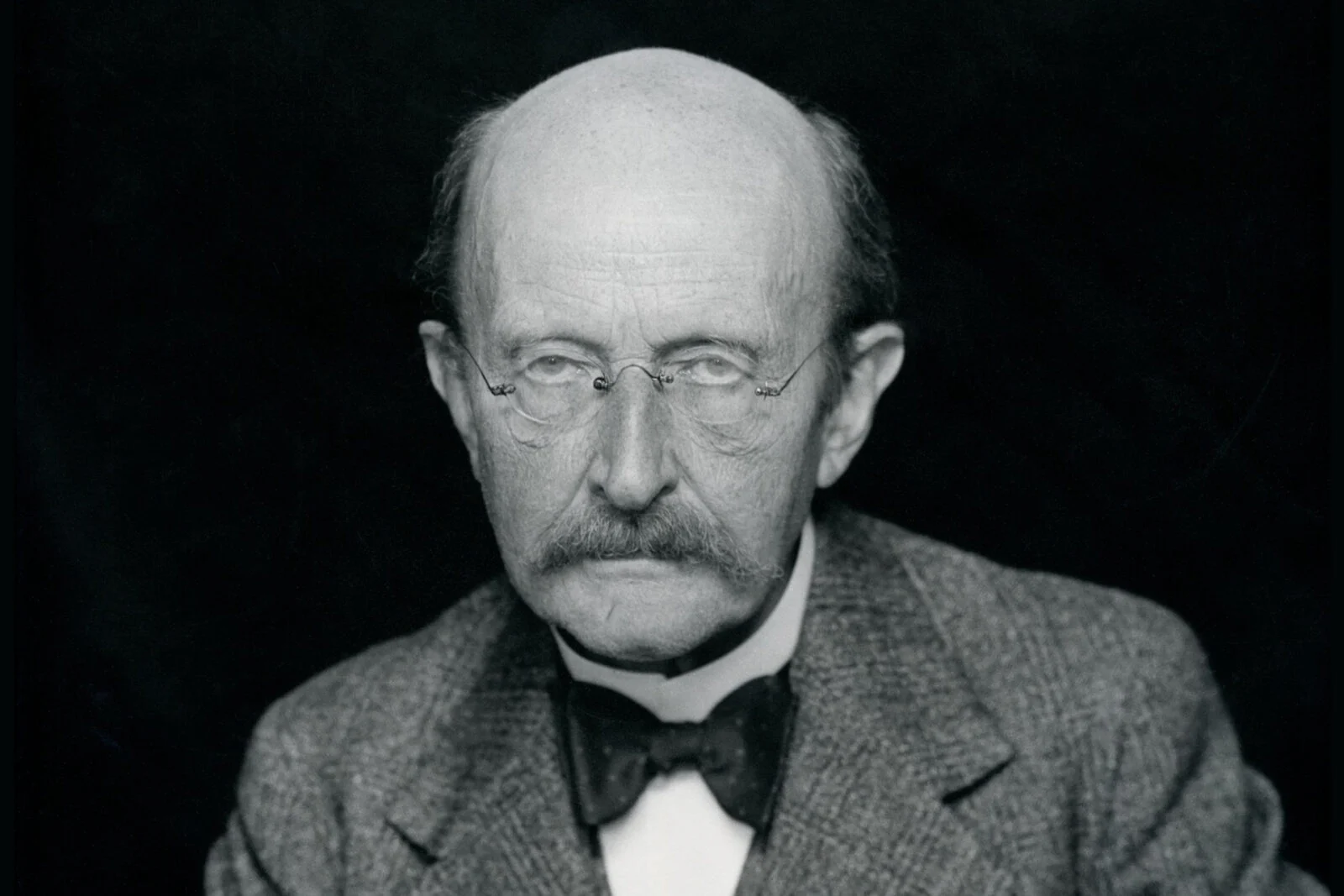
Today the Retraction Watch list of Nobelists who have retracted papers bids Verabschiedung to Max Planck.
After days of scrutiny, Springer Nature has restored two papers by Planck, who won the Nobel for Physics in 1918, reversing a 2011 decision to retract the articles for “copyright violations.”
Both articles are back, and now carry the following statement:
“23 December 2011 This article has been withdrawn due to copyright violation.
06 July 2026 This article has been reinstated. It was retracted as a result of human error in 2011.”
Previously, the retraction notices lacked a date, and referred only to “copyright violation.”
The mysterious retractions had been in the Retraction Watch Database for a decade but had only recently caught the attention of Yves Gingras, an historian in Montreal, when he spotted them on our list of Nobel Prize winners with retractions, which we created in 2024.
Gingras found the whole thing puzzling, so he wrote a paper with Mahdi Khelfaoui about the case and posted it on arXiv in May. A story in Science about the preprint from late last month suggested the work of “a bot” might be to blame, which launched a raft of questions about the reasons behind the move.
But as our Ivan Oransky told Gizmodo, that rationale seemed thin given that bots as understood today were not in widespread use in 2011.
And the integrity of the articles, which Planck first published in Die Naturwissenschaften in 1940 and 1942, has never been in question.
Tim Kersjes, head of research integrity at Springer Nature, told Gizmodo before the reinstatements the “‘decision to retract the papers was a human error and we can confirm that no software or ‘bot’ would have been involved in the process. Unfortunately, our records are limited, as the retractions occurred in 2011, the individuals involved have mostly left the company and the systems by which we record integrity matters have since changed.’”
Gingras expressed skepticism about that explanation of events.
“[W]ho can believe that in 2011 someone at Springer manually browsed decades of archived journals and happened to discover two short papers by Planck that allegedly presented a copyright issue,” he told Retraction Watch. “We still believe that, given the scale of Springer’s digitization projects and journal archive, some automated workflow (related to copyright screening or duplicate detection) flagged the two papers for review. The final decision may well have been made by a human, but that does not mean the process began “manually”. In fact, in our paper, we did suggest that the process, although automatized, was probably supervised by a human, perhaps even by legal assistance.”
Because they were retracted for 15 years, the papers will remain in the Retraction Watch Database, but are now marked as “reinstatements.”
Like Retraction Watch? You can make a tax-deductible contribution to support our work, follow us on X or Bluesky, like us on Facebook, follow us on LinkedIn, add us to your RSS reader, or subscribe to our daily digest. If you find a retraction that’s not in our database, you can let us know here. For comments or feedback, email us at [email protected].
I am of the opinion that humans were indeed responsible for it. It seems to be a deliberate attempt. Now, who are the individuals who did it? Springer Nature should name them, even if they are no longer employed by SN.
I am sure they are no longer employed there.
A deliberate attempt…to remove 2 fairly obscure papers by a person who died in 1947? What could possibly be the motive?
Whoever did it should be put on the gang plank.
It’s a constant, for sure
Or, since it’s Max Planck, put in a Schrödinger’s Cat type box!
Why keep it in your database? It seems pointless.
It should be kept for future reference.
Find the individuals and their connections, and you will get the motive(s).
It’s not about the author who died in 1947. It is about his idea, which opposes Bohr and his followers.
What, you think a revenant Aloys Müller sneaked into the Springer Verlag offices and retracted the papers?
Find the individuals and their connections, and you will get the motive(s).
Never attribute to malice that which is adequately explained by stupidity.
stupidity is not a vector. hence, why planck?why only planck?so, its not stupidity and needs investigation.
Why two random papers and not all of them? Maybe if you have an actual accusation you should make it instead of posting disconnected allusions over and over?
I said, investigate for there is something that is not at all random as a;ready stated in my comments above.