Fluid mechanics article retracted with no explanation

JHeatTransf_ak7An article published earlier this year has been retracted from the  Journal of Heat Transfer. But the retraction notice gives no information about what was amiss.

The article is entitled “Neural Network Methodology for Modeling Heat Transfer in Wake Flow,” and the retraction notice, in full, reads: Continue reading Fluid mechanics article retracted with no explanation

Data “irregularities” sink paper on water treatment

desal water treatmentDesalination and Water Treatment has retracted a paper it published in January by a pair of Turkish researchers for “irregularities in the methodology and data management.”

The article, “Molecular simulation of Zn2+, Cu2+, Pb2+, and NH4+ ion-exchange in Clinoptilolite,” investigated how well different natural forms of the zeolite Clinoptilolite remove heavy metals from wastewater. It came from the lab of Mehmet Göktuğ Ahunbay, of Istanbul Technical University, accompanied by first author Barış Demir.

According to the notice: Continue reading Data “irregularities” sink paper on water treatment

Bitter herbs: Parsley paper retracted after authors omit colleague

ljfp20.v018.i06.coverA pair of plant experts at Uludag University, in Turkey, has lost a paper on techniques for drying parsley because they evidently left a key contributor off the manuscript.

The article, “Effect of Vacuum, Microwave, and Convective Drying on Selected Parsley Quality,” was published online in June 2011 by the International Journal of Food Properties.

During the study, the authors subjected parsley (Petroselinum crispum Mill.) to the various drying techniques, then measured how much each degraded the sample.  Ascorbic acid — a particularly “important indicator of quality,” according to the authors — was lowest after convective drying, and highest after using the microwave. “At the end of the study, microwave drying at 750–850 W ensured the shortest drying time and the best overall quality of parsley; thus, it was chosen as the most appropriate technique for parsley drying.”

But as the retraction notice states: Continue reading Bitter herbs: Parsley paper retracted after authors omit colleague

Rebirth of ovary article prompts retraction from OB lit

ejoglogoThe European Journal of Obstetrics & Gynecology and Reproductive Biology has retracted a 2014 paper on polycystic ovary syndrome for self-plagiarism.

In the notice, the journal states that “significant portions” of the findings in “Association of anti-Mullerian hormone and small-dense low-density lipoprotein cholesterol with hepatosteatosis in young lean women with and without polycystic ovary syndrome” already appeared in another paper. Three authors appear in both publications, all based at the University of Ufuk (don’t think too hard about that name) in Ankara, Turkey. Continue reading Rebirth of ovary article prompts retraction from OB lit

Student denied credit, math article retracted

inequalA math paper in the Journal of Inequalities and Applications has been retracted after it was discovered the authors had included a student’s work without acknowledging her.

One of the authors, however, told us it was an honest mistake, and that the editor pushed for retraction instead of correction “to protect this journal and its impact factor.”

Here’s the notice for “On the Kirchhoff matrix, a new Kirchhoff index and the Kirchhoff energy”: Continue reading Student denied credit, math article retracted

The tell-tale heart: Cardiovascular surgeons notch two retractions for plagiarism

Sometimes plagiarism can be tricky to catch when an article has to be translated before publication.
That seems to be the case for two papers out of a hospital in Canakkale, Turkey, that discussed results of two different kinds of heart surgery.

Here’s the retraction notice for “The effects of 21 and 23 milimeter aortic valve prosthesis on hemodynamic performance and functional capacity in young adults,” in the Pakistan Journal of Medical Sciences: Continue reading The tell-tale heart: Cardiovascular surgeons notch two retractions for plagiarism

Poetry, politics, plagiarism, and erotics add up to a retraction

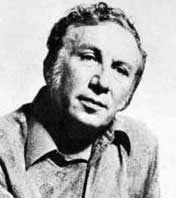
Nizar Qabbani, via WikiMedia

Here’s a new category for us: Poetry.

Comparative Studies of South Asia, Africa and the Middle East, a comparative studies journal, has retracted a paper on gender roles in Middle Eastern poetry due to plagiarism.

Nizar Kabbani was a famed Syrian poet who wrote frankly about feminism, love, and sex. He’s well worth a read, if you have the time – here’s an excerpt from one of his more famous poems, I Have No Power: Continue reading Poetry, politics, plagiarism, and erotics add up to a retraction

Radical geographer doubles up on sexuality paper, earns retraction

ImageRadical geography journal Antipode has retracted a paper on sexuality and geography after discovering that author Martin Zebracki published an almost identical article in a Dutch magazine on which he served as a member of the editorial board.

Here’s the retraction notice for “Right to Space: Moving Towards Sexual Citizenship Beyond the Nation State”: Continue reading Radical geographer doubles up on sexuality paper, earns retraction

Researchers retract breast cancer study after realizing they were using the wrong antibody

br j cancerA group of researchers at Istanbul University has swiftly retracted a paper they published in March in the British Journal of Cancer once it became clear that they were using the wrong antibody.

Here’s the notice for “Clinical significance of p95HER2 overexpression, PTEN loss and PI3K expression in p185HER2-positive metastatic breast cancer patients treated with trastuzumab-based therapies:” Continue reading Researchers retract breast cancer study after realizing they were using the wrong antibody

Plagiarism spells demise of complementary medicine paper

JEBCAMThe Journal of Evidence-Based Complementary Medicine (JEBCAM) has retracted a 2013 review on probiotics by an author from Turkey who patched the paper together from a variety of other sources — and then appears to have reused his own work elsewhere without attribution.

The article was written by Öner Özdemir, a pediatric allergy specialist at İstanbul Medeniyet University. According to the abstract: Continue reading Plagiarism spells demise of complementary medicine paper