Two researchers with a troubled publication history about vaccine safety have withdrawn their third paper.
Along with several other co-authors, Christopher Shaw, of the University of British Columbia, and Lucija Tomljenovic, of the Neural Dynamics Research Group, recently withdrew a 2017 paper about a controversy over a tetanus vaccination program in Kenya.
The paper has been republished in the same journal, adding another chapter to Shaw and Tomljenovic’s confusing record of publishing and withdrawing papers. The journal did not respond to our request for comment, but Shaw told Retraction Watch:
A Canadian doctor with nine retractions due to misconduct has lost a court case seeking payment for an expert medical exam he performed in August 2014. The exam took place several months after his university found he had allowed a breach of research integrity in his lab and a month before news of the investigation and his departure from the school made national news in Canada.
On Dec. 5, Cory Toth, a former professor at the University of Calgary (U of C), appeared in an Edmonton, Alberta courtroom as the plaintiff in a lawsuit filed in Provincial Civil Court. The story was first reported by the Edmonton Journal.
A high profile paper published in 2012 in the Proceedings of the National Academy of Sciences (PNAS) set out to answer that question — and found that yes, the more money people have, the more likely they are to lie, cheat, and steal. And the greedier they are, the worse they behave. But when a more recent paper tried to replicate some of those findings, it couldn’t.
It turns out, both the original paper and the paper that tried to replicate it contained errors. Although neither appear to affect the main conclusions, the authors of the 2016 replication recently issued a correction; the error in the 2012 paper was initially deemed too insignificant to correct, but the journal has decided to revisit the idea of issuing a correction.
A journal is planning to retract a paper that purported to link a component of vaccines to autism in mice.
The paper, about the effects of aluminum adjuvants in vaccines on the immune response in the brains of mice, is the second retraction for co-authors Christopher Shaw and Lucija Tomljenovic, of the University of British Columbia. The journal’s editor told us he and the authors are jointly retracting the paper.
Just over a month old, the paper has already received plenty of criticism. Numerous commenters on PubPeer have allegedly identified image duplications and other problems with the paper. One commenter described “clear and deliberate” removal of control results in the paper, while others suggested gel bands were duplicated within the paper, and appear similar to those from another paperpublished in 2014 by Shaw and Tomljenovic. In a blog post, David Gorski, a professor and surgeon at Wayne State University, called the paper “antivaccine pseudoscience.”
Nature has tagged a recent paper on the importance of glacial melt to water supply in Asia with an expression of concern (EoC), after receiving a tip that the author had misused some data.
The EoC for “Asia’s glaciers are a regionally important buffer against drought,” published by Hamish Pritchard, a glaciologist at the British Antarctic Survey, came out today. The May 11, 2017 article — which has been cited three times, according to Clarivate Analytics’ Web of Science — considers the contribution of glaciers to water supply in Central Asia and the potential for glacier loss to exacerbate water stress in the region. The paper received limited news coverage when it came out from science sites, including Phys.org.
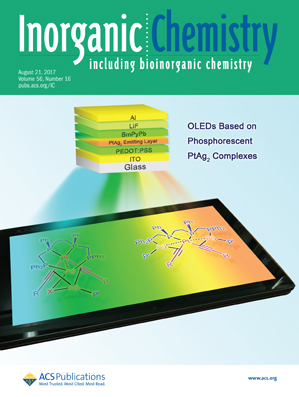
In 2001, Chris Orvig was happy when his team had synthesized a molecule with potential therapeutic applications.He and his colleagues published their findings in a 2002 paper in Inorganic Chemistry.
Over a decade later, Orvig discovered a pivotal error in the paper: The authors had misidentified the compound.
Shereen Ezzat. Source: University Health NetworkSylvia Asa. Source: University of Toronto
A pair of Canadian scientists may be running out of options to save their laboratories, which have been permanently closed based on findings of research misconduct.
Sylvia Asa, once the head of the largest hospital diagnostic laboratory in Canada, and her husband and collaborator Shereen Ezzat,have spent almost five years fighting allegations of research misconduct involving data falsification and fabrication in more than a dozen published papers. The couple’s work has been scrutinized by their employer, University Health Network (UHN), a healthcare system affiliated with the University of Toronto, in two investigations. The investigations did not find evidence that Asa or Ezzat were directly involved in image falsification or fabrication; however, they concluded that, as supervisors, they failed to conform to accepted standards and practices as they related to scientific rigor and accountability.
After the first investigation, UHN decided to temporarily close both Asa and Ezzat’s labs. After the second, the UHN decided to make that closure permanent. The couple have had threepapers retracted and at least one correction.
In March 2016, researchers in Switzerland and Canada published a meta-analysis in The Lancet, exploring the optimal painkiller and dose for treating pain in knee and hip osteoarthritis. Soon after, the authors were informed of an error that would change “all numbers” in a paper that may influence clinical practice.