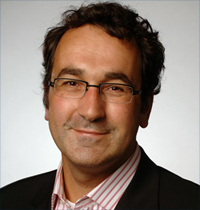
Sanjeeb K. Sahoo, of the Institute of Life Sciences in Bhubaneswar, India, has had four papers retracted from Acta Biomaterialia for what the journal is calling “highly unethical practices.”
Retraction Watch readers may recall the case of William Hamman, the United Airlines pilot who claimed to be a cardiologist until the Associated Press uncovered him in late 2010. Hamman had published at least six papers, and since the revelations has had one retraction and one erratum, by our count.
Automattic, which runs WordPress, notified us tonight of the move, which comes two weeks after the original notice. The claim against Retraction Watch was ridiculous, of course; a site in India plagiarized our posts, then claimed we had violated their copyright. That site, perhaps not surprisingly, has been taken down.
If you wanted to minimize the real-life effects of misconduct, you might note that some of the retractions we cover are in tiny obscure journals hardly anyone reads. But a new meta-analysis and editorial in JAMA today suggests — as a study by Grant Steen did a few years ago — that the risk of patient harm due to scientific misconduct is not just theoretical.
As the editorialists note, hydroxyethyl starches (HES) are “synthetic fluid products used commonly in clinical practice worldwide:”
Synthetic colloids received market approval in the 1960s without evaluation of their efficacy and safety in large phase 3 clinical trials. Subsequent studies reported mixed evidence on their benefits and harms.
Would you hire someone found to have faked data on federal grant applications as a “grant services consultant?”
You may have been without knowing it, if you had gone to Washington, D.C.-based Strategic Health Care for help with your grants. There, you would have found Michael Miller — page removed today, more on that in a moment — whose bio described him as an “internationally known neuroscientist.”
He has more than 30 years of experience in obtaining federal support for his research and that of collaborators. This includes individual grants (R01′s and R03′s) and fellowships for himself and pre- and post-doctoral trainees from the National Institutes of Health (NIH), merit reviews and research career awards from the Department of Veterans Affairs, and support from private foundations. In addition, Dr. Miller successfully orchestrated and competed for a $9 million NIH center (P50) grant that coordinated research at five different institutions.
Retraction Watch readers may recall that earlier this month, WordPress removed ten of our posts about Anil Potti — the former Duke oncology researcher who has retracted or corrected 19 papers — after a false DMCA copyright claim against us. The site which claimed the copyright violations — and which no longer exists — actually plagiarized our posts, not the other way around.
We’re still waiting for those posts to be reinstated; our understanding is that they’ll be back later this week. In the meantime, Nanopolitan, another site that wrote about Potti has been hit with what looks like a false DMCA claim.
Today brings two journal editorials about misconduct and retractions. They take, if we may, a bit of an optimistic and perhaps even blindered approach.
 Sanjeeb K. Sahoo, of the Institute of Life Sciences in Bhubaneswar, India, has had four papers retracted from Acta Biomaterialia for what the journal is calling “highly unethical practices.”