A researcher has pulled a paper about uranium oxide fuel pellets after notifying the journal the data had been falsified — and, what’s more, the publisher can’t verify the identities of the co-authors.
Originally, the Journal of the European Ceramic Society paper suggested a way to increase the compatibility of uranium oxide fuel pellets, which are usually used in nuclear reactors, at high temperatures.
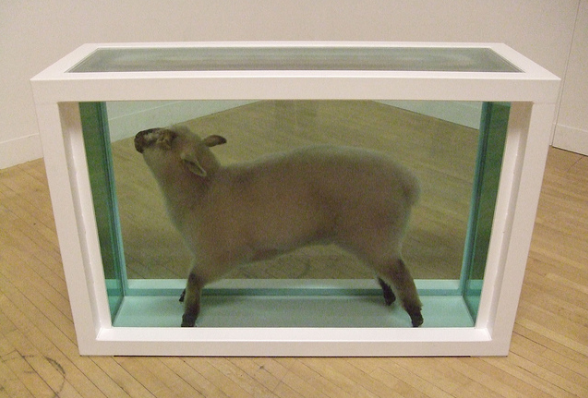
Damien Hirst’s “Away From The Flock” — exhibited at Tate Britain, via Flickr Commons
The corresponding author of the study that detected toxic leaks from the work of prominent British artist Damien Hirst has now retracted it — but most of his co-authors disagree with the decision.
Tate and Hirst’s company, Science Limited, immediately objected to the results; we’ve obtained what appears to be letter from a lawyer for Science Limited to the corresponding author of the paper — Pier Giorgio Righetti of the Polytechnic University of Milan in Italy — saying it was “deeply concerned and troubled by the claims” in the paper.
A cancer researcher who tried to sue PubPeer commenters for criticizing his work has earned five more retractions, bringing his total to 18.
All of the new retractions for Fazlul Sarkar, formerly based at Wayne State University in Michigan, appear in the International Journal of Cancer. Allcite an institutional investigation, and relate to issues with images.
With 18 retractions, Sarkar has now earned a spot on our leaderboard.
We first encountered Sarkar when he subpoenaed PubPeer to reveal the names of anonymous commenters that potentially cost him a job at the University of Mississippi. Earlier this month, a Wayne State spokesperson confirmed to us that Sarkar has now retired from the university. (To get up to speed, check out our timeline on the major events in this case.)
A researcher has retracted two 2016 papers after discovering problems with the data that negated the findings — and after one of his three listed affiliations denied the research was conducted there.
According to the retraction notices issued by Chemosphere, Hong-Wei Luo incorrectly claimed to be affiliated with the Oak Ridge National Laboratory (ORNL) in Tennessee in one of his three affiliations. His other institutions listed on the papers include universities in Singapore and China.
However, an official from the Nanyang Technological University (NTU) in Singapore, told us the work in the now-retracted papers was not carried out at the NTU either.
Authors of systematic review articles sometimes overlook misconduct and conflicts of interest present in the research they are analyzing, according to a recent study published in BMJ Open.
During the study, researchers reviewed 118 systematic reviews published in 2013 in four high-profile medical journals — Annals of Internal Medicine, the British Medical Journal, The Journal of the American Medical Association and The Lancet. In addition, the authors contacted review authors to ask additional questions; 80 (69%) responded. The review included whether the authors had followed certain procedures to ensure the integrity of the data they were compiling, such as checking for duplicate publications, and analyzing if the authors’ conflicts of interest may have impacted the findings.
Carrying out a systematic review involves collecting and critically analyzing multiple studies in the same area. It’s especially useful for accumulating and weighing conflicting or supporting evidence by multiple research groups. A byproduct of the process is that it can also help spot odd practices such duplication of publications. Continue reading Should systematic reviewers report suspected misconduct?
A scientist in Brazil has gained his twelfth retraction for reusing text and figures from previously published papers.
In 2011, Elsevier announced that it would retract 11 papers by Claudio Airoldi, a researcher at the State University of Campinas (UNICAMP) in Brazil. Subsequently, he was suspended for 45 days, and his co-author on the 11 previously pulled papers, Denis de Jesus Lima Guerra, lost his post at the Federal University of Mato Grosso (also in Brazil).
Now, a 12th retraction has appeared for Airoldi — this time in Thermochimica Acta.
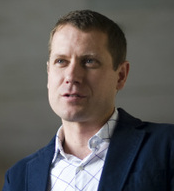
The problem of publication bias — giving higher marks to a paper that reports positive results rather than judging it on its design or methods — plagues the scientific literature. So if reviewers are too focused on the results of a paper, would stripping a paper of its findings solve the problem? That was the question explored in a recent experiment by guest editors of Comparative Political Studies. Mike Findley, an associate professor at the University of Texas at Austin and one of the guest editors of the journal, talked to us about a new paper explaining what they learned.
A biology journal has blacklisted authors from publishing their work after finding their case report about a dementia patient with hypersexuality was plagiarized from a previously published report.
The retraction notice, issued by Advances in Human Biology (AIHB) in June, recognizes the case as “scientific misconduct.” The journal launched an investigation after the plagiarism was flagged by the author of the original report, the editor-in-chief of the journal told us. Eventually, the journal retracted the report — and removed it entirely from their website.
A researcher with four retracted papers has left his former institution in Malaysia, according to an official at the university.
In March, we reported on the retractions of two studies in Environmental Geochemistry and Health co-authored by Muhammad Aqeel Ashraf. Both papers were pulled citing a “compromised” peer review process. The now-retracted work was carried out at the University of Malaya in Kuala Lumpur, Malaysia, where Ashraf was previously based.
PLOS ONE has retracted three papers after the first author admitted to submitting the manuscripts without co-authors’ consent, and an investigation suggested that two out of the three papers had received faked reviews.
Last August, the same author — Lishan Wang of the Shanghai Jiao Tong University — lost two more papers (one in Tumor Biology and the other in Gene), also after the peer review process was found to be compromised. All five papers — which share other authors in common — were originally published in 2013, and four list Wang as the first author. The retractions follow an investigation by Shanghai Jiao Tong University.