Exclusive: Probe suggests new retraction awaiting embattled Korean heart doctor

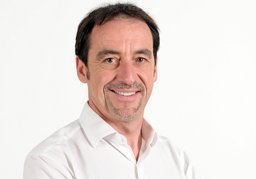
Hui-Nam Pak

A prominent physician-scientist in South Korea may soon be facing his fourth retraction. Last month, Hui-Nam Pak of Yonsei University was found guilty of duplicate publication, a form of academic misconduct, according to a report from the school’s committee on research integrity Retraction Watch has obtained.

Pak, a cardiologist, has had dozens of papers flagged on PubPeer. As we reported in February, journals pulled two of his papers the previous month after a whistleblower pointed out problems with the articles. One was retracted for “a number of issues related to scientific misconduct,” while the other was a duplicate publication. A third paper by Pak was retracted years earlier after mistakenly being published twice by the same journal.

Our February story triggered a flood of comments, many of them malicious. Some likened whistleblowing to “academic vandalism.” Others asserted that “whistleblowers deserve strong legal penalties” and that “immoral whistleblowers” seemed bent on ruining Pak’s “outstanding career.” Many comments were rejected for not adhering to our commenting policies, in particular making unsubstantiated claims.

The September 12 report from Yonsei University (in Korean) explains that an “informant” reported two of Pak’s papers to the school’s Research Ethics Integrity Committee on March 7. 

Continue reading Exclusive: Probe suggests new retraction awaiting embattled Korean heart doctor

Exclusive: UCSF and VA found “pervasive” manipulation in lab of former center director

Rajvir Dahiya

Two institutional investigations that concluded in 2016 and 2019 found scientific misconduct in multiple publications from the lab of a leading urologist at the University of California, San Francisco, Retraction Watch has learned. 

The investigations could not determine who had manipulated the published images of experimental data, but the 2019 report concluded that Rajvir Dahiya, also director of the urology research center at the San Francisco Veterans Affairs Medical Center, “was senior/last author on all these publications and therefore responsible for the results.” Dahiya retired in 2020. 

The two investigation reports, which we obtained through a public records request, along with the reports from the preliminary inquiries preceding the investigations, recommend notifying the journals that published eight papers of the issues identified. Four have so far been retracted, one corrected, and two marked with expressions of concern. One of those expressions of concern was published last month. 

In comments to Retraction Watch, Dahiya blamed the findings that research misconduct occurred in his lab on the age of the papers. He said the VA destroyed notebooks with original data that had been stored in a central facility after the required data retention period had lapsed: 

Continue reading Exclusive: UCSF and VA found “pervasive” manipulation in lab of former center director

Exclusive: World-renowned biologist accused of bullying student, stealing his work

Stuart Pimm

One of the world’s foremost conservation biologists is being accused of plagiarism and bullying by a former PhD student, Retraction Watch has learned.  

The biologist, Stuart Pimm of Duke University, strongly denies the charges, but he and his colleagues have acknowledged the existence of “closely related” work following an internal investigation by Duke.

The allegations surfaced late last month on X, formerly known as Twitter, in a thread that quickly went viral, garnering hundreds of thousands of views and drawing comments from a broad swath of scientists. 

In the thread, Ruben Dario Palacio claimed his former academic advisor “threatened to kick me out of Duke” to make him work faster. Palacio decided to change labs due to the alleged “bullying and harassment,” he said, and three months later, in April 2020, published his research as a preprint. The article appeared in the journal Diversity and Distributions in October 2021.

Continue reading Exclusive: World-renowned biologist accused of bullying student, stealing his work

Exclusive: How a dean went about correcting the scientific record even when at least one journal said he didn’t need to 

Russell Taichman

Less than a year after he became dean of the University of Alabama Birmingham School of Dentistry, an uncomfortable email landed in Russell Taichman’s inbox.

Overlapping and duplicated panels in one of Taichman’s 2005 papers were among a list of complaints relayed by the publisher of Cellular Signalling in the April 2020 correspondence – complaints which were publicly posted on PubPeer by Elisabeth Bik

“The substance of the complaint is image manipulation, which if true, would violate our publishing policies,” the email stated. “Please note that if we do not have an adequate and timely response, we may be forced to conclude that the allegations are truthful.”

The paper, “Diverse signaling pathways through the SDF-1/CXCR4 chemokine axis in prostate cancer cell lines leads to altered patterns of cytokine secretion and angiogenesis”, eventually became the first of five of Taichman’s papers to be retracted. We first reported on the retractions last September.  Since then, following a public records request, we’ve obtained 20 pages of redacted emails that reveal the story behind the retractions. 

Continue reading Exclusive: How a dean went about correcting the scientific record even when at least one journal said he didn’t need to 

Exclusive: Public health journal says it will retract vaping paper for questions authors say were addressed in peer review

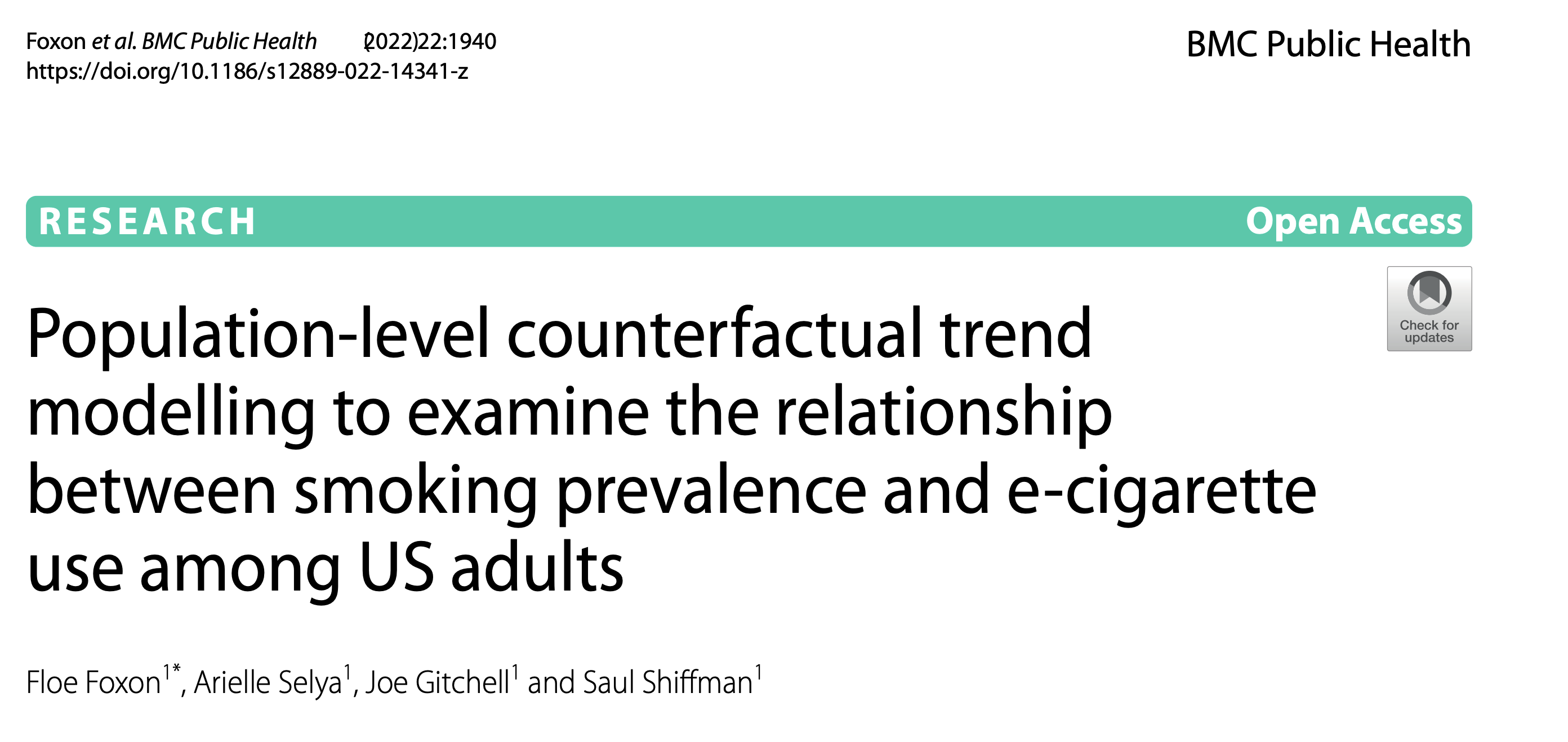
The journal BMC Public Health plans to retract an article that found smoking rates fell faster than expected in the US as use of e-cigarettes increased, Retraction Watch has learned.

The authors contend that they addressed the issues cited in the retraction notice during the peer review process and say they addressed them even more extensively when the journal said they intended to retract.

The paper, “Population-level counterfactual trend modelling to examine the relationship between smoking prevalence and e-cigarette use among US adults,” was published last October. The authors are all employees of Pinney Associates, a consulting firm that they disclosed “provide[s] consulting services on tobacco harm reduction on an exclusive basis to Juul Labs Inc.” The article also disclosed that Juul Labs funded the research and reviewed and provided comments on a draft manuscript. 

Some journals, including several in the BMJ family and the American Journal of Public Health, will not publish research funded by the tobacco industry, which has led to at least one retraction. But the planned BMC Public Health retraction notice does not refer to that conflict of interest.

Continue reading Exclusive: Public health journal says it will retract vaping paper for questions authors say were addressed in peer review

Exclusive: City of Hope cancer researcher goes to court to fight misconduct finding

Flavia Pichiorri

An alumna of the lab of Carlo Croce, a high-profile cancer researcher at The Ohio State University with 14 retractions, has sued the institution over the results of its investigation that found she committed research misconduct. 

Flavia Pichiorri is now a principal investigator with her own lab researching potential therapies for multiple myeloma at City of Hope – a cancer center that also owns Cancer Treatment Centers of America –  in Duarte, Calif. 

She worked at Ohio State from 2004-16, first as a postdoctoral researcher in Croce’s lab, then as a research scientist, and finally as an assistant professor of hematology. She has been a PI on grants that garnered millions of dollars in funding from the National Institutes of Health since switching jobs. 

Continue reading Exclusive: City of Hope cancer researcher goes to court to fight misconduct finding

Exclusive: Researcher has “ceased employment” at university amid investigation and retraction 

Gilles J. Guillemin

A neurology researcher in Australia is no longer employed at his former university in the midst of a research misconduct investigation, Retraction Watch has learned. And the work of a co-author at another institution also is being assessed for possible research misconduct after sleuths alerted the university to comments on PubPeer about potential data issues in his papers. 

The retracted article, “Changes in Cathepsin D and Beclin-1 mRNA and protein expression by the excitotoxin quinolinic acid in human astrocytes and neurons,” was published in Metabolic Brain Disease in 2014 and has been cited 13 times, according to Clarivate’s Web of Science. 

The journal’s editor-in-chief, Gregory Konat, retracted the paper because several of the western blots appeared to be duplicated and he no longer had confidence in the results, according to the retraction notice. The six authors are researchers from the University of New South Wales (UNSW), Macquarie University and St Vincent’s Hospital in Sydney. 

Continue reading Exclusive: Researcher has “ceased employment” at university amid investigation and retraction 

Exclusive: Alleged research misconduct cost Turkish surgeons tenure

Two orthopedic surgeons in Turkey will not attain tenured professorships following alleged research misconduct that, so far, has also cost them a pair of publications, Retraction Watch has learned. 

Mehmet Faruk Çatma and Serhan Ünlü are among the authors of a paper about hip-replacement surgery that was published in 2016 in International Orthopedics and retracted earlier this year.

The February 16 retraction notice reads:

Continue reading Exclusive: Alleged research misconduct cost Turkish surgeons tenure

Exclusive: Top-tier university in Japan investigating prof’s alleged misconduct

Tokyo’s Waseda University is investigating alleged misconduct by an assistant professor at the institution, Retraction Watch has learned.

The probe is focusing on at least three works by Woohyang Sim, of the Faculty of International Research and Education, including her 2020 doctoral dissertation, titled “What is Higher Education For? Educational Aspirations and Career Prospects of Women in the Arab Gulf.” Two of Sim’s published papers are also under scrutiny, according to a source familiar with the investigation. 

In June 2022, an anonymous commenter on PubPeer flagged several problems with these publications, as well as with Sim’s master’s thesis and another one of her papers. That same month, a whistleblower notified the Japanese government about the concerns, according to the source.

Continue reading Exclusive: Top-tier university in Japan investigating prof’s alleged misconduct

Exclusive: Former Tufts researcher suspended from animal work after abuse

A researcher and former faculty member at Tufts School of Medicine in Boston has been banned from working with animals for a year following repeated cases of abuse under his supervision, according to documents obtained by an animal-rights group.

In an Oct. 26, 2022, letter to the federal Office of Laboratory Animal Welfare, the university reported “serious and continuing noncompliance with” animal-welfare regulations. These breaches included “injections in mice via an unapproved route/location, failure to provide required analgesia, inadequate supportive care and monitoring, and failure to euthanize mice upon reaching the approved humane endpoints,” Tufts said.

When asked for his comments, the researcher “refuted most of the allegations and took no responsibility for his actions,” the university added.

Continue reading Exclusive: Former Tufts researcher suspended from animal work after abuse