Publisher retracting 68 articles suspected of being paper mill products

via Pixy

It appears to be Paper Mill Sweeps Week here at Retraction Watch. 

On Tuesday, we reported on an editor who believes one such operation was responsible for the withdrawals of at least two articles in her journal. 

Now, the Royal Society of Chemistry is retracting 68 articles, across three of its titles, after an investigation turned up evidence of what it suspects was the “systemic production of falsified research.” The society said it is in the process of beefing up its safeguards against milled papers and plans to train its editors to have “extra vigilance in the face of emerging, sophisticated digital fraud.” 

Continue reading Publisher retracting 68 articles suspected of being paper mill products

Exercise science grad student at Australian university dismissed after he admitted faking data, says supervisor

A physiology journal has retracted a pair of papers from a group in Australia after learning that the flawed work was the subject of an institutional investigation.

The articles, both of which were published last year in The Journal of Strength and Conditioning Research, came from a group at the Murdoch Applied Sports Science Laboratory, part of Murdoch University. The first author on both papers was Liam J. Hughes, a PhD student at Murdoch who was terminated as a result of the misconduct. 

Continue reading Exercise science grad student at Australian university dismissed after he admitted faking data, says supervisor

“Confrontation is an important element of physics progress:” Paper on black holes retracted

Amrit Srečko Šorli

A Springer Nature journal has retracted a 2019 article by a Slovenian physicist who claims that both Creationism and Big Bang theory are wrong, and that black holes are the engines driving the universe.

The paper, in Scientific Reports, was titled “Mass-energy equivalence extension onto a superfluid quantum vacuum,” and was written by Amrit Srečko Šorli. It has yet to be cited, according to Clarivate Analytics’ Web of Science, and four posts by Šorli’s institute that refer to it have been removed by Medium because the institute’s “account is under investigation or was found in violation of the Medium Rules.”

In 2010, Šorli founded the Bijective Physics Institute, whose proponents — we’re not sure how many there are beyond him and a few others named on the site — believe: 

Continue reading “Confrontation is an important element of physics progress:” Paper on black holes retracted

Holy cow: “The article as written contains misleading information and omits important details.”

via Flickr

An agriculture journal has put the “retraction” brand on a 2020 study about calving cattle after the editors learned that the researchers had misrepresented aspects of their work. 

Changes in rumen fermentation, bacterial community, and predicted functional pathway in Holstein cows with and without subacute ruminal acidosis during the periparturient period,” appeared in March in the Journal of Dairy Science. The senior author of the article was Shigeru Sato, of the Graduate School of Veterinary Sciences at Iwate University in Japan. 

According to the retraction notice (which is only mentioned at the very bottom of the original article’s page, as a “linked article”): 

Continue reading Holy cow: “The article as written contains misleading information and omits important details.”

Columbia grad student faked data in study of socioeconomics and life experiences, says retraction notice

Personality and Social Psychology Bulletin has retracted a 2018 paper because, according to a retraction notice, the first author changed data in a way that “resulted in incorrect and misleading results.”

The article, “Cardiovascular and self-regulatory consequences of SES-based social identity threat,” claims to show that socioeconomic status-based “social identity threat can go from ‘in the air’ to ‘under the skin’ to influence physiological and self-regulatory processes.” It has been cited twice in addition to the retraction notice, according to Clarivate Analytics’ Web of Science.

Here’s the retraction notice:

Continue reading Columbia grad student faked data in study of socioeconomics and life experiences, says retraction notice

JAMA journal retracts its first paper, on exercise and heart disease

The authors of a 2019 meta-analysis in a JAMA journal on exercise and heart disease have retracted the paper after discovering that a quarter of the studies they’d used in the analysis did not belong. 

The retraction is the first for the journal, which had published some 2,800 articles before having to pull one, Frederick P. Rivara, the editor in chief, told Retraction Watch. One in 2,800, we should note, is quite close to the 4 in 10,000 rate of retraction in the overall literature.

The study, from a group at the Universities of Manchester and Brighton, in the United Kingdom, was titled “Accelerometer- and pedometer-based physical activity interventions among adults with cardiometabolic conditions: a systematic review and meta-analysis,” and appeared in JAMA Network Open

The authors, led by Alexander Hodkinson, looked at 36 randomized clinical trials and found that: 

Continue reading JAMA journal retracts its first paper, on exercise and heart disease

Researcher linked to author with 52 retractions loses a paper for duplication

An engineering researcher alleged to be part of a four-group ring of authors who have “repetitively published their own work in ways that call into serious question” the validity of hundreds of papers has had a paper retracted.

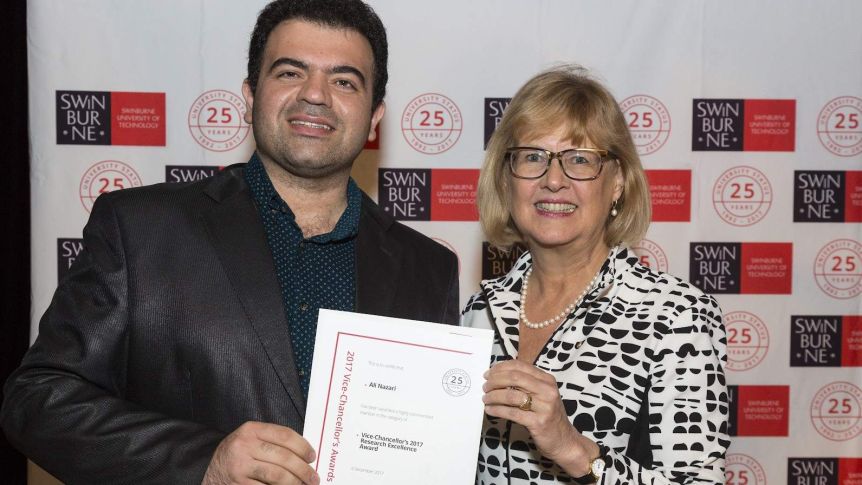
As we reported in August, Mostafa Jalal, a postdoc at Texas A&M, is alleged to have “engaged in some manner of collaboration or communication” with three other researchers, including Ali Nazari, who has now had 52 papers retracted. Those retractions came after the whistleblower, the pseudonymous Artemisia Stricta, called attention to problems in Nazari’s work.

The newly retracted paper, originally published in 2013 in Science and Engineering of Composite Materials, is one of five publications in which Artemisia Stricta said Jalal’s group had misrepresented electron microscopy images.

Here’s the retraction notice for “Assessment of nano-TiO2 and class F fly ash effects on flexural fracture and microstructure of binary blended concrete”:

Continue reading Researcher linked to author with 52 retractions loses a paper for duplication

Psychology journal retracts two articles for being “unethical, scientifically flawed, and based on racist ideas and agenda”

A psychology journal has retracted a pair of decades-old articles by a now-deceased psychologist with noxious views about race and intelligence after the editors concluded that his work was “unethical, scientifically flawed, and based on racist ideas and agenda.”

The author, J. Philippe Rushton, was affiliated with the University of Western Ontario, where he was notorious for publishing highly questionable studies that promoted tropes of white supremacy, including that Blacks are less intelligent than whites and that

Continue reading Psychology journal retracts two articles for being “unethical, scientifically flawed, and based on racist ideas and agenda”

Psychology paper retracted after creators of tool allege “serious breach of copyright”

A researcher in Ecuador has lost a 2019 paper on the application of a widely-used psychological research instrument after the owner of the tool flexed their copyright muscle. 

The episode — like another one, recently — echoes the case of Donald Morisky, a UCLA researcher who developed an instrument for assessing medication adherence — and then began charging other scientists small fortunes (and, in some cases, large ones) for use of the tool, or forcing retractions when they failed to comply. (For more on the Morisky case, see our 2017 piece in Science and this recent warning by journal editors.)

Written by Paúl Arias-Medina, of the University of Cuenca, the article, “Psychometric properties of the self-report version of the strengths and difficulties questionnaire in the Ecuadorian context: an evaluation of four models,” appeared in BMC Psychology

Per the paper’s abstract:

Continue reading Psychology paper retracted after creators of tool allege “serious breach of copyright”

Medical writer loses COVID-19-cancer paper for plagiarism

via CDC

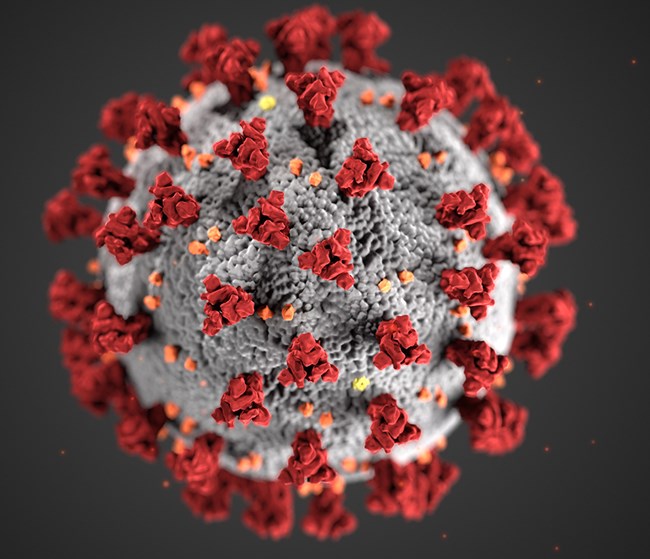
An oncology journal has retracted a review article on the hypothetical link between Covid-19 and cancer after determining that the medical writer who authored the work hadn’t done all the writing herself. 

The paper, “Clinical sequelae of the novel coronavirus: does COVID-19 infection predispose patients to cancer?” appeared in Future Oncology in May and was written by Priya Hays, who at the time was a technical writer with Talis Biomedical Corp., in Menlo Park, Calif. Hays is currently with Abbott, according to her LinkedIn profile. She also has a company called Hays Documentation Specialists, which offers a variety of manuscript services, including academic writing and something called “unstructured authoring assistance.” 

As the retraction notice indicates, Hays appears to have had some authoring assistance of her own: 

Continue reading Medical writer loses COVID-19-cancer paper for plagiarism