‘Misconduct on a grand and terrible scale’: Dental scientist up to 26 retractions

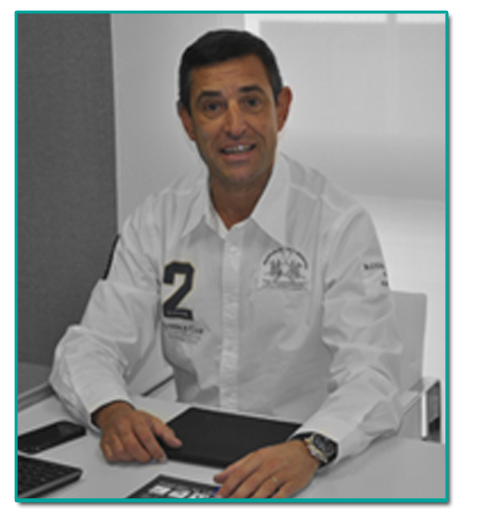
Jose Luis Calvo-Guirado

A dentistry researcher in Spain with a history of reusing and manipulating images has notched two more retractions, giving him 26. 

The new retractions move Jose´ Luis Calvo-Guirado, of Universidad Católica San Antonio de Murcia, into a tie for 24th place on the Retraction Watch leaderboard

Calvo-Guirado has in the past disputed the retractions of his research. And at least one of his co-authors, Georgios Romanos, of the State University of New York Stony Brook School of Dental Medicine, speculated that Calvo-Guirado was reusing images to limit the number of lab animals that would need to be sacrificed in his studies.

The latest retractions involve two papers in Annals of Anatomy, an Elsevier publication, including the 2018 article “A new procedure for processing extracted teeth for immediate grafting in post-extraction sockets. An experimental study in American Fox Hound dogs.” According to the notice, the paper contained manipulated images that were reused in subsequently retracted articles:  

Continue reading ‘Misconduct on a grand and terrible scale’: Dental scientist up to 26 retractions

‘Caught in the act’: Veterinary researcher caught fabricating gene data, resigns from university job

via Pixabay

A research technician at Washington State University resigned after his colleagues caught him fabricating data earlier this year, Retraction Watch has learned. 

Ryan Evanoff was working in veterinary microbiology at the Pullman campus when members of the department discovered that he had been falsifying sequencing data in gene studies. According to Robert Mealey, the chair of the  Department of Veterinary Clinical Sciences in the College of Veterinary Medicine at Washington State: 

Continue reading ‘Caught in the act’: Veterinary researcher caught fabricating gene data, resigns from university job

Legal researcher up to 23 retractions for false affiliations, plagiarism

A legal scholar with a peripatetic and checkered career — and questionable CV — now has 23 retractions by our count

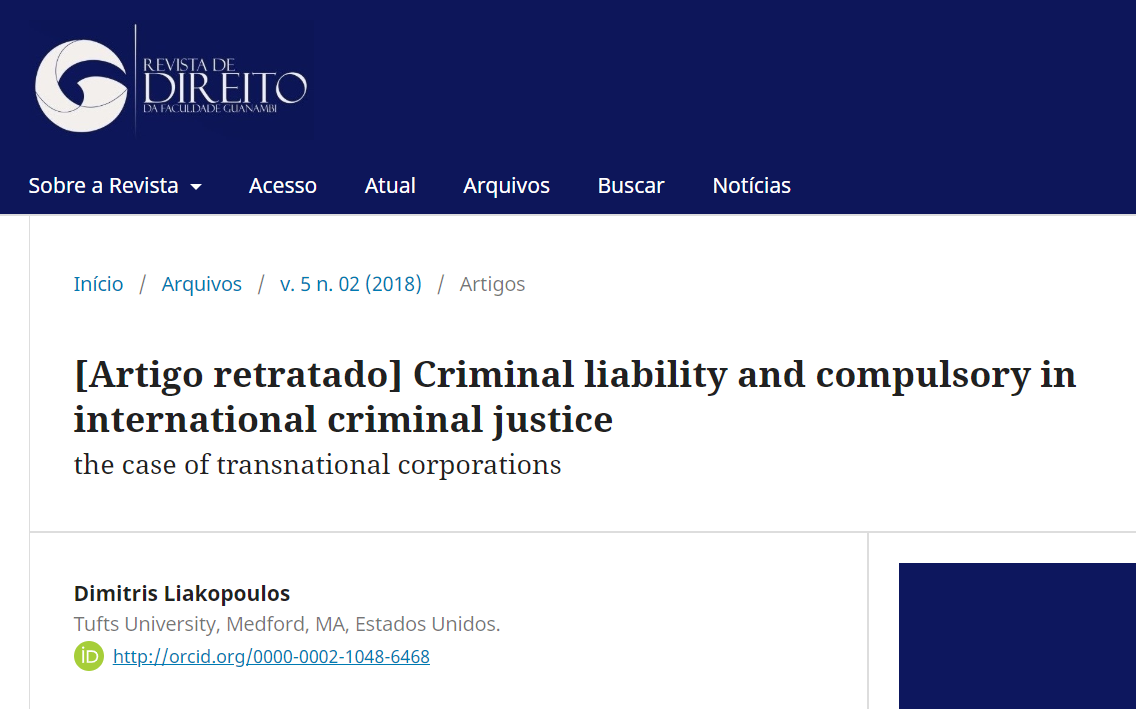
Dimitris Liakopoulos, about whom we first wrote in July, has claimed to have held professorships in Europe and the United States, including at Columbia Law School, Stetson University and Tufts University, as well as authorship on some 600 papers. But journals have been retracting his articles over concerns about plagiarism and concerns about his stated academic affiliations. For example, Tufts told us in July that he had never been affiliated with the school.

Liakopoulos appears to have locked his ORCID ID, making public scrutiny of his scholarly output more difficult. But commenters on PubPeer have taken aim at several of his papers over the past few months. 

Continue reading Legal researcher up to 23 retractions for false affiliations, plagiarism

The grad student who found a fatal error that may affect lots of papers

A team of researchers in England has retracted a 2014 paper after a graduate student affiliated with the group found a fatal error while trying to replicate parts of the work — and which might affect similar studies by other scientists, as well.

The article, “Perceptual load affects spatial tuning of neuronal populations in human early visual cortex,” was written by Benjamin de Haas, then of the Institute of Cognitive Neuroscience at the University College London, and his colleagues at UCL. 

According to the retraction notice

Continue reading The grad student who found a fatal error that may affect lots of papers

Elsevier looking into “very serious concerns” after student calls out journal for fleet of Star Trek articles, other issues

Hampton Gaddy

An undergraduate student in the United Kingdom has taken to task the editors of a purportedly scholarly journal for having published more than 100 papers by a Maltese researcher with a deep affinity for Star Trek.

In a Dec. 8, 2020, letter to the editors of Early Human Development (EHD), Hampton Gaddy, a BA student at the University of Oxford, accuses the journal of having published “a large number of unprofessional articles” by Victor Grech, of the University of Malta. 

Grech is a pediatric cardiologist, and, evidently a huge Star Trek fan. He’s also a prolific author, and seems to have turned EHD into something of a personal fanzine. As Gaddy notes in his letter, Grech has written at least 113 papers in EHD, an Elsevier title, 57 as sole author: 

Continue reading Elsevier looking into “very serious concerns” after student calls out journal for fleet of Star Trek articles, other issues

Authors of meta-analysis on heart disease retract it when they realize a NEJM reference had been retracted

Carl Heneghan

The authors of a meta-analysis on predicting cardiovascular disease have retracted the paper because it included a study that was retracted between the time they submitted their article and the date it was published. 

If only there were a repository of retracted articles that authors and editors could check to see if the references in the studies they publish are still reliable.

Wait, we have one of those!

Continue reading Authors of meta-analysis on heart disease retract it when they realize a NEJM reference had been retracted

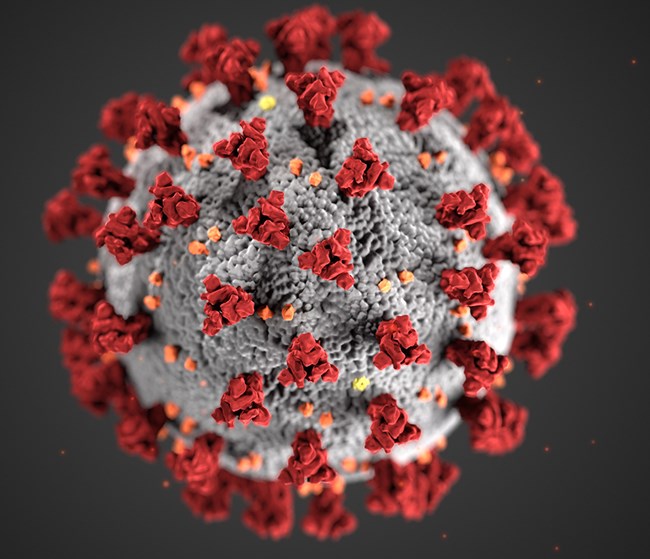
Public health journal “seeking further expert advice” on January paper about COVID-19 PCR testing by high-profile virologist

After a petition from nearly two dozen people in Europe, the United States and Asia, a public health journal says it is investigating an article it published last January about a way to detect the virus that causes COVID-19. 

[Please see an update on this post.]

The paper, “Detection of 2019 novel coronavirus (2019-nCoV) by real-time RT-PCR,” appeared in Eurosurveillance. It was received on January 21 and accepted on January 22, a remarkably quick turnaround under normal circumstances, although not unheard of during the pandemic. It has been cited well over 800 times, according to Clarivate Analytics’ Web of Science.

The senior author of the work was Christian Drosten, of the Charité University Hospital in Berlin, who became something of a celebrity virologist — the Anthony Fauci of Germany — in the early days of the pandemic. As Science reported in late April, Drosten’s podcast, Coronavirus Update, became the most popular podcast in Germany, garnering more than 1 million downloads per episode.

Continue reading Public health journal “seeking further expert advice” on January paper about COVID-19 PCR testing by high-profile virologist

Journal retracts 70-year-old article on homosexuality for “long discredited beliefs, prejudices, and practices”

We wrote in September in WIRED about a trend among journals of purging racist and sexist work from their archives. To that trend we can now add papers that are homophobic and racist.

The Journal of Nervous and Mental Disease has retracted a 1951 article by one Benjamin H. Glover, at the time a professor of psychology at the University of Wisconsin–Madison. The article, “Observations on Homosexuality Among University Students,” claimed that:

Continue reading Journal retracts 70-year-old article on homosexuality for “long discredited beliefs, prejudices, and practices”

Johns Hopkins student newspaper deletes, then retracts, article on faculty member’s presentation about COVID-19 deaths

A student newspaper at Johns Hopkins has retracted an article claiming that COVID-19 has had “relatively no effect on deaths in the United States.”

The article, “A closer look at U.S. deaths due to COVID-19” (link from the Wayback Machine) was published on November 22 and relied on a presentation by Genevieve Briand, assistant program director of the Applied Economics master’s degree program at Hopkins. 

From the article:

Continue reading Johns Hopkins student newspaper deletes, then retracts, article on faculty member’s presentation about COVID-19 deaths

Nanoscience researcher loses four papers for image manipulation, forged authors

Journals published by the Royal Society of Chemistry have retracted four articles by a researcher in China for a range of misconduct, including manipulation of images, fabrication of authors and more. 

The papers were written by Rijun Gui, of Qingdao University and formerly of the School of Chemistry and Molecules Engineering at East China University of Science and Technology, in Shanghai, and published in 2013 and 2014. Gui has a sizable entry on PubPeer, where many of his studies have come under scrutiny for years. Together, the four papers have been cited nearly 150 times, according to Clarivate Analytics’ Web of Science.

It’s not quite Rashomon, but each of the retraction notices adds a bit of detail to the story. 

Continue reading Nanoscience researcher loses four papers for image manipulation, forged authors