“We didn’t want to hurt them. We are polite”: When a retraction notice pulls punches

via Flickr

A group of anesthesiology researchers in China have lost their 2020 paper on nerve blocks during lung surgery after finding that the work contained “too many” errors to stand. But after hearing from the top editor of the journal, it’s pretty clear “too many errors” was a euphemism for even worse problems.

The article, “Opioid-sparing effect of modified intercostal nerve block during single-port thoracoscopic lobectomy: A randomised controlled trial,” came from a team at Anhui Medical University. The senior author was  Guang-hong Xu. The paper appeared online in early December in the European Journal of Anaesthesiology

At which point it caught the attention of a reader in Australia, who emailed the journal to  point out fishiness in the data. 

Charles Marc Samama, the editor-in-chief of the EJA, told us:

Continue reading “We didn’t want to hurt them. We are polite”: When a retraction notice pulls punches

Clinical trial paper that made anemia drug look safer than it is will be retracted

via Kidney International Reports

A study that a pharmaceutical company admitted last month included manipulated data will be retracted, Retraction Watch has learned.

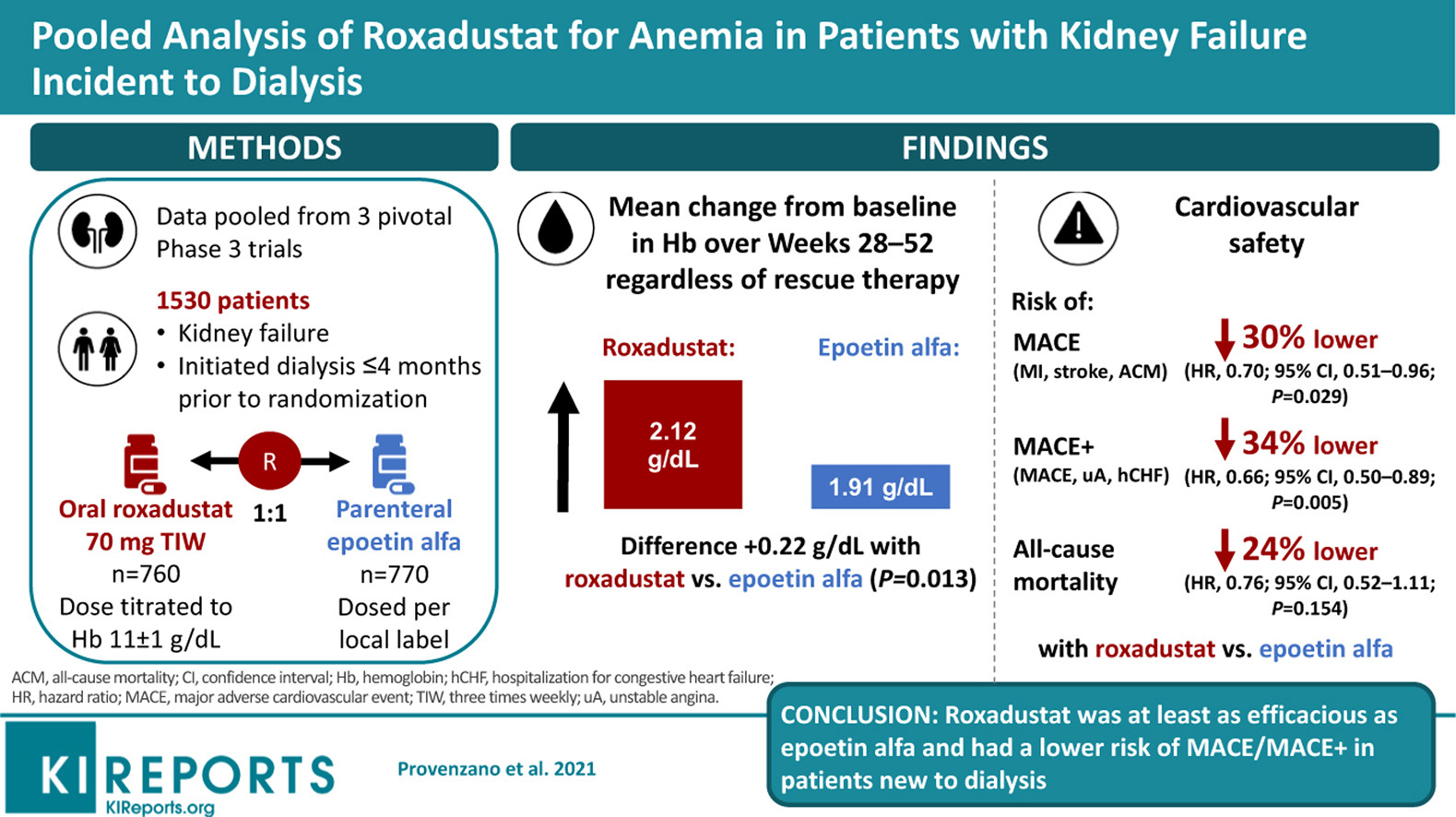
The paper, “Pooled Analysis of Roxadustat for Anemia in Patients With Kidney Failure Incident to Dialysis,” was published in Kidney International Reports in December 2020. The study analyzed data from a clinical trial for roxadustat, a drug intended to help anemic patients make more red blood cells. The medicine was tested in more than 1,500 patients with kidney failure that had been on dialysis for less than four months.

The paper compared roxadustat to a standard treatment, epoetin alfa. Epoetin alfa is not given to anemic patients who have kidney disease and are not dependent on dialysis, according to reporting in April by FiercePharma, because it can increase the risk of a cardiovascular event, including heart attacks.

In the study, roxadustat was as effective as epoetin alfa for these patients, but carried a 30 percent lower risk for death, heart attacks or strokes.

Then, on April 6th, Fibrogen announced, according to FiercePharma, that researchers had

Continue reading Clinical trial paper that made anemia drug look safer than it is will be retracted

Ecologist who lost thesis awards earns expressions of concern after laptop stolen

Readers may roll their eyes at the various excuses authors use — including flooded labs and “my laptop was stolen” — when their data are unavailable for further scrutiny following questions. But here’s a case in which a stolen laptop is a real story.

On April 5, Daniel Bolnick, the editor-in-chief of The American Naturalist, posted an expression of concern for three studies published in 2018 and 2019:

This Editorial Expression of Concern serves to notify readers of The American Naturalist that the Editorial Board has identified data archiving and statistical concerns regarding three previously published papers. 

The statement continues, noting that author Denon Start — who has had two awards from his PhD rescinded, and whose employment status is unclear — “no longer has access to these data:”

Continue reading Ecologist who lost thesis awards earns expressions of concern after laptop stolen

Journal retracts paper by ‘miracle doctor’ claiming life force kills cancer cells

Yan Xin

A “miracle doctor” in China and his colleagues have lost a 2007 paper on the ability of the martial art qigong to treat cancer after the journal that published the work said it failed to properly vet the findings.

Well, the first part of that is true. The second part is implied. We’ll explain. 

The paper, “External Qi of Yan Xin Qigong induces G2/M arrest and apoptosis of androgen-independent prostate cancer cells by inhibiting Akt and NF-B pathways,” appeared in December 2007 in Molecular and Cellular Biochemistry, a Springer Nature journal. It has been cited 20 times, according to Clarivate Analytics’ Web of Science.

The first author on the study was Yan Xin, whose biography states that he is a “miracle doctor” and one of the world’s experts in the healing properties of qi — the universal life force in traditional Chinese medicine and philosophy. His co-authors include researchers at Harvard, McMaster University in Canada, and the New Medical Science Research Institute in New York City.

Continue reading Journal retracts paper by ‘miracle doctor’ claiming life force kills cancer cells

‘Unfair and unsubstantiated’: Journal retracts paper suggesting smoking is linked to lower COVID-19 risk

ecigarettereviewed.com via Wikimedia

A paper suggesting that smokers were significantly less likely than nonsmokers to contract Covid-19 has been retracted because the authors failed to disclose financial ties to … the tobacco industry. 

The article, which appeared as a preprint and then as an “early view” in the European Respiratory Journal last July, came from a group at the University of Piraeus, in Greece, and the University of Utah. The first author was Theodoros Giannouchos, currently a post-doc at the University of Utah, and the senior author was Konstantinos Farsalinos, a fairly prominent name in the world of vaping research. 

Some vaping advocates have pointed to a protective effect of nicotine against Covid-19. According to the preprint of the now-retracted paper:

Continue reading ‘Unfair and unsubstantiated’: Journal retracts paper suggesting smoking is linked to lower COVID-19 risk

Palmitoleic acid paper pulled for data concerns

A journal has retracted the 2014 report of a clinical trial of a supplement touted as a way to reduce the risk of cardiovascular disease after beginning to suspect that the data were not reliable. 

The study, “Purified palmitoleic acid for the reduction of high-sensitivity C-reactive protein and serum lipids: A double-blinded, randomized, placebo controlled study,” was published in the Journal of Clinical Lipidology, an Elsevier title. It has been cited 42 times, according to Clarivate Analytics’ Web of Science.

The authors were Adam Bernstein and Michael Roizen, of the Wellness Institute at Cleveland Clinic, and Luis Martinez, who at the time was the president of the Xyrion Medical Institute, in Puerto Rico. 

Roizen, an anesthesiologist and the founding chair of the Wellness Institute, is the co-creator of the RealAge test, which he developed along with Mehmet Oz.

Roizen and Oz have been hawking palmitoleic acid — an omega-7 fatty acid that is the subject of the now-retracted study — for some time. In this 2019 article, for example, the pair wrote: 

Continue reading Palmitoleic acid paper pulled for data concerns

Seven barred from research after plagiarism, duplications in eleven papers

Tribhuvan University logo

A retired Nepali professor and six others have been barred from research after plagiarism and duplicated images were found in 11 of their papers.

Parashuram Mishra, a retired crystallographer at Tribhuvan University, in Nepal, is the lead author on all the studies. Most of the papers contain image duplications; the same figures were reused across multiple studies. But two figures that Mishra published, according to the university’s findings, were plagiarized from a 2010 study by a British team, and a 2020 study by researchers at the University of Monastir, in Tunisia.

Last December, Armel Le Bail, crystallographer at the Université du Maine in Les Mans, France, began flagging Mishra’s studies on PubPeer and his personal website. He reported his findings to the vice-chancellor of Tribhuvan University, Dharma Kant Baskota, on January 4th.

Continue reading Seven barred from research after plagiarism, duplications in eleven papers

A longtime whistleblower explains why he’s spent more than a decade trying to get a paper retracted

Peter Wilmshurst

Since the report of the MIST Trial was published in Circulation in 2008, I have repeatedly written to the journal to express concern about the paper.

Most recently, on February 22, I wrote to the editor-in-chief of Circulation, which is owned by the American Heart Association (AHA), requesting that they retract the 2008 MIST Trial paper, the revised version of the paper, the correction and the data supplement. The response two days later was from the senior attorney of the AHA: “AHA respectfully declines any further involvement. We consider this matter closed and we will not pursue additional comment or review.”

Let me explain how I got involved, and why I have persisted. I was the principal cardiologist in the MIST Trial sponsored by NMT Medical. Another member of the steering committee (Simon Nightingale) and I refused to be authors of the paper because NMT had refused to allow any investigator to see all the data but even without access to the data it was clear that the paper made false claims. In November 2007, a few days after we refused to be authors, NMT started legal proceedings for libel and slander against me. They also instructed their lawyers to sue Nightingale, but did not start the legal proceedings against him.

Continue reading A longtime whistleblower explains why he’s spent more than a decade trying to get a paper retracted

Paper claiming Muslim patients are “particularly sensitive” retracted

A paper about medical treatment for migrant patients in Germany has been retracted after the authors made unsupported claims that Muslims are “particularly sensitive” to pain.

The paper, titled “Diversität im klinischen Alltag der Augenheilkunde,” or “Diversity in everyday clinical practice in ophthalmology,” in English, was published in Der Ophthalmologe, a German medical journal, in November 2019. It has not yet been cited, according to Clarivate Analytics’ Web of Science. 

The original article, penned by ophthalmologists at the Cologne University Eye Clinic, is in German. We ran it through Google Translate to get a sense of its content. The paper begins with a case study of a 52 year-old Turkish migrant, explains how to use smartphone speech translators to overcome language barriers, and highlights cultural differences that physicians should consider while treating migrants. 

Continue reading Paper claiming Muslim patients are “particularly sensitive” retracted

“Falsifying elements” prompt retraction of three more papers by former “Peorian of the Year”

Jasti Rao, a former star scientist at the University of Illinois College of Medicine at Peoria whose career flamed out over concerns about misconduct, gambling and allegations that he had mistreated employees, is now up to 16 retractions

The International Journal of Oncology, a Spandidos title, has retracted three of Rao’s papers dating back to 2011, citing the presence of “falsifying elements” in the images. 

Here’s the notice for the 2011 paper “Oncogenic role of p53 is suppressed by si‑RNA bicistronic construct of uPA, uPAR and cathepsin‑B in meningiomas both in vitro and in vivo”:

Continue reading “Falsifying elements” prompt retraction of three more papers by former “Peorian of the Year”