Social psychology in the age of retraction

Augustine Brannigan

We’re pleased to present an excerpt from chapter 10, “The Replication Crisis,” of Augustine Brannigan’s The Use and Misuse of the Experimental Method in Social Psychology (Routledge 2021), with permission from the publisher.

Contemporary social psychology has been seized over the past years by a loss of credibility and self-confidence associated with scientific fraud and unsuccessful attempts to replicate the modern corpus of knowledge. The most notorious case was that of Dietrick Stapel. Fifty-eight papers published over a decade and a half were retracted due to fraud and suspicious research practices.

One of the most poignant questions raised by the review committees in three universities where he worked was how it was possible for such dubious scientific practices to escape the notice of all the academic reviewers in the high-profile journals, the funding agencies and at the scientific conferences. Many statistical anomalies were identified readily by statisticians who assisted in the review of Stapel’s papers. The committees were forced to conclude that “there is a general culture of careless, selective and uncritical handling of research and data. The observed flaws were not minor ‘normal’ imperfections in statistical processing, or experimental design and execution, but violations of fundamental rules of proper scientific research.” The culture contributed to the absence of skepticism about Stapel’s extraordinary findings.

Continue reading Social psychology in the age of retraction

Medical journal retracts article on “tribalism” after readers call it offensive

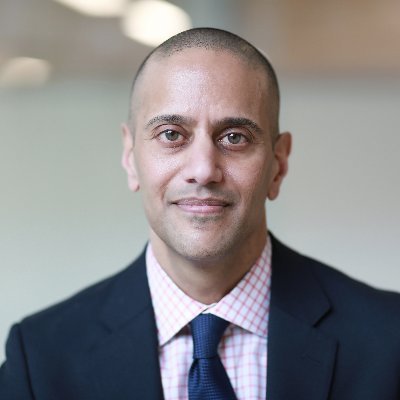
Journal of Hospital Medicine editor Samir Shah

A journal has retracted — and replaced — an article on “tribalism” in medicine and deleted a tweet about it, too, after readers complained that the language in the piece was offensive to Indigenous peoples. 

The article, which appeared in the Journal of Hospital Medicine in April, was titled “Tribalism: The Good, The Bad, and The Future.” The authors were Zahir Kanjee and Leslie Bilello, of Harvard Medical School. 

The journal used social media to promote the article — which prompted a flood of criticism about the use of the word “tribalism” and its permutations. 

On May 21, Samir Shah, the editor-in-chief of JHM, and four other editors issued a statement  apologizing for publishing the article:

Continue reading Medical journal retracts article on “tribalism” after readers call it offensive

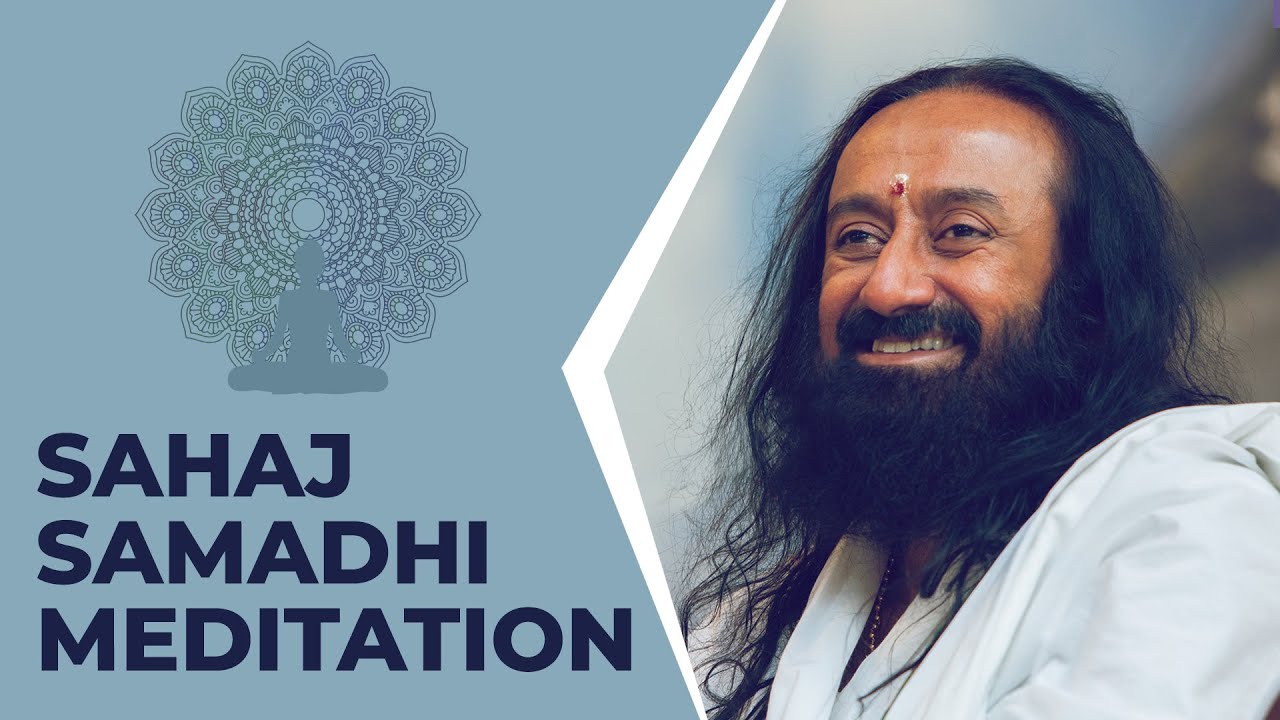
Two meditation papers retracted for failures to report primary outcomes

A pair of psychology journals have retracted two related papers on the health benefits of a popular form of meditation after a reader pointed out that the authors failed to report the primary outcome of the study underpinning the articles.

The now-retracted articles describe the putatively salubrious effects of sahaj samadhi meditation, a form of meditation developed by Sri Sri Ravi Shankar and promoted by the Art of Living Foundation, which describes itself thusly: 

Continue reading Two meditation papers retracted for failures to report primary outcomes

Anesthesiology researcher guilty of misconduct in more than 140 papers: Investigation

Showa University Hospital, via Wikimedia

A Japanese anesthesiologist has been found guilty of fabricating data and other misconduct in 142 articles, leading to his termination and the sanction of several of his co-authors. 

Showa University says its investigation into Hironobu Ueshima, the existence of which we first reported on last June, found that the prolific researcher had doctored his results, falsified his findings and tinkered with authorship.

The university’s report on the case is available here, in Japanese, and a similar report from the Japanese Society of Anesthesiologists is available here in English. The JSA report cites 142 papers — including 120 letters to the editor, 12 original papers, and 9 case reports — with evidence of misconduct including fabricated data and improper authorship. The investigation also found evidence of misconduct in several unpublished studies by Ueshima. By our count, he has six retractions to date.

Continue reading Anesthesiology researcher guilty of misconduct in more than 140 papers: Investigation

‘Regrettably it took too long to investigate and retract this paper.’

Figure 2 of the paper

A journal has expressed regret over its sluggish response to image hijinx in a 2017 paper on the antimalarial properties of a kind of pea plant.

The article, “Antimalarial efficacy of Pongamia pinnata (L) Pierre against Plasmodium falciparum (3D7 strain) and Plasmodium berghei (ANKA),” was written by P. V. V. Satish and K. Sunita, of the Department of Zoology and Aquaculture at Acharya Nagarjuna University. 

The paper drew scrutiny on PubPeer four years ago, where commenters noted issues with the figures. 

Time passed, and the paper was cited six times, according to Clarivate Analytics’ Web of Science. Now, according to the retraction notice:

Continue reading ‘Regrettably it took too long to investigate and retract this paper.’

‘The notices are utterly unhelpful’: A look at how journals have handled allegations about hundreds of papers

Andrew Grey

Retraction Watch readers may recall the names Jun Iwamoto and Yoshihiro Sato, who now sit in positions 3 and 4 of our leaderboard of retractions, Sato with more than 100. Readers may also recall the names Andrew Grey, Alison Avenell and Mark Bolland, whose sleuthing was responsible for those retractions. In a recent paper in in Accountability in Research, the trio looked at the timeliness and content of the notices journals attached to those papers. We asked them some questions about their findings.

Retraction Watch (RW): Your paper focuses on the work of Yoshihiro Sato and Jun Iwamoto. Tell us a bit about this case.

Continue reading ‘The notices are utterly unhelpful’: A look at how journals have handled allegations about hundreds of papers

How can universities and journals work together better on misconduct allegations?

Elizabeth Wager

Retractions, expressions of concern, and corrections often arise from reader critiques sent by readers, whether those readers are others in the field, sleuths, or other interested parties. In many of those cases, journals seek the input of authors’ employers, often universities. In a recent paper in Research Integrity and Peer Review, longtime scientific publishing consultant Elizabeth Wager and Lancet executive editor Sabine Kleinert, writing on behalf of the Cooperation & Liaison between Universities & Editors (CLUE) group, offer recommendations on best practice for these interactions. Here, they respond to several questions about the paper.

Retraction Watch (RW): Many would say that journals can take far too long to act on retractions and other signaling to readers about problematic papers. Journals (as well as universities) often point to the need for due process. So what would a “prompt” response look like, as recommended by the paper?

Continue reading How can universities and journals work together better on misconduct allegations?

‘Preprints are works in progress’: The tale of a disappearing COVID-19 paper

When a Twitter user tipped us off last week to the mysterious disappearance of a preprint of a paper on a potential new therapy to treat Covid-19, we were curious. Was it a hidden retraction, or something else? 

The article, titled “Effectiveness of ZYESAMI™ (Aviptadil) in Accelerating Recovery and Shortening Hospitalization in Critically-Ill Patients with COVID-19 Respiratory Failure: Interim Report from a Phase 2B/3 Multicenter Trial,” had popped up on SSRN on April 1. 

The trial was funded by NeuroRX, the maker of Zyesami, which trumpeted the results in a series of press releases dating back to February 2021. NeuroRX has been partnering with Relief Therapeutics on the development of the drug, but that marriage seems to be rather rocky

Guillaume Cabanac, a computer scientist in France, tweeted that by May 10 the paper had vanished with only a trace of meta-data. As another Twitter user noted, however, the article had reappeared on the preprint server with a different title. (We see the post date on SSRN as May 11.)

We took a look at the two articles and found some interesting differences. 

Continue reading ‘Preprints are works in progress’: The tale of a disappearing COVID-19 paper

Drug company withdraws court motion requesting retraction of papers critical of its painkiller

A drug maker has blinked in a lawsuit against the leading anesthesiology society in the United States, along with several anesthesiology researchers, who it claims libeled the company in a series of articles and other materials critical of its main product. 

As we reported last month, Pacira Biosciences, which makes the local anesthetic agent Exparel, field the suit in federal court in April, alleging that the American Society of Anesthesiologists (ASA), the editor of its flagship journal, Anesthesiology, and others, were unfairly targeting the drug.

The company asked the court for a preliminary injunction to retract two papers and an editorial about Exparel that Anesthesiology published in February. But on May 7,  Pacira withdrew the motion, about a week after the ASA filed its own motion calling for a quick hearing on the merits of the company’s motion. 

According to an unusually forceful statement (for a medical society) from the ASA

Continue reading Drug company withdraws court motion requesting retraction of papers critical of its painkiller

“Yep, pretty slow”: Nutrition researchers lose six papers

Zatollah Asemi

Six months after we reported that journals had slapped expressions of concern on more than three dozen papers by a group of nutrition researchers in Iran, the retractions have started to trickle in. 

But the clock started nearly two years ago, after data sleuths presented journals with questions about the findings in roughly 170 papers by the authors. So far we’ve seen only six retractions, from two journals, of the suspect papers. As one of the sleuths said, “yep, pretty slow.”

Central to the case is Zatollah Asemi, of the Department of Nutrition at Kashan University of Medical Sciences. As we wrote last November: 

Continue reading “Yep, pretty slow”: Nutrition researchers lose six papers