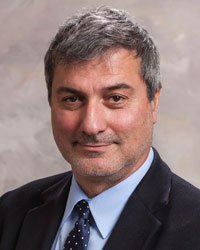
There’s more news to report on the story of surgeon Paolo Macchiarini, who’s been dogged by allegations of misconduct.
After the Karolinska Institutet (KI) announced it would not extend his contract and that he needed to “phase out” his research by November, it has now announced it may dismiss him.
An MD Anderson Cancer Center researcher who has been under investigation by the institution for at least several years has had seven papers retracted from a single journal.
This week, Biochemical Pharmacology retracted seven studies of which he is the only common author, noting the “data integrity has become questionable.” The papers have been cited a total of more than 500 times, according to Thomson Scientific’s Web of Knowledge; one has been designated as “highly cited.” Here are the seven retractions: Continue reading Journal retracts 7 papers by MD Anderson cancer researcher long under investigation
A Toronto hospital network is keeping two researchers’ labs closed even after an Ontario court quashed part of a misconduct finding by the institution.
According to the Toronto Star, on February 4th the UHN notified the researchers that the sanction against them would be upheld, and it would not reopen the researchers’ labs.
An 8th paper has been retracted for Anna Ahimastos, a heart researcher who faked patient records.
It’s the last in a chain of retractions that were the result of an investigation by her former workplace, Baker IDI Heart & Diabetes Institute in Australia. As with the others, she did not agree to the retraction.
That previous trial — which also included 17 patients with Marfan syndrome treated with either placebo or perindopril — has been retracted from JAMA; the New England Journal of Medicine has also retracted a related letter.
Anders Hamsten announced he would be resigning as vice-chancellor from Karolinska Institutet (KI) in the early hours of Saturday, February 13.
In a press release we received at 12:16 a.m. local time in Stockholm, Hamsten issued the following statement:
Following the criticism on the so called Macchiarini affair at KI I conclude it will be hard for me to serve as Vice-Chancellor with the strength and credibility this university needs. I will therefore leave office.
The media has been abuzz in the last few weeks with developments in the ongoing story about “super surgeon” Paolo Macchiarini. We’ve been covering the allegations against him for years (and invited him to publish a guest post on our site). Below, we present a timeline of recent events, to keep you abreast of what we know so far.
Macchiarini was famous long before accusations of misconduct arose, once-heralded for creating tracheas from cadavers and patients’ own stem cells. However, the glow of his success was diminished somewhat after some Karolinska Institutet (KI) surgeons filed a complaint in 2014 — alleging, for instance, Macchiarini had downplayed the risks of the procedure and not obtained proper consent. In response, KI issued an external review by Bengt Gerdin of Uppsala University.
Stefan Franzen doesn’t give up. Ten years ago, he began to suspect the data behind his colleagues’ research about using RNA to make palladium nanoparticles, a potentially valuable tool that ended up as a Science paper. Recently, the National Science Foundation (NSF) decided to cut off funding for Bruce Eaton and Dan Feldheim — currently at the University of Colorado at Boulder — and last week, Science retracted the paper. We talked to Franzen, based at North Carolina State University (NCSU), about his decade-long efforts, and how it feels to be finally vindicated.
Retraction Watch: How did you first begin to suspect the findings by Eaton and Feldheim?
Stefan Franzen: Starting in early 2005, I was collaborating with Drs. Eaton and Feldheim at NCSU, thanks to two joint grants from the W.M. Keck Foundation and NSF. During a group meeting in December of 2005, a graduate student showed electron microscopy data that were inconsistent with the assignment of the particles as palladium. Over time, we kept producing more data that called their findings into question; in April 2006, a postdoc showed that the hexagonal particles could be obtained without RNA. By then, I could see that there was a significant discrepancy between what was written in the articles and what was done and observed in the laboratory.
Researchers in Finland are criticizing an investigation by VTT Technical Research Centre into one of its scientists.
The investigation followed allegations about the VTT’s plasma and serum metabolomics (QBIX) group, previously led by Matej Orešič (who is now based at the Steno Diabetes Center in Gentofte, Denmark) and Tuulia Hyötyläinen. Kai Simons, who conducted an earlier investigation of the group, and the Chancellor Emeritus at the University of Helsinki, have criticized VTT, saying it cut corners in its investigation.
VTT found no evidence of data tampering or falsification in a 2008 paper co-authored by Orešič in the Journal of Experimental Medicine, but said the paper — which has not been corrected or retracted — included some “exaggerated conclusions.” In turn, Orešič and Hyötyläinen filed a complaint for “an alleged violation of good scientific practice” by Simons during the initial investigation. Continue reading Sparks fly in Finland over misconduct investigation
A chemist is suing the University of Texas a second time in an effort to keep the PhD she earned in 2008.
In 2014, school officials revoked Suvi Orr‘s degree after finding it was based, in part, on falsified data. Some of the data were also included in a paper in Organic Letters that was retracted in 2011 after some steps in the chemical synthesis the authors described were not reproducible. Orr, currently working at Pfizer, sued UT, and the school reinstated her degree.
Now, the school is trying to remove it again, according to the lawsuit, filed last week. The lawsuit says the school has scheduled a “hearing” on March 4, during which three undergraduate students and two faculty members will deliberate — “none of whom are qualified to evaluate the scientific evidence being used against S.O.,” the suit says.
Orr has requested a temporary injunction to halt the proceedings, and a hearing has been scheduled for next week, according to the Austin-American Statesman.
An investigation at the University of New South Wales in Australia has led to a fifth retraction for a cancer researcher long accused of misconduct, due to “unresolvable concerns” with some images.
As we reported in December, UNSW cleared Levon Khachigian of misconduct, concluding that his previous issues stemmed from “genuine error or honest oversight.” Now, Circulation Research is retracting one of his papers after an investigation commissioned by UNSW was unable to find electronic records for two similar images from a 2009 paper, nor records of the images in original lab books.
Again, the retraction note affirms that this is not a sign of misconduct:
UNSW has not attributed any instance of research misconduct or responsibility for the unavailability of the original data to Professor Khachigian or to any of the authors of the publication.