Case report journal pulls paper on metastatic ovarian cancer with falsified data

crmedThe journal Case Reports in Medicine has retracted a 2012 article by a group of Turkish authors who made up things in the piece.

The paper, “Brain Metastasis as an Initial Manifestation of Ovarian Carcinoma: A Case Report,” came from ob-gyns at Hacettepe University in Ankara, and purported to relate the case of

A 30-year-old gravida 2, para 2 woman admitted to our hospital with complaints of headache, nausea, vomiting, and right-sided blurred vision. She did not report any previous medical history or malignancy. Her neurologic examination revealed a right optic disc edema suggesting a posterior orbital mass. Her cranial computerized tomography (CT) scan showed multiple lesions that are a 6 mm mass on the right parietal lobe, a 16 mm mass on the left occipital, and another 7 mm mass on the left temporal lobe (Figures 1 and 2). All the lesions were hyperintense and surrounded by edema which suggests a metastatic cancer. Her cranial magnetic resonance imaging (MRI) also confirmed similar findings suggestive of a metastatic cancer to the brain. Continue reading Case report journal pulls paper on metastatic ovarian cancer with falsified data
ORI sanctions pathologist in Canada for bogus monkey data

haowang
Hao Wang

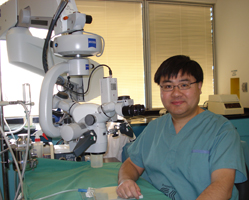
The Office of Research Integrity has concluded that Hao Wang, a Canadian pathologist, falsified data in a 2011 poster presentation supported by money from the National Institutes of Health.

For his part Wang, a former faculty member at Western University in Ontario (his website is still active but his email bounces back), has said there were undisclosed “extenuating circumstances” in the matter but that he could not afford to fight the case. Wang also seems to be making the “no harm, no foul” defense, as you’ll see from the notice: Continue reading ORI sanctions pathologist in Canada for bogus monkey data

Scientist who faked data in his thesis will keep his PhD

nitin_aggarwal
Nitin Aggarwal

Last month, we reported on the case of Nitin Aggarwal, who earned his PhD at the Medical College of Wisconsin, and who, according to the Office of Research Integrity (ORI), faked data in his graduate thesis, in applications for National Institutes of Health and American Heart Association grant, and in two published papers.

Given the findings about his PhD thesis — and the fact that he had won a $1,000 award for his dissertation — we were curious whether he would lose his degree.  Ravi Misra, dean of the Medical College of Wisconsin’s Graduate School of Biomedical Science, tells Retraction Watch he won’t: Continue reading Scientist who faked data in his thesis will keep his PhD

Cardiology researcher faked data in his prizewinning PhD thesis — and NIH, AHA grants: ORI

nitin_aggarwal
Nitin Aggarwal

Nitin Aggarwal, formerly of the Medical College of Wisconsin, faked data in his PhD thesis, grant applications to the NIH and American Heart Association, and in two papers, according to new findings by the Office of Research Integrity.

(The case would have apparently first been published in the Federal Register on October 2, except for the government shutdown.)

Here were their findings: Continue reading Cardiology researcher faked data in his prizewinning PhD thesis — and NIH, AHA grants: ORI

Embryonic stem cell paper retracted for fabrication

scadcoverStem Cells and Development has retracted a paper it published earlier this year after the leader of the study reported that the data were unreliable.

The paper, “Derivation and Genetic Modification of Embryonic Stem Cells from Disease-Model Inbred Rat Strains,” came from the lab of Aron Geurts, of the Medical College of Wisconsin.

According to the retraction notice: Continue reading Embryonic stem cell paper retracted for fabrication

Retraction appears for stem cell researcher found to have used funds for his company’s gain

Feuer_detail
Gerold Feuer in 2008, via Upstate

A stem cell journal is retracting a paper by Gerold Feuer, a researcher at the State University of New York (SUNY) Upstate Medical Center in Syracuse who was also found to have misused grants.

The Feuer story is complicated. Heralded in 2008 for landing $6.2 million in grants from the New York Stem Cell Board, Feuer was suspended in October 2010 while the university investigated allegations he had misused funds, specifically to funnel state dollars to HuMurine, a company he founded in 2008. In December 2010, Upstate said they had found evidence he had committed 53 acts of financial misconduct, and dismissed him.

From an August 2012 court ruling on a case Feuer brought to fight that dismissal: Continue reading Retraction appears for stem cell researcher found to have used funds for his company’s gain

Second retraction for chemist from Portugal who forged names, data

chemengjrnChemical Engineering Journal has retracted a 2011 article from a group of researchers in Portugal after determining that the scientists made up their data.

The clincher: According to the journal, the researchers did not possess the proper lab equipment to perform the study as reported.

The article, “Detoxification of high-strength liquid pollutants in an ozone bubble column reactor: Gas–liquid flow patterns, interphase mass transfer and chemical depuration,” appeared in August 2011 and was written by Rodrigo J. G. Lopes and Rosa M. Quinta-Ferreira, from the Group on Environmental, Reaction and Separation Engineering in the Department of Chemical Engineering at the University of Coimbra. The paper has been cited twice, according to Thomson Scientific’s Web of Knowledge, both times by the original authors.

Here’s what the abstract has to say about the work: Continue reading Second retraction for chemist from Portugal who forged names, data

Science reporter spoofs hundreds of open access journals with fake papers

scienceAlan Sokal’s influence has certainly been felt strongly recently. Last month, a critique by Sokal — who in 1996 got a fake paper published in Social Text — and two colleagues forced a correction of a much-ballyhooed psychology paper.  A few days after that, we reported on a Serbian Sokal hoax-like paper whose authors cited the scholarly efforts of one B. Sagdiyev, a.k.a. Borat.

And today, we bring you news of an effort by John Bohannon, of Science magazine, to publish fake papers in more than 300 open access journals. Bohannon, writing as “Ocorrafoo Cobange” of the “Wassee Institute of Medicine” — neither of which exist, of course — explains his process: Continue reading Science reporter spoofs hundreds of open access journals with fake papers

Dutch anthropologist Mart Bax faked 61 papers, says university

free universityA former anthropologist at the Free University in Amsterdam appears to have made up data for at least 61 papers, and invented awards and other parts of his CV, according to a university investigation.

The news was first reported by NRC Handelsblad and the Volkskrant newspaper.

Bax, who studied an Irish town he called Patricksville, a Dutch pilgrimage site he called Neerdonk, and Medjugorje, a Bosnian pilgrimage site, retired from the Free University in 2002. The university began investigating Bax’s work last year Continue reading Dutch anthropologist Mart Bax faked 61 papers, says university

That’ll do it: Physics paper retracted for a “pattern that is unphysical”

j phys dLast December, we brought you the story of a math paper that was retracted because it made “no sense mathematically.” Today, we have that retraction’s cousin: A physics paper retracted because some of the data are “unphysical.”

Here’s the notice for “Room temperature ferromagnetism in pure and Co- and Fe-doped CeO2 dilute magnetic oxide: effect of oxygen vacancies and cation valence,” which was published in April 2011 in the Journal of Physics D: Applied Physics: Continue reading That’ll do it: Physics paper retracted for a “pattern that is unphysical”