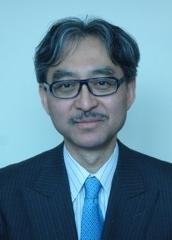
Two Moriguchi stem cell papers being retracted

It was, as Nature News wrote last month, a story that “seemed too good to be true:”

Stem-cell transplant claims debunked

Transplant of induced pluripotent stem cells to treat heart failure probably never happened

Hisashi Moriguchi, a visiting researcher at the University of Tokyo, had claimed a result that would have put him years ahead of researchers toiling in stem cell research. But the claims were met with a great deal of doubt — to say the least — and the story began to unravel when Harvard, where Moriguchi said he’d done the work, denied it had ever taken place.

And as expected, the retractions have now started. Today, a Nature Publishing Group journal said they would be retracting two papers, “A therapeutic method for the direct reprogramming of human liver cancer cells with only chemicals” and “Successful cryopreservation of human ovarian cortex tissues using supercooling.” The notices for the Scientific Reports papers will both say the same thing: Continue reading Two Moriguchi stem cell papers being retracted
“Major errors” lead to retraction of Nature Photonics paper on quantum dots

Maybe it’s an occupational hazard of dealing with quantum physics — uncertainty and all that — but a group of Swiss researchers has retracted their paper on quantum dots after discovering “major errors” that undermined their conclusions.

The article, published in 2010 as a research letter in Nature Photonics, was titled “Polarization-entangled photons produced with high-symmetry site-controlled quantum dots,” by Eli Kapon and colleagues.

According to the retraction notice: Continue reading “Major errors” lead to retraction of Nature Photonics paper on quantum dots

Expressions of regret: group retracts sedation paper for stolen words, data

A group of researchers in China have retracted a 2011 article in Acta Pharmacologica Sinica, the official journal of the Chinese Pharmacological Society, acknowledging that they lifted text and results from a previously published paper from other researchers.

The paper was titled “Lipid metabolism disturbances and AMPK activation in prolonged propofol-sedated rabbits under mechanical ventilation.”

According to the notice: Continue reading Expressions of regret: group retracts sedation paper for stolen words, data

University College London mitochondrial biologist resigns after three retractions for image fraud

Courtesy Nature Publishing Group

A biologist at University College London (UCL) has resigned his post and taken responsibility for “inappropriate figures manipulations” in three now-retracted papers.

Assegid Garedew, formerly a senior research investigator in Salvador Moncada‘s group, stepped down earlier this summer in the midst of an investigation that should be completed soon, Moncada tells Retraction Watch.

The three retraction notices for papers by Garedew and colleagues are all similar.

From Cell Metabolism: “Mitochondrial Dynamics, Biogenesis, and Function Are Coordinated with the Cell Cycle by APC/CCDH1“, cited once, according to Thomson Scientific’s Web of Knowledge: Continue reading University College London mitochondrial biologist resigns after three retractions for image fraud

Shikeagi Kato, who resigned post in March, retracts Nature paper

Shikeagi Kato, an endocrinologist formerly of the University of Tokyo who resigned on March 31 amidst an investigation into his work, has retracted another paper, this one in Nature.

Here’s the notice for “DNA demethylation for hormone-induced transcriptional derepression,” which was the subject of a correction last October: Continue reading Shikeagi Kato, who resigned post in March, retracts Nature paper

Former Millennium Villages Project staffer responds to critical Nature editorial

courtesy Nature

Last week, we wrote about a correction of a heavily criticized paper in The Lancet by the Millennium Villages Project, a large aid program. Paul Pronyk, director of monitoring and evaluation at Columbia University’s Center for Global Health and Economic Development, which runs the Project, left his job shortly after writing an explanatory letter that accompanied the correction.

That correction had come after a letter to The Lancet, but also after Nature had raised issues in an editorial. Nature’s editorial concluded: Continue reading Former Millennium Villages Project staffer responds to critical Nature editorial

Whistling the same Tunisia: Serial plagiarists plague the oncology literature

A group of cancer researchers from Tunisia has been seeding the oncology literature with plagiarized articles that steal liberally — both text and data — from the work of others.

The group has one retraction, in the journal Obesity — whose splash page has the jaunty, if disconcerting, invite: “Welcome to Obesity!” — and at least two withdrawn papers. However, we have been alerted to at least one other case of apparent plagiarism involving an article in the Annals of Saudi Medicine that ought to receive careful scrutiny. Continue reading Whistling the same Tunisia: Serial plagiarists plague the oncology literature

Rabbits needn’t worry about cell phones’ effects on their sperm count, say three retractions

If you’re a rabbit and you haven’t figured out where to carry your cell phone, your front pocket is just fine.

That’s what you could reasonably infer from the retraction of a paper in the International Journal of Andrology purporting to show that mobile phones affected rabbits’ sperm counts. The notice, signed by the journal’s editor, Ewa Rajpert-De Meyts (we added links): Continue reading Rabbits needn’t worry about cell phones’ effects on their sperm count, say three retractions

University of East London “looking into” Jatinder Ahluwalia’s career

We’re continuing to follow the case of Jatinder Ahluwalia. As we reported on Tuesday, Ahluwalia was dismissed from graduate school at the University of Cambridge years before a University College London (UCL) investigation found had renumbered files to deceive a co-author, and had likely sabotaged his colleagues’ work while manipulating his solutions to improve how his results looked. The results of that investigation came to light as part of a Nature retraction.

Ahluwalia now works — and studies plagiarism, in fact — at the school of health and bioscience at the University of East London. We asked Neville Punchard, the school’s dean, whether the university was aware of Ahluwalia’s past. Punchard replied by email: Continue reading University of East London “looking into” Jatinder Ahluwalia’s career

Exclusive: Researcher found guilty of misconduct at UCL had been dismissed from Cambridge for data fabrication

Here at Retraction Watch, we’ve been following the case of Jatinder Ahluwalia with interest. You may recall that an investigation by University College London (UCL) found “beyond reasonable doubt” that Ahluwalia had renumbered files to deceive a co-author. UCL was also “highly confident” that Ahluwalia had messed with his solutions to make his results look better, and sabotaged his colleagues’ work. The report of that investigation was part of a Nature retraction notice.

We’ve now learned that UCL was not the first scene of misconduct by Ahluwalia. Yesterday, we obtained letters by University of Cambridge faculty and administrators describing repeated — and in the words of of one professor, amateurish — data fabrication by Ahluwalia that led to his dismissal from the university’s graduate program.

In a letter dated November 10, 1997, Martin Brand, then Ahluwalia’s PhD advisor, wrote: Continue reading Exclusive: Researcher found guilty of misconduct at UCL had been dismissed from Cambridge for data fabrication