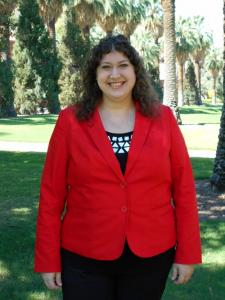
The director of the Division of Investigative Oversight at the U.S. Office of Research Integrity is leaving the agency.
Susan Garfinkel told Retraction Watch that her last day is November 10. She is taking a position as assistant vice president in the Office of Research Compliance at The Ohio State University (OSU).
Garfinkel declined to comment on why she was leaving the agency:
A high profile paper published in 2012 in the Proceedings of the National Academy of Sciences (PNAS) set out to answer that question — and found that yes, the more money people have, the more likely they are to lie, cheat, and steal. And the greedier they are, the worse they behave. But when a more recent paper tried to replicate some of those findings, it couldn’t.
It turns out, both the original paper and the paper that tried to replicate it contained errors. Although neither appear to affect the main conclusions, the authors of the 2016 replication recently issued a correction; the error in the 2012 paper was initially deemed too insignificant to correct, but the journal has decided to revisit the idea of issuing a correction.
In 1980, Leila Tov-Ruach published a book chapter in which she thanked the editor of the book, Amélie Oksenberg Rorty, “for the hospitality that made the writing of this paper possible.”
Normally, such an acknowledgement wouldn’t raise eyebrows. But, the trouble is, Tov-Ruach and Rorty are the same person: Leila Tov-Ruach is a pseudonym for Rorty, an accomplished philosopher. The University of California Press (UC Press) officially outed Rorty as Leila Tov-Ruach when it issued corrections for two chapters she published decades ago under the pseudonym (1, 2).
The corrections explain the author of the chapters is Rorty, who also edited the two books in which the chapters appear. Although Rorty didn’t note in the original versions of the books that she is Tov-Ruach, she has not tried to hide her pseudonym either. She has acknowledged she is Tov-Ruach in her CV, and at least some philosophers know about the pseudonym (1, 2).
Why would a philosopher—who has an impressive publishing record that spans 50 years and, at 85 years old, is still a lecturer at Harvard—choose to write under a fake name?
A journal has withdrawn an essay that called for a return to colonialism after the editor received alleged threats tied to the article.
Soon after Third World Quarterly published the controversial essay, readers began to object. When the journal defended its decision, 15 editorial board members resigned in response. More than 10,000 people signed a petition to have it retracted. On September 26, the publisher posted a statement — including a detailed timeline of the paper’s peer review process — and said the the author had requested to withdraw the article. However, in the statement, the publisher said that “peer-reviewed research articles cannot simply be withdrawn but must have grounds for retraction.”
A pharmaceutical company has admitted that one of its former researchers falsified early data on a compound that’s designed to fight cancer, now in human trials.
The data, published as an abstract in August 2015 in the journal Cancer Research, reported a therapeutic benefit of acalabrutinib in a mouse model of pancreatic cancer. The compound, developed by the company Acerta Pharma, has also been the subject of additional trials published in the New England Journal of Medicine and Bloodin 2015. The 2015 NEJM study, which had several authors in common with the Cancer Research abstract, showed the agent had “promising safety and efficacy profiles in patients” with relapsed chronic lymphocytic leukemia.
But an investigation into the data underlying the 2015 abstract shows some were falsified, prompting the journal to retract the abstract.
Ed Tucker, senior vice president of Medical Safety, Quality and Compliance at Acerta Pharma, told us that in August 2016 the company identified an issue with the data in the Cancer Research abstract and started an investigation:
Nature has added an “editor’s note” to a high-profile August paper alerting readers to the fact that the article has been subject to criticism.
Journals often flag papers that are being debated — what’s unusual here is that the journal doesn’t label the notice as an official “Expression of Concern,” which are indexed by PubMed. Yet the Nature notice reads just like an expression of concern.
A social psychologist has retracted a second paper that contains “fabricated or manipulated data.”
The first retraction for William Hart at the University of Alabama — also due to data manipulation — appeared earlier this year. The notice raised some questions over authorship: Hart was the sole author, but he blamed the retraction on a graduate student who supplied the problematic data. The questions continued when Hart’s colleagues posted blogs about the problems that occurred in Hart’s lab, using a pseudonym to describe the student, who apparently admitted to fabricating data.
The author of one of those blogs, Hart’s colleague Alexa Tullett, told us in March that she was retracting another paper she wrote with Hart and the unnamed graduate student. Recently, she confirmed this latest retraction is that paper.
Looking at the author list of the newest retraction, by process of elimination, we now have a lead on the identity of the graduate student who allegedly took responsibility for the misconduct.
A researcher who co-authored a paper about violent video games that was retracted earlier this year appears to have changed positions, according to her website.
After her PhD was revoked by The Ohio State in August, Jodi Whitaker’s listed position at the University of Arizona changed from “assistant professor” to “lecturer.” The page also has removed the information about her PhD, and lists her highest degree as a master’s degree in social psychology from the University of Michigan.
Researchers have retracted and replaced a June 2016 paper in JAMA Internal Medicine after discovering errors in their data.
The paper explored whether Accountable Care Organizations (ACOs) — groups of health care providers who earn more when they deliver high-quality care without boosting costs — improve care and lower health care costs for Medicare patients. The paper’s corresponding author, Carrie H. Colla, and her colleagues examined Medicare data over five years and found the ACOs provided “ modest savings on average” and less hospital care.


 A journal has published an expression of concern (EoC) for a paper on cancer genetics in mice, over a concern about data in some gel panels.
  A journal has withdrawn an essay
 Nature
 A social psychologist has retracted a second paper that contains “fabricated or manipulated data.”