Scientist who alleged COVID cover-up circulated a faked NIH email, agency says

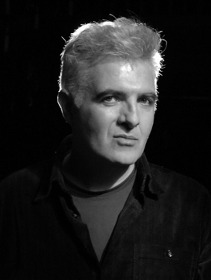
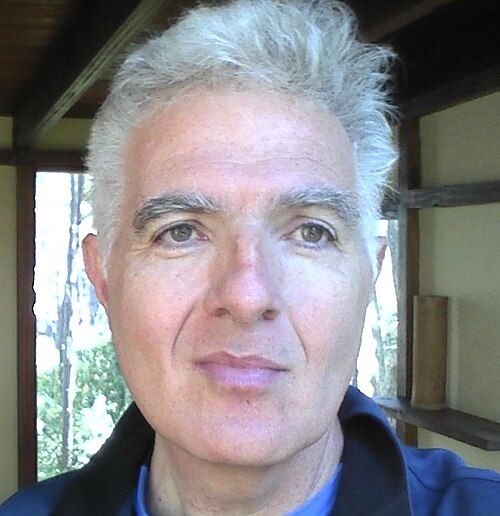
Ariel Fernández

A scientist charged with research misconduct used a fake email communication with an NIH researcher’s address to support his claims of governmental retaliation, Retraction Watch has learned.  

Last month, we reported on the upholding of a proposed 15-year debarment by a U.S. Department of Health and Human Services appeals judge against Argentine chemist Ariel Fernández for falsifying research while a professor at Rice University in Houston. Administrative law judge Margaret G. Brakebusch based that May 2025 decision on findings by Rice sent to the Office of Research Integrity in 2010 and conclusions from ORI’s independent review completed in 2022. 

Fernández denied the misconduct allegations and told us the findings were retaliation by the government for a 2021 paper he wrote supporting a lab origin of SARS-CoV-2. As evidence of the contention, Fernández showed us an email purportedly from National Institutes of Health researcher Joshua Cherry dated June 2021. The email, which appeared to be from Cherry’s NIH address, threatened to resurrect Fernández’s ORI case if he didn’t remove the paper. We could not independently verify the email’s authenticity at the time.  
Continue reading Scientist who alleged COVID cover-up circulated a faked NIH email, agency says

Family decries publication of child’s picture in open access journal

indian-journal-of-dermatology-venereology-and-leprologyAn author of a paper about a boy with a rare genetic disorder has retracted it after the patient’s family revoked permission to use his photo.

The 2012 paper in the Indian Journal of Dermatology, Venereology and Leprology (IJDVL) told the tale of a 14-year old boy with Delleman syndrome, a condition that often results in the development of cysts within the cavities of the skull, leading to malformations in the eyes, brain, and skin.

Mabel Nocito, the study’s first and corresponding author from Hospital Churruca in Buenos Aires, Argentina told us the parents initially gave permission to publish their son’s picture, but then became concerned when they realized the paper was freely accessible: Continue reading Family decries publication of child’s picture in open access journal

Authors retract Nature paper on bird-like footprints thought to date to Late Triassic

courtesy Nature
courtesy Nature

Two of three authors in Argentina of a 2002 paper purporting to show evidence of bird-like fossil footprints from the Late Triassic age have retracted it after subsequent research suggested their estimates were off.

Here’s the notice for “Bird-like fossil footprints from the Late Triassic:” Continue reading Authors retract Nature paper on bird-like footprints thought to date to Late Triassic

“Conflicting investigations” prompt expression of concern in BMC Genomics

Source: Wikipedia
Ariel Fernandez, source: Wikipedia

BMC Genomics has issued an expression of concern for a 2011 paper by a prominent Argentine chemist, Ariel Fernandez, whose work covers several disciplines — “His research spans representation theory in algebra, physical chemistry, molecular biophysics, and more recently, molecular evolution and drug discovery” — and institutions. And therein lies the tale.

Fernandez appeared as the first author of the article, titled “Subfunctionalization reduces the fitness cost of gene duplication in humans by buffering dosage imbalances,” along with a pair of researchers from Taiwan. Fernandez’s affiliations were listed as being with the Instituto Argentino de Matemática “Alberto P. Calderón”, CONICET (National Research Council of Argentina), in Buenos Aires, the Department of Computer Science at the University of Chicago, and the Morgridge Institute for Research, in Madison, Wisc.

According to the abstract:

Continue reading “Conflicting investigations” prompt expression of concern in BMC Genomics

The “unintentionality” of being leads to nothingness for paper on protein’s role in cancer

empcoverA group of cancer researchers in Argentina has retracted a paper on the p300 protein in breast cancer that appeared in Experimental and Molecular Pathology.

The article, titled “Intracellular distribution of p300 and its differential recruitment to aggresomes in breast cancer,” was published in 2010 by Maria E. Fermento and colleagues. It has been cited 11 times since, according to Thomson Scientific’s Web of Knowledge.

Here’s the notice: Continue reading The “unintentionality” of being leads to nothingness for paper on protein’s role in cancer