Two more Eric Smart retractions appear

Eric J. Smart, via U Kentucky

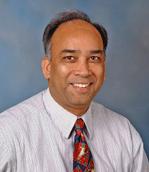
Eric Smart, the former University of Kentucky researcher found by the Office of Research Integrity to have faked images in ten papers, has two more retractions, both in the American Journal of Physiology — Cell Physiology.

Here’s one, for a paper cited four times, according to Thomson Scientific’s Web of Knowledge: Continue reading Two more Eric Smart retractions appear

Retraction 12 appears for Alirio Melendez, this one for plagiarism

alirio_melendezThe twelfth of Alirio Melendez’s 20-something retractions has appeared, in Clinical and Experimental Pharmacology and Physiology.

Along with the retraction notice, the journal runs letters from the paper’s two co-authors. Melendez writes: Continue reading Retraction 12 appears for Alirio Melendez, this one for plagiarism

MD Anderson’s Bharat Aggarwal inquiry still ongoing; center uninvolved in legal threats

aggarwal
Bharat Aggarwal

When we learned earlier this week that Bharat Aggarwal, the MD Anderson researcher under investigation there for possible misconduct, had directed his attorneys to send us a pull-all-your-posts-about-our-client-or-we’ll-sue-you letter, we wondered if he’d included the Houston institution in that decision.

Turns out he’d been acting on his own. Continue reading MD Anderson’s Bharat Aggarwal inquiry still ongoing; center uninvolved in legal threats

MD Anderson’s Bharat Aggarwal threatens to sue Retraction Watch

aggarwal
Bharat Aggarwal

Bharat Aggarwal, an MD Anderson researcher under investigation by his institution, has threatened to sue us.

Today, we received a letter from the Houston firm of Paranjpe & Mahadass LLP telling us to pull every post related to their client off our site within 20 days, or they’d “file a lawsuit against” us on his behalf.

On what grounds? According to the March 26 letter, which we have posted here in its entirety: Continue reading MD Anderson’s Bharat Aggarwal threatens to sue Retraction Watch

Alirio Melendez notches retractions 10 and 11

jbcmarch13coverFormer National University of Singapore and University of Liverpool scientist Alirio Melendez has two more of the 20-something retractions suggested by the investigations into his work. Both appear in the Journal of Biological Chemistry.

Here’s the notice for “FcγRI-triggered generation of arachidonic acid and eicosanoids requires iPLA2 but not cPLA2 in human monocytic cells:” Continue reading Alirio Melendez notches retractions 10 and 11

Frequent Retraction Watch fliers rack them up: Stapel hits 51, Lichtenthaler scores number 9

freq flyer
Rewards may vary

Quick updates on work by two people whose names appear frequently on Retraction Watch: Diederik Stapel and Ulrich Lichtenthaler.

Last month, we reported on the 50th retraction for Stapel. Here’s number 51 in the Journal of Experimental Social Psychology, for “The flexible unconscious: Investigating the judgmental impact of varieties of unaware perception:” Continue reading Frequent Retraction Watch fliers rack them up: Stapel hits 51, Lichtenthaler scores number 9

New Mexico obstetrics researcher violated research subject protocols: Retraction notice

gynoncLaurence Cole, an obstetrics researcher at the University of New Mexico, made an appearance on this blog in November 2011 after the American Journal of Obstetrics & Gynecology published a remarkably heavy-handed retraction of one of his papers.

Shortly after, we learned that the retraction was preceded by a strongly-worded letter from an attorney representing a company that had been miffed by the content of Cole’s article (the issue involved the effectiveness of commercially-available pregnancy tests, and Cole’s failure to adequately disclose a past relationship with the aggrieved company’s competitor). That letter read, in part: Continue reading New Mexico obstetrics researcher violated research subject protocols: Retraction notice

Kenji Okajima retraction count grows to five

Kenji Okajima
Kenji Okajima

We’ve been following the case of Kenji Okajima, a professor at Nagoya City University in Japan who was suspended for six months following an investigation into work in his lab. Bits of the story — including at least one other university investigation, and scrutiny of Okajima’s colleagues, one of whom was fired — have been dribbling out for almost two years since a retraction notice in the Journal of Neuroscience.

In all, it looks as Nagoya found evidence of misconduct in 19 papers. The Journal of Neuroscience retraction appeared in 2011, and another showed up in the Journal of Immunology last year. Now there are three more: One in Translational Research and two in Blood.

Here’s the notice from Translational Research: Continue reading Kenji Okajima retraction count grows to five

One in twelve Belgian medical scientists admits having “made up and/or massaged data”: Survey

001_coverEOSA recently released survey of Belgian scientists suggests that Flemish medical researchers admit to having made up or massaged data more often than their counterparts around their world.

The survey, by the Dutch science magazine Eos with the help of Joeri Tijdink, of VU University Medical Center in Amsterdam, and the Pascal Decroos Fund for Investigative Journalism, found that Continue reading One in twelve Belgian medical scientists admits having “made up and/or massaged data”: Survey

Diederik Stapel retraction count hits 50

stapel_npcIt’s Diederik Stapel’s golden retraction: Number 50.

The lucky notice appears in Social Psychology: Continue reading Diederik Stapel retraction count hits 50