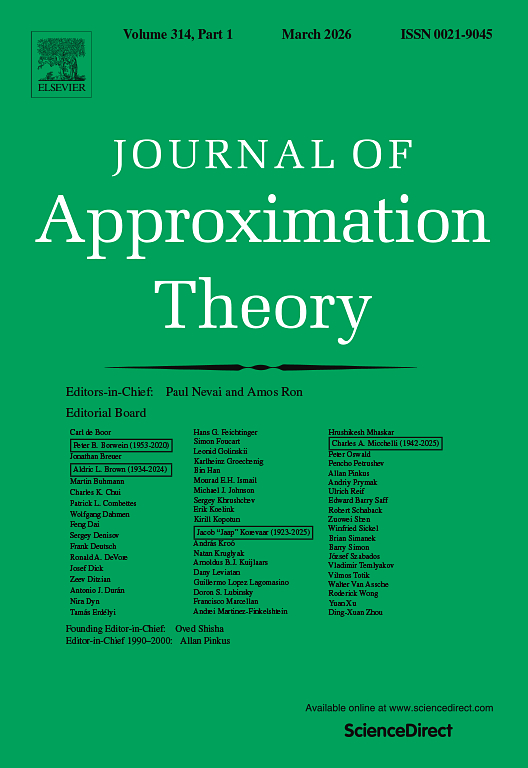
45 editors resign from math journal, former EIC calls Elsevier publisher a ‘mini-dictator’

Forty-five of 48 members of the editorial board of the Journal of Approximation Theory resigned earlier this month for what they called Elsevier’s “concerning and potentially detrimental” decisions regarding the publication. 

Paul Nevai, formerly a professor at The Ohio State University, was appointed editor-in-chief of JAT in 1990 and held the position for 35 years until December. That’s when he reached the end of his term and Elsevier informed him they’d be filling the position with someone else. 

The mass resignation came after what Nevai said were several years of bad blood between the editors of the journal (including him) and the publisher, Giampiero Accardo. A representative for Elsevier told us designated publishers like Accardo are Elsevier employees who “oversee a portfolio of academic journals within a subject area, working closely with editors, authors, and research communities to support their development and long-term success.”

Continue reading 45 editors resign from math journal, former EIC calls Elsevier publisher a ‘mini-dictator’

Retraction Watch testifies in Congressional hearing on scientific publishing

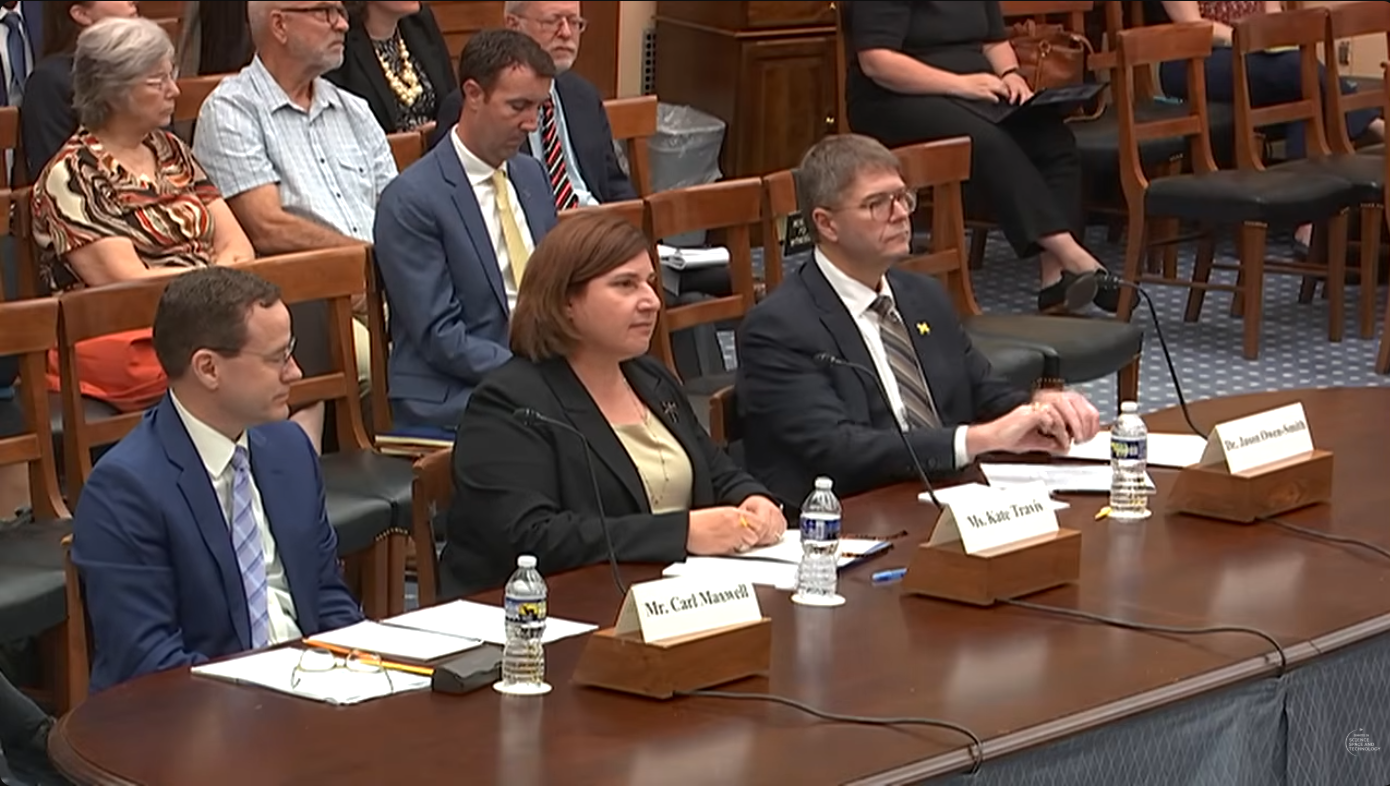
Retraction Watch managing editor Kate Travis (center) testified April 15 in a hearing before the Investigations and Oversight Subcommittee of the House Science, Space and Technology Committee. Other witnesses were Carl Maxwell (left) of the Association of American Publishers and Jason Owen-Smith (right) of the University of Michigan.

A hearing on Capitol Hill today explored issues in scientific publishing — and Retraction Watch had a seat at the table. 

The Investigations and Oversight Subcommittee of the U.S. House Committee on Science, Space and Technology called the hearing to talk about open access, reproducibility, predatory journals, paper mills and the incentive structure in science. The wide remit meant the committee and witnesses touched on quite a few topics in 90 minutes.

Our testimony, delivered by managing editor Kate Travis, focused on the pitfalls of “publish or perish” and how an overreliance on metrics has incentivized shortcuts in research and publishing. “‘Publish or perish’ is what has allowed businesses like paper mills and predatory journals to flourish, and more recently is leading to an explosion of AI-generated papers flooding journals,” Travis told the subcommittee.

Continue reading Retraction Watch testifies in Congressional hearing on scientific publishing

“Game-changer” breast cancer study retracted as Indiana researcher out of his post

A group of cancer researchers whose work has been questioned by sleuths has been hit with their third retraction in less than a year.  

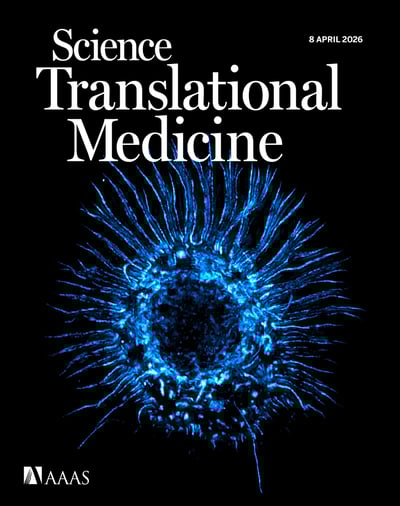
Today, Science Translational Medicine (STM) withdrew a 2021 breast cancer study by former Indiana University researcher Yujing Li and 12 other authors for image falsification. The immunotherapy study had been described by senior author Xiongbin Lu as a “game-changer” for triple negative breast cancer in a 2021 IU press release

The paper’s April 15 retraction notice states that a joint research misconduct investigation involving Indiana University, The Ohio State University, and the University of Maryland, College Park determined “falsification occurred during creation of figure S9C.” The institutions alerted the American Association for the Advancement of Science of the misconduct late last year and requested the paper’s retraction, according to Meagan Phelan, a spokesperson for AAAS, which publishes STM.

Continue reading “Game-changer” breast cancer study retracted as Indiana researcher out of his post

BMJ retracts most of a special issue for ‘compromised’ peer review and ‘improbable device use’

BMJ’s Journal of Medical Genetics has retracted the bulk of a seven-year-old special issue for an “irreparably compromised” review process and “improbable device use.” 

Of the eight papers in the 2019 special issue, seven were retracted, including an editorial that “almost exclusively” referred to the other now-retracted papers, according to a statement from the journal. 

According to the retraction notice published today, the journal’s investigation found the guest editor for the issue selected the peer reviewers, the majority of whom were affiliated with Nanjing University in China. The guest editor is not named in the issue. The publisher’s investigation also found evidence of compromised peer review in almost all articles, the notice states.

Continue reading BMJ retracts most of a special issue for ‘compromised’ peer review and ‘improbable device use’

Scientist who alleged COVID cover-up circulated a faked NIH email, agency says

Ariel Fernández

A scientist charged with research misconduct used a fake email communication with an NIH researcher’s address to support his claims of governmental retaliation, Retraction Watch has learned.  

Last month, we reported on the upholding of a proposed 15-year debarment by a U.S. Department of Health and Human Services appeals judge against Argentine chemist Ariel Fernández for falsifying research while a professor at Rice University in Houston. Administrative law judge Margaret G. Brakebusch based that May 2025 decision on findings by Rice sent to the Office of Research Integrity in 2010 and conclusions from ORI’s independent review completed in 2022. 

Fernández denied the misconduct allegations and told us the findings were retaliation by the government for a 2021 paper he wrote supporting a lab origin of SARS-CoV-2. As evidence of the contention, Fernández showed us an email purportedly from National Institutes of Health researcher Joshua Cherry dated June 2021. The email, which appeared to be from Cherry’s NIH address, threatened to resurrect Fernández’s ORI case if he didn’t remove the paper. We could not independently verify the email’s authenticity at the time.  

Continue reading Scientist who alleged COVID cover-up circulated a faked NIH email, agency says

Weekend reads: LLMs ‘are not the problem’; Cash for peer review ‘doesn’t work,’ project finds; ‘Many Flaws, Few Retractions’ in vaping literature

If your week flew by — we know ours did — catch up here with what you might have missed.

The week at Retraction Watch featured:

In case you missed the news, the Hijacked Journal Checker now has more than 400 entries. The Retraction Watch Database has over 64,000 retractions. Our list of COVID-19 retractions is up to 650, and our mass resignations list has more than 50 entries. We keep tabs on all this and more. If you value this work, please consider showing your support with a tax-deductible donation. Every dollar counts.

Here’s what was happening elsewhere (some of these items may be paywalled, have metered access or require free registration to read):

Continue reading Weekend reads: LLMs ‘are not the problem’; Cash for peer review ‘doesn’t work,’ project finds; ‘Many Flaws, Few Retractions’ in vaping literature

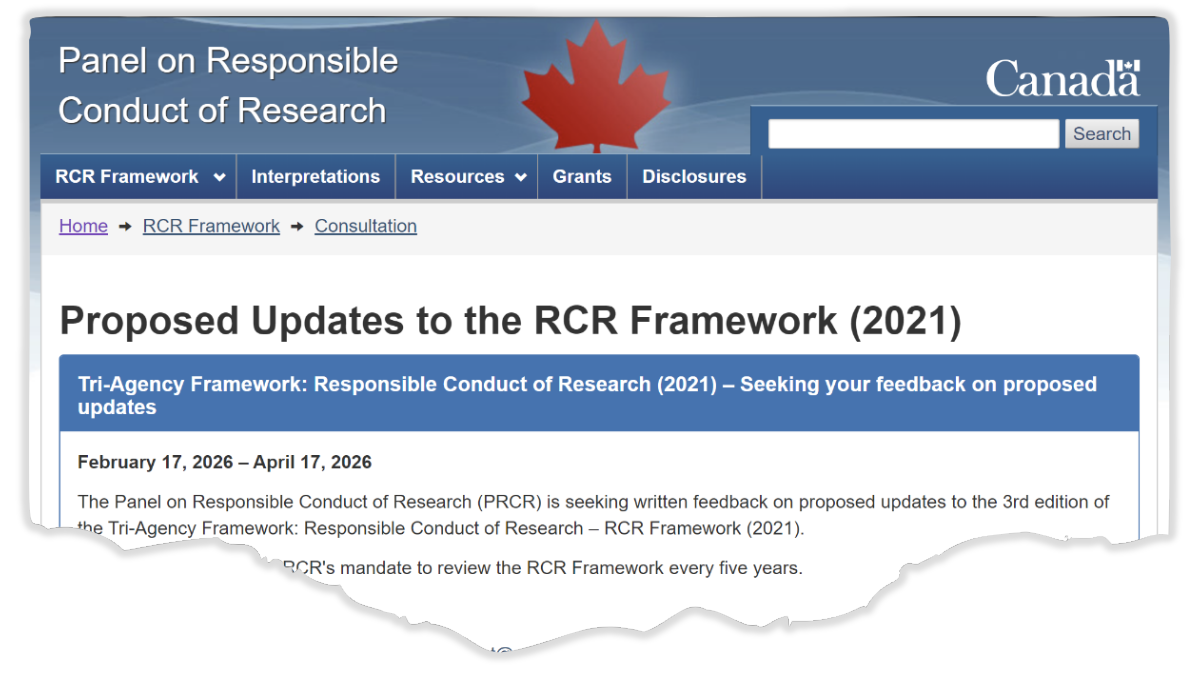
Canadian panel seeks to add more teeth to research oversight

Public comment is invited through April 17, 2026.

A Canadian panel is proposing several changes to its guidelines for responsible conduct of research, including a provision that effectively removes any statute of limitations on investigations into potential misconduct. 

The proposed revisions, from the Canadian Panel on Responsible Conduct of Research (PRCR), are up for public comment until April 17 and have not been made official. The PRCR is an interdisciplinary review and advisory body to Canada’s three federal research funding agencies: the Canadian Institutes of Health Research, the Natural Sciences and Engineering Research Council, and the Social Sciences and Humanities Research Council. 

Continue reading Canadian panel seeks to add more teeth to research oversight

Could a national database of scientific misconduct rulings stop repeat offenders?

Mark Barnes (courtesy of Ropes and Gray LLC)

In an editorial published today in Science, Michael Lauer and Mark Barnes call for greater transparency in investigations of scientific misconduct with an aim toward making sure prospective academic employers know of applicants’ past misdeeds. As we’ve reported, in the absence of transparency around findings of misconduct, some universities have discovered too late they hired someone who has turned out to be a serial offender.

Lauer, who served as Deputy Director for Extramural Research at the National Institutes of Health from 2015-2025, and Barnes, a partner at Ropes and Gray LLC in Boston who has served as acting research integrity officer at several U.S. institutions, propose a tracking system similar to the National Practitioner Data Bank (NPDB). That database logs adverse actions and malpractice payments as a way to inform decisions about individual physicians by hospitals. As Lauer and Barnes note, federal law “requires a hospital to query the NPDB whenever it is considering a new applicant for medical privileges, as well as to conduct repeat queries every 2 years to make sure information on staff is up to date.” We asked Barnes to elaborate on the ideas presented in the op-ed. (He notes he is speaking only for himself here.)

Retraction Watch: You write in your op-ed universities may avoid sharing personal information — presumably including results of misconduct investigations — for fear of legal claims of defamation or violations of privacy. Are those fears valid? 

Continue reading Could a national database of scientific misconduct rulings stop repeat offenders?

A journal named a sleuth in a correction. The sleuth says that was ‘ethical editorial malpractice’

As the publishing community debates the merits of naming sleuths in retraction or correction notices, one journal did so without the sleuth’s permission — by publishing an email from the authors naming her in the correction notice. 

The sleuth calls it “ethical editorial malpractice.” The publisher says it was an “administrative error.” After Retraction Watch reached out for comment, the journal removed the text of the email from the correction notice. 

The paper, on trends in chronic kidney disease in people with lupus, appeared in BMC Nephrology in August.

Continue reading A journal named a sleuth in a correction. The sleuth says that was ‘ethical editorial malpractice’

Publisher changes citation, registration policies following Retraction Watch investigation

Wolters Kluwer global headquarters in the Netherlands

The Dutch publisher Wolters Kluwer has scrapped some of its citation and study-registration requirements at a top-ranked surgery journal founded by the U.K. plastic surgeon Riaz Agha, Retraction Watch has learned.

The move follows our investigation last month that found mandatory citation of reporting guidelines developed by Agha and published in the International Journal of Surgery (IJS) had inflated the impact factor of the open-access title, making it more attractive to authors and readers.

A blanket requirement to register all human studies before manuscript submission, contrary to recommendations from the International Committee of Medical Journal Editors, appeared to serve another of Agha’s business interests: a paid research registry he founded in 2015.

Continue reading Publisher changes citation, registration policies following Retraction Watch investigation