Weekend reads: Did a researcher ‘Obscure a Baby’s Poisoning?’; ‘Critical social media posts linked to retractions’; arXiv ‘clamps down on AI slop’

If your week flew by — we know ours did — catch up here with what you might have missed.

The week at Retraction Watch featured:

In case you missed the news, the Hijacked Journal Checker now has more than 400 entries. The Retraction Watch Database has over 63,000 retractions. Our list of COVID-19 retractions is up over 640, and our mass resignations list has 50 entries. We keep tabs on all this and more. If you value this work, please consider showing your support with a tax-deductible donation. Every dollar counts.

Here’s what was happening elsewhere (some of these items may be paywalled, metered access, or require free registration to read):

Continue reading Weekend reads: Did a researcher ‘Obscure a Baby’s Poisoning?’; ‘Critical social media posts linked to retractions’; arXiv ‘clamps down on AI slop’

Guest post: Forget pickles and ice cream. I published a fake paper on pregnancy cravings for prime numbers

Image generated by Google Gemini

I had grown weary of the constant stream and abuse of spam invitations to submit manuscripts to journals and to attend fake conferences on the other side of the world, a trend extensively studied in academia. The last straw: a solicitation from the Clinical Journal of Obstetrics and Gynecology, well outside my work in mathematics education.

Accepting the challenge, I decided to submit a deliberately nonsensical, AI-generated manuscript in response to observe how the individuals behind these supposed journals operate.

In October 2025, I wrote to someone named Henry Jackson, who had sent the article invitation in August (despite the fact that no such person is listed on the journal’s website). I sent a manuscript generated entirely by ChatGPT to test how far a publication created with zero genuine effort could go and whether there was any filtering mechanism in place to prevent a meaningless article from being published. 

Continue reading Guest post: Forget pickles and ice cream. I published a fake paper on pregnancy cravings for prime numbers

Journal retracts nearly 150 articles for compromised peer review   

A journal published by an organization that develops technical standards is retracting 147 papers for problematic peer review — and the publisher expects more to follow. 

The American Society For Testing And Materials  (ASTM) International started an investigation into its Journal of Testing and Evaluation after an ASTM vendor noticed some “irregular patterns in the peer review” in a special issue, spokesperson Gavin O’Reilly told Retraction Watch. When the publisher confirmed those patterns, ASTM decided to investigate several related issues, he said.  

The investigation revealed the peer review process in the special sections or issues had been compromised, each of the retraction notices says. 

Continue reading Journal retracts nearly 150 articles for compromised peer review   

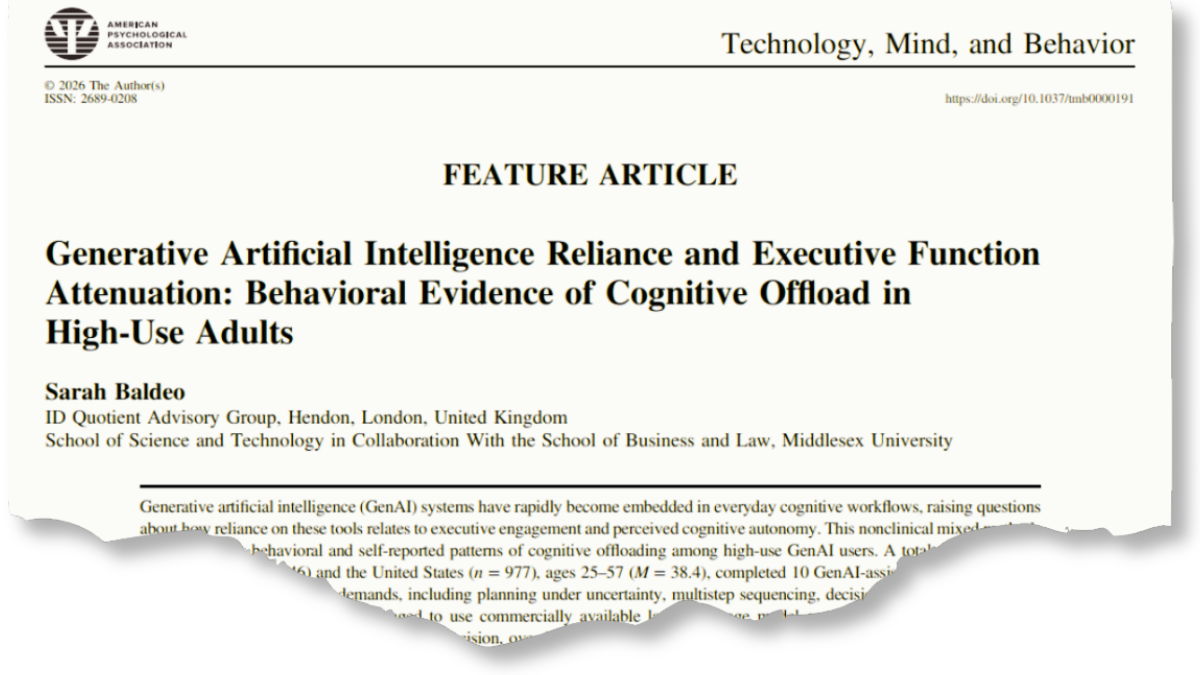
Medical journal publishes a letter on AI with a fake reference to itself

We’ve seen all kinds of articles that got published despite having references that don’t exist. But this was a new one: a paper with a made-up reference to the journal in which it appears.

While nonexistent references can indicate the use of a large language model in generating text, the authors maintain they used AI according to the journal’s guidelines. 

The letter to the editor, published in December 2024 in Intensive Care Medicine, explored ways AI could help clinicians monitor blood circulation in patients in intensive care units. The 750-word letter included 15 references.

Continue reading Medical journal publishes a letter on AI with a fake reference to itself

Engineering journal plucks poultry paper for plagiarism

Bob Nichols/USDAgov/Flickr

While plagiarism can sometimes be difficult to prove, stolen figures and identical metadata were the death knell for a recent article involving chicken mortality.

In September, the authors of a 2022 paper in the American Society of Agricultural and Biological Engineers’ journal Applied Engineering in Agriculture discovered a version of their article published by different authors in the International Journal of Engineering Research & Technology. Both papers, which had identical titles, describe the development of a robot designed to assist with detecting and removing dead chickens from farms. 

Although some of the text in the 2025 IJERT paper was altered, the images are the same as those from the ASABE paper, which has been cited 13 times, according to Clarivate’s Web of Science. The IJERT paper also replaced the word “broiler,” a chicken raised for meat production, with “grill,” including paraphrasing “broiler mortality” as “grill mortality” and “U.S. broiler industry” as “American grill business.” Such tortured phrases, which occur when common phrases are transformed into nonsensical ones, can indicate plagiarism

Continue reading Engineering journal plucks poultry paper for plagiarism

Study is stolen, sold, published. Now the victim is accused of plagiarism

The year 2026 did not start off kindly for Vijayalakshmi S, an economics researcher at RV University in Bengaluru, India. She received a rejection letter from a journal noting that a paper of hers was highly similar to another published study by other researchers. 

S couldn’t understand why that was — until she realised someone had somehow gotten hold of her study and published it as their own. She took to LinkedIn, expressing her concerns and tagging the authors responsible. The post attracted a comment from another individual, also based in India, with inside knowledge of how paper mills work. Using keywords from S’s study, he found reasons to believe authorship slots on the stolen paper had been sold on Telegram for less than $200 each. 

After S’s LinkedIn post went live, she heard from someone apologizing on behalf of a researcher who had allegedly mistakenly published her paper as a coauthor. That person was now offering her a different study on a related topic that she could publish under her name. 

Continue reading Study is stolen, sold, published. Now the victim is accused of plagiarism

Weekend reads: Why 500 retractions per month matter; another EOC for former Stanford president; and an argument for ‘slow science’

If your week flew by — we know ours did — catch up here with what you might have missed.

The week at Retraction Watch featured:

In case you missed the news, the Hijacked Journal Checker now has more than 400 entries. The Retraction Watch Database has over 63,000 retractions. Our list of COVID-19 retractions is up over 640, and our mass resignations list has 50 entries. We keep tabs on all this and more. If you value this work, please consider showing your support with a tax-deductible donation. Every dollar counts.

Here’s what was happening elsewhere (some of these items may be paywalled, metered access, or require free registration to read):

Continue reading Weekend reads: Why 500 retractions per month matter; another EOC for former Stanford president; and an argument for ‘slow science’

Fabricated allegations of image manipulation baffle expert

The fabricated claim about image manipulation raises a question: Why bother?

Mike Rossner had never seen anything like it. At first, the anonymous comment on PubPeer, which claimed a lane of a western blot in a research paper had been duplicated, seemed nothing out of the ordinary to Rossner, who specializes in detecting image manipulation in biomedical research. The surprise came when he looked closer at the magnified images the commenter had provided to support their allegation.

While the two enlarged lanes in the anonymous comment were indeed identical to each other, close inspection of the original image from the paper, which the comment included, clearly showed two different lanes. It wasn’t hard to see how the fakery had been achieved: A single lane had been copied and pasted on top of an adjacent lane.

“I have looked at thousands of PubPeer allegations, and this is the first time I have come across what appear to be fabricated allegations,” Rossner told us.

Continue reading Fabricated allegations of image manipulation baffle expert

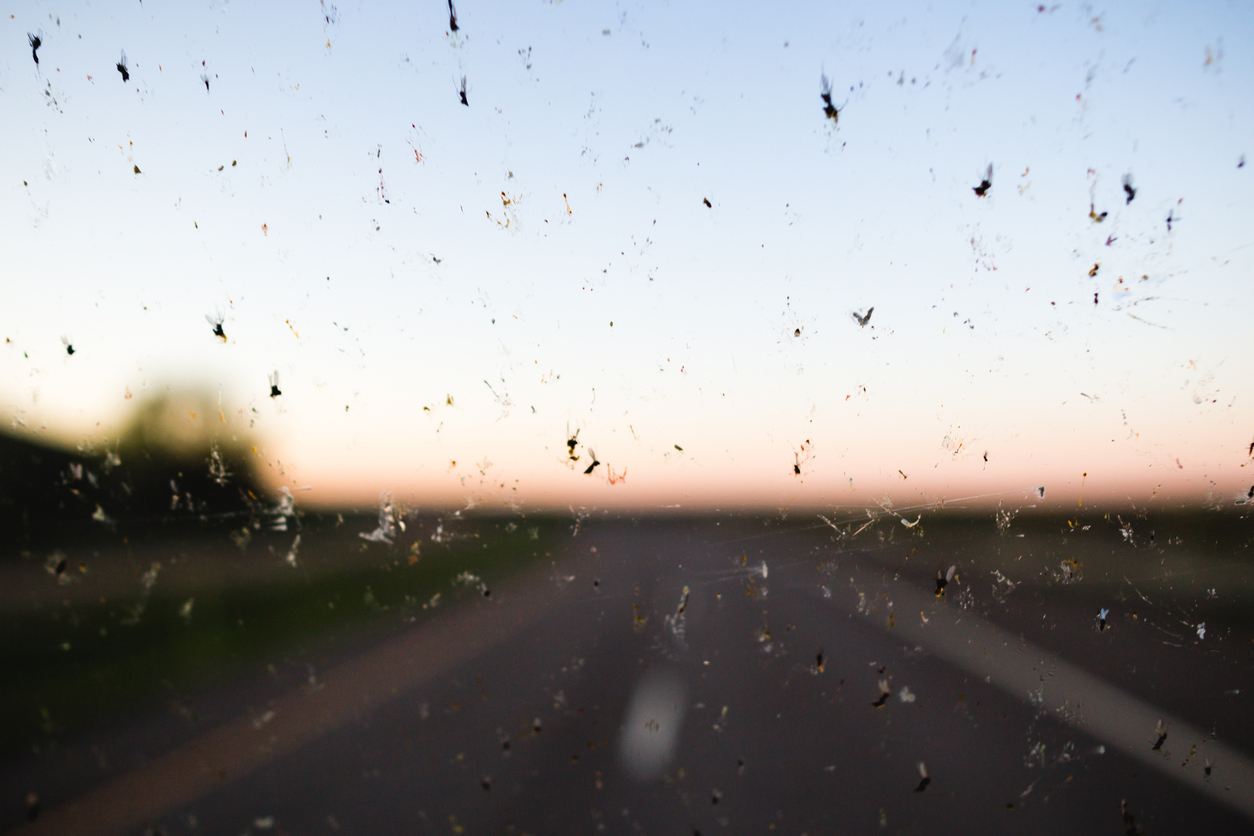
‘Kicking the can down the road’: Science flags insect meta-analysis based on allegedly buggy database

An insect meta-analysis published in Science in 2020 has been hit with an EOC. (Photo credit: Aron Sousa)

Science has issued a permanent expression of concern for a paper reporting a meta-analysis of a database including studies critics have said were “experimentally manipulated.” 

The notice, published today, applies to a 2020 meta-analysis measuring population patterns of freshwater and terrestrial insects and predicting what might drive changes in population numbers. According to the notice, the move comes after critics raised concerns about a database, called InsectChange, on which the meta-analysis was based. The database itself was published in 2021 in Ecology, a journal of the Ecological Society of America. 

The Science article has been cited 820 times, according to Clarivate’s Web of Science. The Ecology paper has been cited 23 times. 

Continue reading ‘Kicking the can down the road’: Science flags insect meta-analysis based on allegedly buggy database

Lawsuit fails to block retraction of paper claiming to link heart-related deaths to COVID-19 vaccines

Greg J. Marchand in a photo from his research institute’s website.

A Taylor & Francis journal has retracted a widely-read paper linking cardiac-related mortality to COVID-19 vaccines after an unsuccessful legal attempt by the lead author to block the withdrawal. That author says he is considering further legal action against the publisher.

The article, “Risk of all-cause and cardiac-related mortality after vaccination against COVID-19: A meta-analysis of self-controlled case series studies,” drew swift criticism when it was published in Human Vaccines & Immunotherapeutics in August 2023. At the time, critics and sleuths were quick to challenge the data and methods used in the paper, which now has more than 143,000 views on the Taylor & Francis website and has been cited 15 times, including by two letters to the editor of the journal and a response from the authors, according to Clarivate’s Web of Science. 

The retraction notice, posted online January 16, states the retraction resulted from concerns that arose about the methodology of the study and the integrity and availability of the data. The authors provided a full response to the queries; however, the publisher determined the validity of the findings remained in question, the notice states. It continues:

Continue reading Lawsuit fails to block retraction of paper claiming to link heart-related deaths to COVID-19 vaccines