How a typo in a catalog number led to the correction of a scientific paper — and what we can learn from that
Anita Bandrowski

Papers are corrected for lots of different reasons. In this guest post, Anita Bandrowski, who leads an initiative designed to help researchers identify their reagents correctly, describes one unusual reason for a correction — and explains what researchers can learn from the episode.

Last December, Tianyi Wang and her colleagues published a very interesting paper in Cell Metabolism on the potential link between a gene called JAK/STAT3 and breast cancer. It turns out that breast cancers become resistant to chemotherapy via a pathway that involves JAK/STAT3, and blocking this pathway can re-sensitize the tumor to chemotherapy.

But six months later, they corrected the paper — because of typos in the catalog numbers they’d used. Continue reading How a typo in a catalog number led to the correction of a scientific paper — and what we can learn from that

“Sufficiently serious” issues in study prompt company to yank drug approval application in China

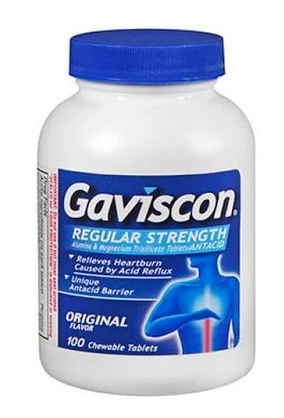
The maker of a leading over-the-counter antacid has withdrawn its application for approval of the drug in China because a clinical trial of the product in that country was marred by “major protocol deviations.”
Researchers for the company, Reckitt Benckiser, maker of Gaviscon, had published a report on the study in 2015 in the journal Alimentary Pharmacology & Therapeutics. But the journal has now retracted the article, “Randomised clinical trial: The clinical efficacy and safety of an alginate‐antacid (Gaviscon Double Action) versus placebo, for decreasing upper gastrointestinal symptoms in symptomatic gastroesophageal reflux disease (GERD) in China,” at the behest of the drug maker.

According to the notice: Continue reading “Sufficiently serious” issues in study prompt company to yank drug approval application in China

Harvard and the Brigham recommend 31 retractions for cardiac stem cell work

Piero Anversa

Retraction Watch readers may be familiar with the name Piero Anversa. Until several years ago, Anversa, a scientist at Harvard Medical School and the Brigham and Women’s Hospital, was a powerful figure in cardiac stem cell research.

“For ten years, he ran everything,” says Jeffery Molkentin, a researcher at Cincinnati Children’s whose lab was among the first to question the basis of Anversa’s results in a 2014 paper in Nature. Continue reading Harvard and the Brigham recommend 31 retractions for cardiac stem cell work

Weekend reads: Fired for challenging authorship?; homeopathy paper earns a flag; sentenced to playing piano — for embezzling research funds

Before we present this week’s Weekend Reads, a question: Do you enjoy our weekly roundup? If so, we could really use your help. Would you consider a tax-deductible donation to support Weekend Reads, and our daily work? Thanks in advance.
The week at Retraction Watch featured more than a dozen corrections at Sloan Kettering, three retractions from the principal investigator of a multi-million dollar Federal grant; and a rift at an international medical association over plagiarism. Here’s what was happening elsewhere: Continue reading Weekend reads: Fired for challenging authorship?; homeopathy paper earns a flag; sentenced to playing piano — for embezzling research funds

Retraction Watch readers, we need your help to be able to continue our work

Dear Retraction Watch readers:

Have you seen our database of retractions?

While we’re still putting finishing touches on it before an official launch, with more than 18,000 retractions, it’s already the most comprehensive collection of retractions anywhere. We have learned a great deal as we’ve gathered those retractions, which we look forward to sharing quite soon, along with ways that the database can help cut down on waste in research, but — and this is key — it has been painstaking work.

Because of how scattered, incomplete, and sometimes even wrong retraction notices are, every retraction must be located, double-checked, and entered by hand. That means all 18,244, at the time of this writing — and growing every day. Our researcher spends much of her time curating the database, assisted at various points by a small army of terrific librarians, graduate students, and others interested in cleaning up the literature.

As you can guess, this effort requires resources. We have been fortunate to have this and other work funded by generous grants over the years, going back to 2014, but those grants have ended. We are always in discussions with past and potential funders — and would be grateful to hear suggestions on that front — but as is the case for most non-profits, our future depends on maintaining sufficient financial support. We’re therefore asking you to consider a tax-deductible financial contribution to our parent non-profit organization, The Center For Scientific Integrity. Continue reading Retraction Watch readers, we need your help to be able to continue our work

In wake of media scrutiny, Sloan Kettering author adds financial disclosures

Michelle Bradbury, via MSKCC

A month after a journalism investigation that led to resignations and turmoil at Memorial Sloan Kettering Cancer Center in New York, researchers including a Sloan Kettering scientist have quietly corrected at least two papers to add disclosures of financial conflicts of interest.

The two corrections, in Chemistry of Materials, are dated October 8, 2018 and read: Continue reading In wake of media scrutiny, Sloan Kettering author adds financial disclosures

University of Kentucky cancer toxicologist retracts three papers for image duplication

Xianglin Shi

A researcher at the University of Kentucky who studies the cancer risks of toxic chemicals has retracted three papers.

All of the retraction notices, which appear in the Journal of Biological Chemistry, refer to some kind of image duplication. The papers were originally published between 2014 and 2017, with the 2014 paper cited 39 times, according to Clarivate Analytics’ Web of Science.

Continue reading University of Kentucky cancer toxicologist retracts three papers for image duplication

Canadian Medical Association leaves international group after president plagiarizes past president’s speech

The address was supposed to be a triumphant inaugural speech.

On Friday, Leonid Eidelman, the incoming president of the World Medical Association (WMA), made up of representatives from national medical associations, stood up in front of the group’s members in Reykjavik, Iceland, and told them it was a great honor to become their leader.

The trouble was, his speech had lifted passages from various sources — including remarks one of his predecessors had given in 2014. The following morning, members of the Canadian Medical Association (CMA) — including Chris Simpson, who had delivered the original 2014 speech — made a motion for Eidelman to resign. When that failed, the CMA said it was leaving the WMA.

CMA president Gigi Osler said in a statement: Continue reading Canadian Medical Association leaves international group after president plagiarizes past president’s speech

Weekend reads: Views on the “grievance studies” hoax; universities play “pass the harasser;” what next for NEJM?

Before we present this week’s Weekend Reads, a question: Do you enjoy our weekly roundup? If so, we could really use your help. Would you consider a tax-deductible donation to support Weekend Reads, and our daily work? Thanks in advance.

The week at Retraction Watch featured questions about what should happen to a paper published by Theranos; a replication of a famous paper on treatment of writer’s block that led to — well, you’ll see; a researcher joining our leaderboard’s top 10; and a data faker who became chief scientific officer of a cannabis product company. Here’s what was happening elsewhere: Continue reading Weekend reads: Views on the “grievance studies” hoax; universities play “pass the harasser;” what next for NEJM?

Chief scientific officer of a high-flying cannabis product company faked data at the NIH

The chief scientific officer of a cannabis product company whose stock price has been hotter than a flaming joint (sorry) was known more than 18 months ago to have committed research misconduct while at the U.S. National Institutes of Health — casting a cloud of suspicion over the firm’s operations.

Marketwatch reported yesterday that the company, India Globalization Capital, which trades on the New York Stock Exchange as IGC, has at least nine other “red flags” for investors, from questions about its ability to manufacture cannabinoids to a history of trouble with the U.S. Securities and Exchange Commission.

Until August, the company’s stock had been trading below 50 cents per share. It began a dramatic rise, eventually reaching $13 per share. MarketWatch notes:

Continue reading Chief scientific officer of a high-flying cannabis product company faked data at the NIH