Exclusive: Journal to retract Alzheimer’s study after investigation finds misconduct

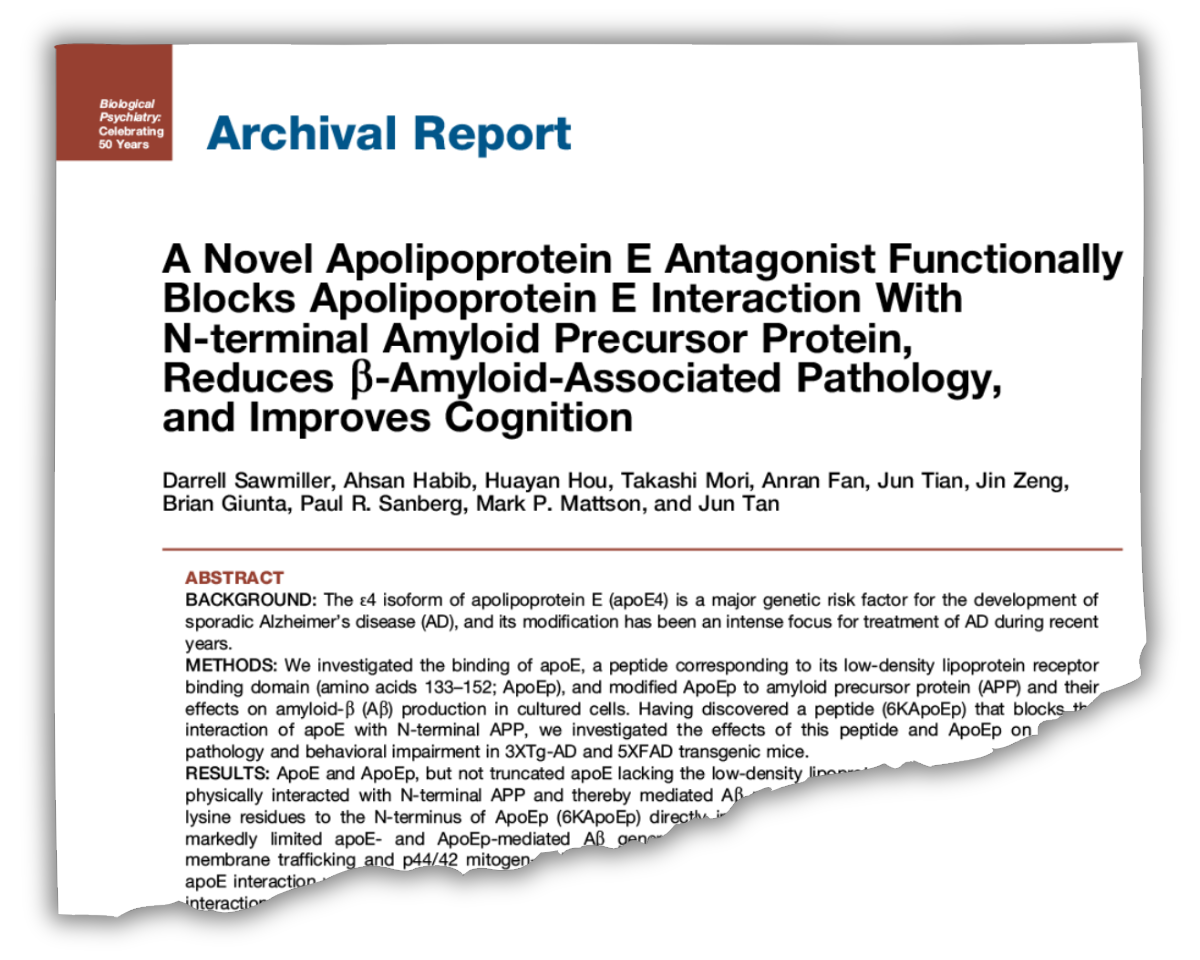
A journal says it will retract a 2019 paper on an Alzheimer’s treatment after an institutional investigation found research misconduct, according to emails seen by Retraction Watch. The move comes four years after another investigation by the same university uncovered image duplication in a different paper by a similar group of authors.

The paper, published in Biological Psychiatry, describes the potential of an apoE antagonist for treatment in Alzheimer’s disease. 

A 2019 news release by the University of South Florida, home to several of the researchers involved in the study, called the work “promising.” Lead author Darrell Sawmiller, an assistant professor at USF, said the study represented “the first time … we have direct evidence” apoE “acts as an essential molecule” in the mechanisms leading to Alzheimer’s. 

Continue reading Exclusive: Journal to retract Alzheimer’s study after investigation finds misconduct

Exclusive: Iraqi university forcing students to cite its journals to graduate

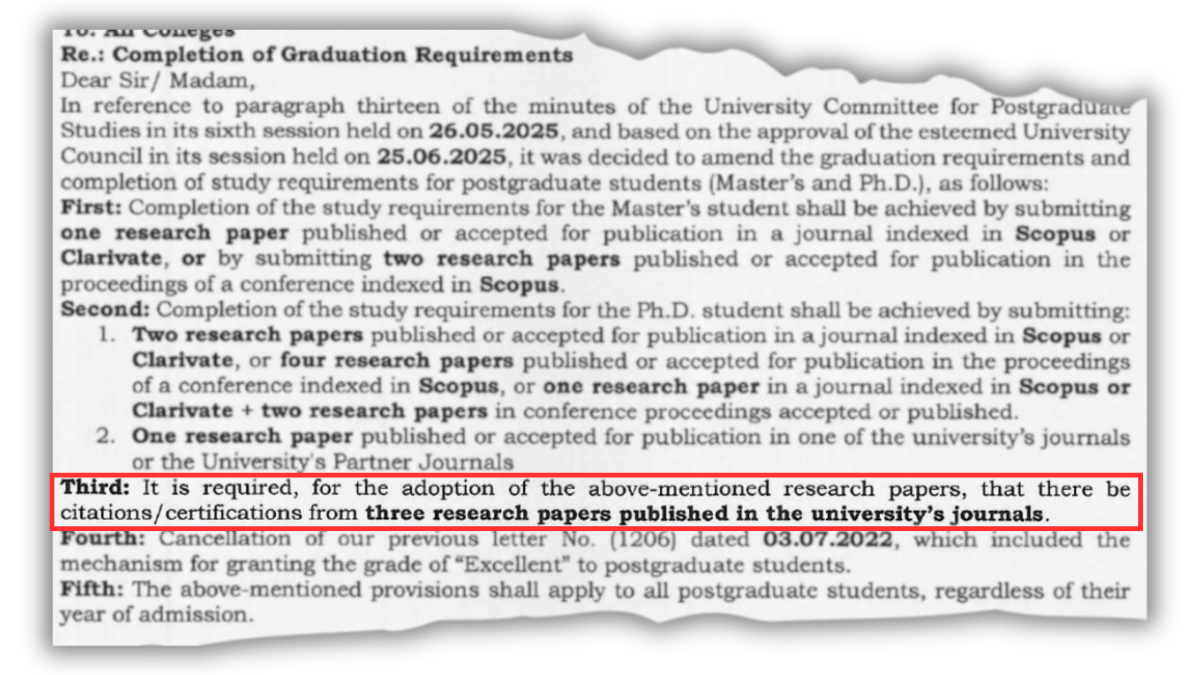
To earn their degrees, graduate students at the University of Technology in Baghdad not only must publish research in indexed journals. They also are required to cite articles in their school’s own publications, a document obtained by Retraction Watch shows.

Experts who reviewed the document called the citation requirement “deceptive and despicable” and said it could carry a steep price for the journals involved, one of which is indexed in Scopus.

Coercive citation is widespread in academia and can help boost the rankings of publications, institutions and individual researchers. The practice is considered unethical and may trigger heavy penalties.

Continue reading Exclusive: Iraqi university forcing students to cite its journals to graduate

Exclusive: Iraqi physicist fired by ministry over massive publishing scam

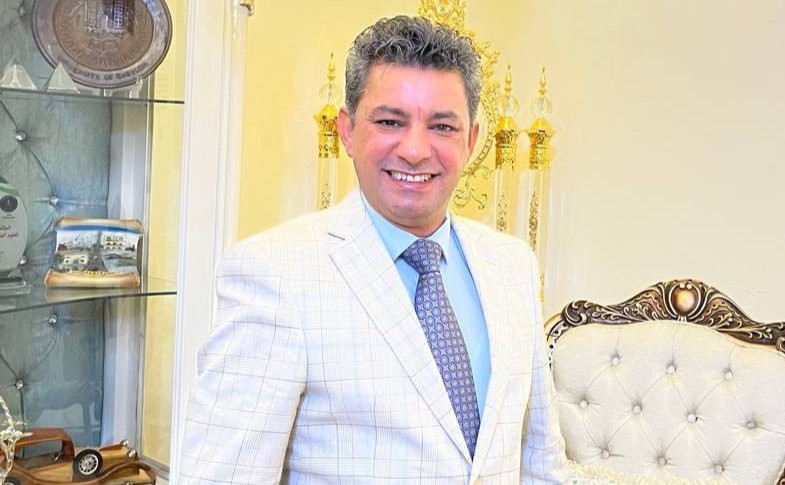
Oday A. Al-Owaedi

A professor of physics in Iraq was permanently dismissed last week after a government investigation found he orchestrated a massive fraudulent publishing scheme involving hundreds of thousands of dollars paid into his bank account by unwitting researchers, documents obtained by Retraction Watch show.

The scam included a deal between a prominent association of Iraqi academics and a predatory publisher, as well as the creation of a fake journal website and bogus acceptance letters purporting to be from reputed journals.

According to a ministerial order dated September 9 and obtained by Retraction Watch, the physicist, Oday A. Al-Owaedi, who also goes by several other names, defrauded “researchers by collecting money from them under the pretext of publishing their papers in reputable international journals as promised, while in fact falsifying and forging publication in fake websites.”

Continue reading Exclusive: Iraqi physicist fired by ministry over massive publishing scam

Exclusive: Publisher investigating DNA contamination paper that authors say CDC vaccine committee will consider

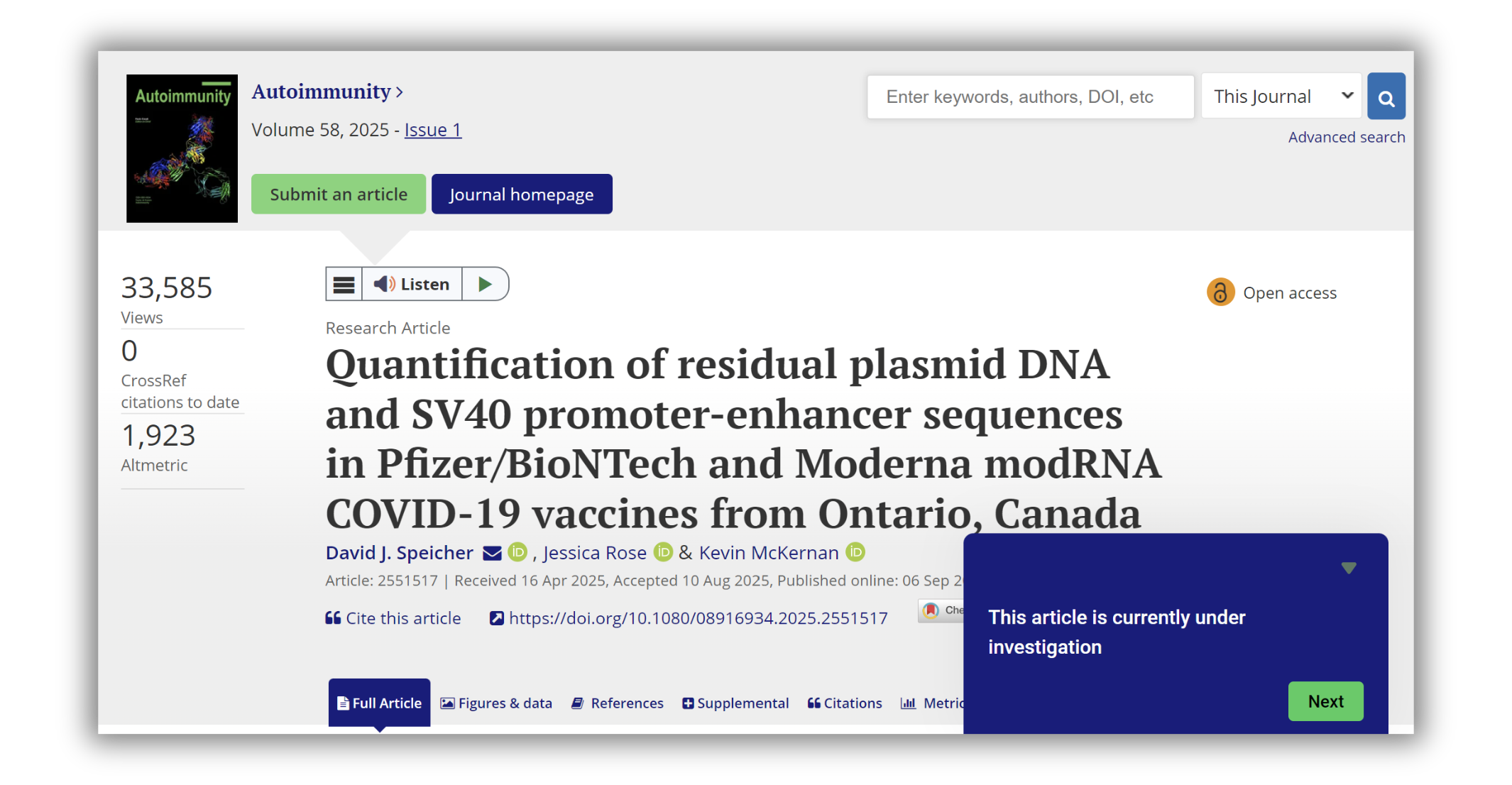
The publisher Taylor & Francis is investigating concerns raised on PubPeer about a paper claiming to find DNA contamination in COVID-19 vaccines beyond regulators’ recommended amounts. 

The move comes as the U.S. body tasked with making recommendations for vaccine use is scheduled to consider the safety of COVID-19 shots, and two of the study’s authors say their findings will be discussed.

The paper at issue was published September 6 in the journal Autoimmunity, a Taylor & Francis title. Scientific sleuth Kevin Patrick soon posted concerns on PubPeer, which he forwarded to the ethics department of the publisher. 

Continue reading Exclusive: Publisher investigating DNA contamination paper that authors say CDC vaccine committee will consider

Exclusive: Journal bans drug safety database papers as they flood the literature

celafon/iStockPhoto

Starting around 2023, a curious trend took hold in papers on drug safety monitoring. The number of articles published on an individual drug and its link to specific adverse events went from a steady increase to a huge spike. 

The data source in most of those articles was largely the same: The FDA Adverse Events Reporting System, or FAERS. In 2021, around 100 studies mining FAERS for drug safety signals were published. In 2024, that number was 600, with more than that already published this year. 

Two journals in particular published the bulk of these papers, Frontiers in Pharmacology and Expert Opinion on Drug Safety. In response to the flood, Frontiers started to require independent validation of studies drawing on public datasets. And Expert Opinion on Drug Safety decided in late July to stop accepting submissions altogether that use the FAERS database for this particular type of study. 

Continue reading Exclusive: Journal bans drug safety database papers as they flood the literature

Exclusive: Cancer researcher sues MD Anderson over misconduct finding

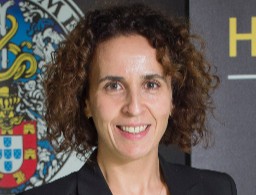
Sonia Melo

A biochemist who worked as a postdoc at The University of Texas MD Anderson Cancer Center in Houston has sued the institution to dispute findings of research misconduct. 

The researcher, Sonia Melo, now at the University of Porto in Portugal, alleges MD Anderson did not follow its own policies while conducting its investigation. Melo lost a prestigious grant in 2016 after one of her papers was retracted for containing duplicated images. 

MD Anderson’s investigation concerned a paper published in Cancer Cell in 2014. On August 7 the journal marked it with a “temporary Expression of Concern” detailing duplicated and relabeled data found in the probe, which was completed in May 2024. The article has been cited 1,462 times, according to Clarivate’s Web of Science. 

Continue reading Exclusive: Cancer researcher sues MD Anderson over misconduct finding

Exclusive: U.S. federal research integrity teams take hits with departures 

Amid efforts by the Trump administration to “put an end to fraudulent and wasteful spending” and “enhance” accountability, two key offices charged with investigating fraud and holding scientists and institutions accountable for federal spending have seen top leadership depart.

At the National Science Foundation’s Office of Inspector General (OIG), the changes start at the top: Inspector General Allison Lerner is departing, and Megan Wallace, currently assistant inspector general for investigations at NSF, will become the acting inspector general, effective March 1.

Deputy Inspector General Ken Chason is also departing. The acting deputy will be Catherine DelPrete, who is NSF’s general counsel to NSF’s inspector general, according to her LinkedIn profile.

The changes were confirmed by Nadine Lymn, communications director of the National Science Board, which appoints and supervises NSF’s inspector general. 

Meanwhile, Retraction Watch has learned that most — if not all — research investigators at the National Science Foundation’s Office of the Inspector General (OIG) will also be leaving their jobs.  

Continue reading Exclusive: U.S. federal research integrity teams take hits with departures 

Exclusive: Extensive correction to Genentech PNAS article will get an update after RW inquiry

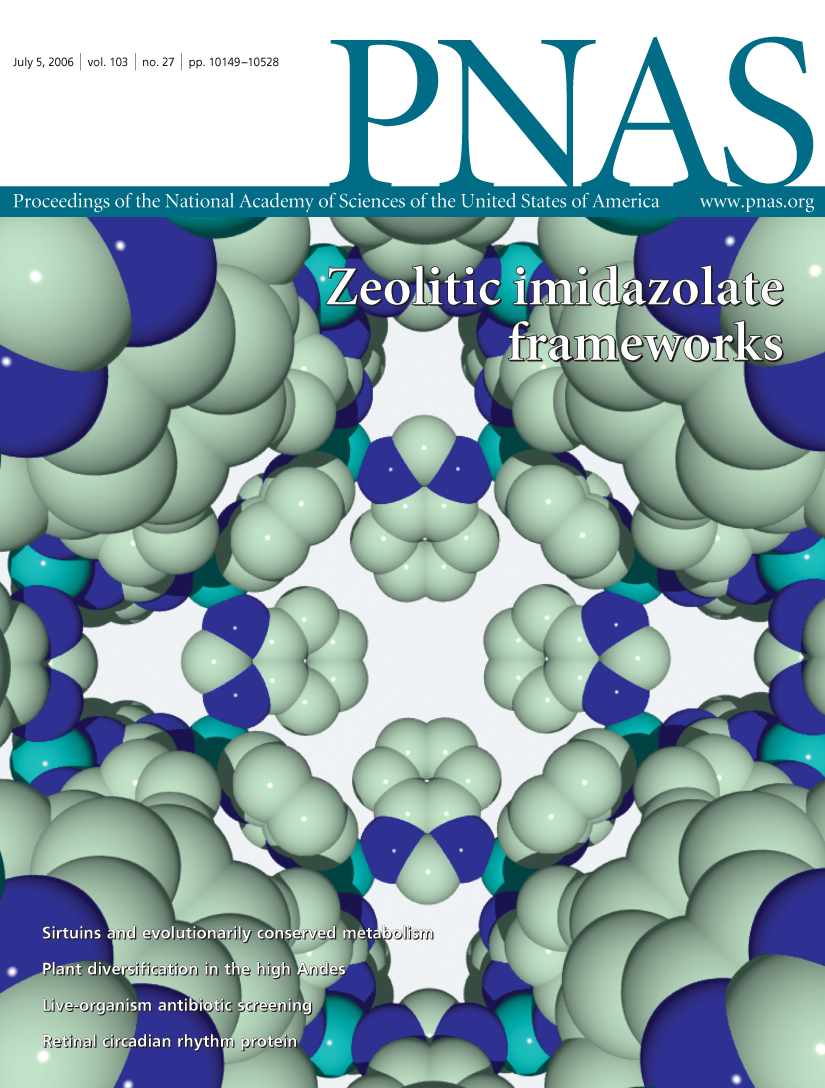
Cover of the July 5, 2006 issue of PNAS

An article by Genentech scientists received an extensive correction in January for multiple instances of image duplications after comments on PubPeer spurred the authors to review the work. 

But the correction “inadvertently omitted” an additional duplication, and will be updated after Retraction Watch brought the matter to the journal’s attention, a representative for the publication said. The sleuth who identified the additional duplication said the original article should have been retracted instead of corrected. 

The article, “Death-receptor activation halts clathrin-dependent endocytosis,” appeared in July 2006 in Proceedings of the National Academy of Sciences, with a correction issued that September. It has been cited 99 times, according to Clarivate’s Web of Science. 

Continue reading Exclusive: Extensive correction to Genentech PNAS article will get an update after RW inquiry

Exclusive: Researcher who received settlement to leave University of Iowa won’t be starting new job

Kaikobad Irani

A cardiology researcher who left the University of Iowa with a six-figure settlement earlier this year won’t be starting the new job he’d lined up at the Providence VA Medical Center, Retraction Watch has learned. 

Justyn Charon, a spokesperson for the Providence VA, previously told us the researcher, Kaikobad Irani, would begin his new position “around November.” When we followed up, Charon confirmed, “there is currently no plan for Dr. Irani to be employed by VA Providence.” 

In the meantime, the University of Iowa in Iowa City has launched an investigation about the leak of a report regarding Irani to Retraction Watch that appears to be an attempt to identify the source of the document.

Continue reading Exclusive: Researcher who received settlement to leave University of Iowa won’t be starting new job

Exclusive: New hijacking scam targets Elsevier, Springer Nature, and other major publishers

Until recently, journal hijackers do not appear to have targeted titles from big publishers, in part because their well-known website designs made such clones easy to detect.

Typically, cloned versions of journals’ websites are of low quality and don’t resemble the recognizable and professional designs of Springer Nature and Elsevier. As described in previous posts, fraudulent publishers would usually copy the ISSN, title and other metadata of niche and university journals in order to avoid identification, and possibly index their unauthorized content in bibliographic databases such as Scopus or Web of Science

We’ve cataloged over 300 such cloned journals in the Retraction Watch Hijacked Journal Checker, a small number of which involve major publishers like Springer Nature, Elsevier and Wiley. For example, earlier this year the Journal of Academic Ethics and Machine Intelligence Research, both published by Springer Nature, were cloned.

But earlier this month, William Black, founder and CEO of PSIref, an online platform aggregating scholarly publication data which offers advertising opportunities for publishers, sent me evidence of a new, more sophisticated scam.

Continue reading Exclusive: New hijacking scam targets Elsevier, Springer Nature, and other major publishers