Exclusive: Cancer researchers in Iran under investigation as questions swirl around dozens of studies

Fraidoon Kavoosi

Year after year, a husband-and-wife team at a university in Iran has been publishing studies involving research on cell lines ostensibly purchased from the Pasteur Institute of Iran, in Tehran. 

But the couple may never have been in possession of the cells. In correspondence obtained by Retraction Watch, the Pasteur Institute told their employer, Jahrom University of Medical Sciences, only three of the many cell lines described in their publications had been available at the national cell bank over the past decade.

A university official confirmed the two researchers – Fraidoon Kavoosi, an associate professor in the department of anatomical science, and his wife Masumeh Sanaei, an assistant professor in the same department – were under investigation.

Continue reading Exclusive: Cancer researchers in Iran under investigation as questions swirl around dozens of studies

Exclusive: Editorial board member quits over journal’s handling of plagiarized paper

Dirk H. R. Spennemann

An architecture journal’s “failure to act in a timely and proactive manner” in a case of plagiarism in a now-retracted review article has sparked the resignation of a member of its editorial board, Retraction Watch has learned.

“I am appalled that it took, essentially, from November 2022 until now, September 2024, to resolve what was a fairly straightforward matter,” Dirk H. R. Spennemann, of Charles Sturt University in Albury, Australia, wrote in a Sept. 18, 2024, email to the editor-in-chief of Buildings, an MDPI title.  

The offending paper, “A Review on Building Design as a Biomedical System for Preventing COVID-19 Pandemic,” was published in April 2022 in a special issue Spennemann had edited.

But in June of that year, Marco Spada, a senior lecturer in architecture at the University of Suffolk in the United Kingdom, informed Buildings the work borrowed heavily from two previous publications without proper citation. Although many sentences had been reworded using synonyms, the plagiarism was extensive and obvious.

Spada had recognized the article, a version of which he had previously reviewed – and rejected – as a referee for Sustainability, a different MDPI journal. Elements such as the title, the order in which the authors appeared and some of the abstract had changed, Spada told us. But it was still the same paper.

“Clearly they managed to outsmart the system,” Spada said.

Continue reading Exclusive: Editorial board member quits over journal’s handling of plagiarized paper

Exclusive: Providence VA hires scientist previous employer found had harassed mentees

Kaikobad Irani

The University of Iowa found a cardiology researcher violated multiple of its policies, including harassing his former mentees when they tried to leave his lab to establish labs of their own, according to an investigation report obtained by Retraction Watch. 

The researcher, Kaikobad Irani, left the school last month with a six-figure settlement, and has a new job lined up, Retraction Watch has learned. 

Irani studies the molecular mechanisms of the function and dysfunction of blood vessels. He’s listed as an inventor on four patents, including an active one regarding a compound that could lower the risk of heart attacks and strokes. 

One of Irani’s active grants names the Providence VA Medical Center as the awardee organization. A spokesperson for the VA Providence Healthcare System confirmed Irani “is in the process of onboarding and is expected to begin working around November.” 

Continue reading Exclusive: Providence VA hires scientist previous employer found had harassed mentees

Exclusive: One university’s three-year battle to retract papers with fake data

Richard Eckert

In 2021, the provost of the University of Maryland, Baltimore sounded the alarm about a troubling batch of papers from the lab of Richard Eckert, the former chair of the Department of Biochemistry and Molecular Biology at the institution. 

The provost sent letters to the editors of seven journals calling out a string of serious issues.  Based on the university’s investigation, the papers contained duplicated, fabricated and falsified data, according to emails obtained by Retraction Watch. 

But more than three years later, the results of those alerts are mixed: Of the 11 papers the university flagged in 2021, editors corrected three and retracted two. Six still await resolution, with no apparent action taken by the journals. 

Continue reading Exclusive: One university’s three-year battle to retract papers with fake data

Exclusive: Editor resigns after he says publisher blocked criticism of decision to retract paper on gender dysphoria

Michael Bailey

A Springer Nature journal has rescinded the acceptance of a paper criticizing the publishing giant’s controversial retraction last year of an article that surveyed parents of children with gender dysphoria, leading an associate editor to resign, Retraction Watch has learned.

According to emails we obtained, the blocked paper was slated to appear as a commentary in a special issue of Springer Nature’s Current Psychology that aimed “to stimulate discussion of all aspects of the ‘unpublication’ of scientific articles.”

“This is the only time I’ve had an accepted paper overruled in 4 years” as an associate editor at this journal, Christopher Ferguson of Stetson University in Florida, one of two guest editors of the special issue, told us by email.

Continue reading Exclusive: Editor resigns after he says publisher blocked criticism of decision to retract paper on gender dysphoria

Exclusive: Thousands of papers misidentify microscopes, in possible sign of misconduct

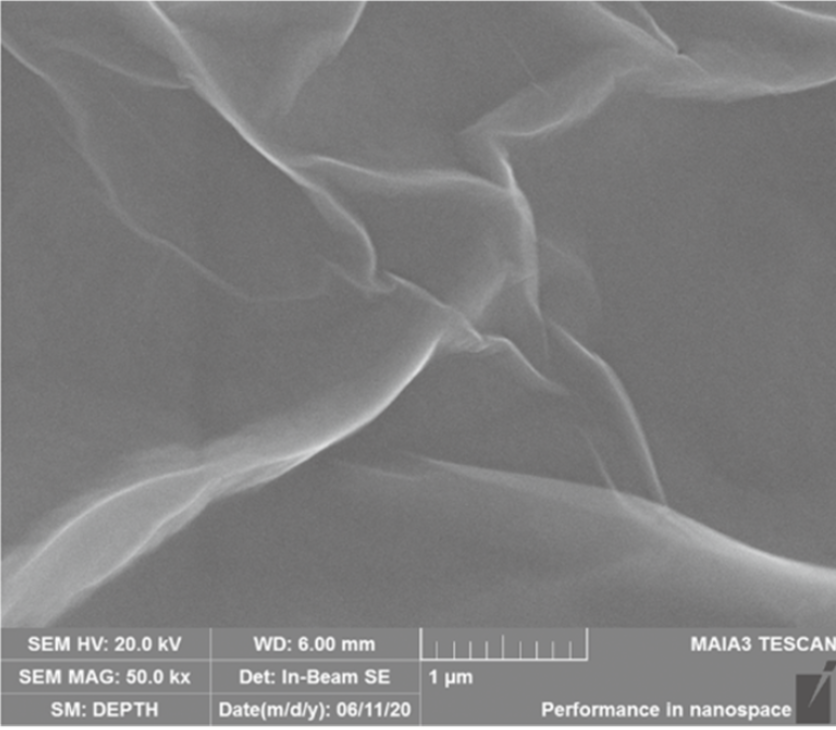
One in four papers on research involving scanning electron microscopy (SEM) misidentifies the specific instrument that was used, raising suspicions of misconduct, according to a new study. 

The work, published August 27 as a preprint on the Open Science Framework , examined SEM images in more than 1 million studies published by 50 materials science and engineering journals since 2010. 

Researchers found only 8,515 articles published the figure captions and the image’s metadata banners, both of which are needed to determine whether the correct microscope is listed in papers. Metadata banners usually contain important information about the experiments conducted, including the operating voltage of the microscope and the instrument’s model and parameters. 

Of these papers, 2,400 (28%) listed the wrong microscope manufacturer or model, raising questions about the integrity of the conducted research. 

Continue reading Exclusive: Thousands of papers misidentify microscopes, in possible sign of misconduct

Exclusive: Publisher retracts more than 450 papers from journal it acquired last year

Sage has retracted 467 articles from the Journal of Intelligent and Fuzzy Systems, a title it took on when it acquired IOS Press last November for an undisclosed sum. 

The publisher “launched a thorough investigation” into the journal in April, according to a spokesperson, after the indexing company Clarivate “informed us about concerns relating to the quality of some of the journal’s content.”

“The investigation found that the peer review process for some articles was inadequate, leading to the retraction of these articles,” the spokesperson said. 

The journal’s editor in chief, Reza Langari of Texas A&M University in College Station, resigned on June 16 “due to differences of opinion on how to proceed” with Sage’s investigation, he told Retraction Watch. 

Continue reading Exclusive: Publisher retracts more than 450 papers from journal it acquired last year

Exclusive: Biochemistry journal retracts 25 papers for ‘systematic manipulation’ of peer review

A journal of the UK-based Biochemical Society is retracting 25 papers after finding “systematic manipulation of our peer-review and publication processes by multiple individuals,” according to a statement provided to Retraction Watch. 

The batch of retractions for Bioscience Reports is “​​the first time that we have issued this many retractions in one go for articles that we believe to be connected,” managing editor Zara Manwaring said in an email. 

As academic publishing grapples with its papermill problem, many firms are retracting articles by the dozens, hundreds, or even thousands after discovering foul play

Bioscience Reports already had retracted 20 papers this year, by our count. The latest batch means the journal’s yearly total will surpass 2023, when it pulled 32 papers, and the year before, when it pulled 26. 

Continue reading Exclusive: Biochemistry journal retracts 25 papers for ‘systematic manipulation’ of peer review

Exclusive: Publisher to retract article for excessively citing one researcher after Retraction Watch inquiry

Muhammed Imam Ammarullah

A paper that cited a single researcher’s work in 53 of 64 references will be retracted following our inquiries, the publisher of the journal has told Retraction Watch. 

The article, ‘Culturally-informed for designing motorcycle fire rescue: Empirical study in developing country’, published in June in AIP Advances, overwhelmingly cites the work of Muhammed Imam Ammarullah, a lecturer at Universitas Pasundan in West Java, Indonesia, sometimes without obvious relevance to the text. 

An anonymous tipster came across the soon-to-be retracted paper on Google Scholar, then alerted the editors at AIP Advances in June to the strange citation pattern. The journal investigated, but didn’t acknowledge a problem with the excessive citations to Ammarullah’s work in their initial response to the complaint. Instead, they identified issues with six other, unrelated citations, according to emails seen by Retraction Watch. 

Continue reading Exclusive: Publisher to retract article for excessively citing one researcher after Retraction Watch inquiry

Exclusive: Prof plagiarized postdoc’s work in now-retracted paper, university found

Charles Conteh

A political scientist in Canada copied his postdoc’s work without credit in a paper, according to the retraction notice and a university inquiry report.

The paper by Charles Conteh, a professor at Brock University in St. Catharines, Ontario, appeared in Sage’s Outlook on Agriculture in October 2023. It has one citation, according to Clarivate’s Web of Science.

An inquiry by Brock identified plagiarism and uncredited authorship in the article, according to the report finalized this March and seen by Retraction Watch. Failure to give post-doctoral fellows the “opportunity to publish in peer-reviewed journals negatively impacts [them] both reputationally and financially,” the report states. 

Continue reading Exclusive: Prof plagiarized postdoc’s work in now-retracted paper, university found