A group of editors of journals focused on the history of economics has gone public to urge Clarivate Analytics, which publishes a highly influential ranking of journals, to reconsider its decision to drop the titles from this year’s index.
Researchers have retracted a 2015 Nature paper about the molecular underpinnings of immune function after discovering they could not replicate key parts of the results.
What happened appears to be a case of “he said, she said:” Littman asked to retract the paper after his lab couldn’t reproduce it, and Huang insists the data remain correct, saying the process had been “unfair and done without due process:”
Here’s a story that shows the lengths a public university — The University of Illinois at Chicago — went to block the release of information about a child psychiatry trial gone wrong, and how a reporter — Jodi S. Cohen of ProPublica — fought them effectively at every turn to reveal the truth.
A probe into the work of a researcher who studied natural products for cancer had many stops and starts along the way — including five extensions granted by the U.S. Office of Research Integrity — according to documents obtained by Retraction Watch.
Last month, the Journal of Pediatric Gastroenterology and Nutrition pulled an article on fecal transplantation for a reason that, well, doesn’t pass the sniff test.
The paper, by Sonia Michail of Children’s Hospital Los Angeles, appeared online in October 2017 and described a randomized controlled trial of fecal transplants to treat kids with ulcerative colitis. (If you’re interested, here’s an overview of how fecal transplantation works.) The trial, or one awfully like it, is listed on ClinicalTrials.gov, and shows Michail as the lone investigator on the study, which is aiming to gather more than 100 participants.
But the journal retracted the article — which was the subject of a laudatory editorial in the journal pointing readers to the findings — with an entirely opaque statement, saying that the work
Two years ago, I uploaded a preprint to arXiv.org describing what I considered serious problems, including apparently irreproducible results, that I had uncovered when analyzing a set of research articles published by the NASA Jet Propulsion Laboratory (JPL) NEOWISE project. NEOWISE is the largest scientific analysis of asteroids ever conducted; the researchers on the project have so far published estimated sizes of more than 164,000 objects in the solar system, estimates they have claimed were all derived by applying a standard approach to raw observations from the WISE space telescope.
The New England Journal of Medicine has retracted a 2013 paper that provided some proof that the Mediterranean diet can directly prevent heart attacks, stroke, and other cardiovascular problems.
Adeel Safdar was once a rising star in the field of kinesiology. After completing his doctorate degree at McMaster University in Canada, working with one of the titans of his field, Safdar took a postdoc at Harvard, then accepted a newly created chair position at another university in Ontario.
That all came crashing down last year, when Safdar went on trial in Canada, accused of horrifically abusing his wife. Over the course of the trial, allegations arose about his research, prompting two journals to flag papers he co-authored with his former mentor, Mark Tarnopolsky.
The president of the Karolinska Institutet (KI) is frustrated.
At the beginning of the year, Ole Petter Ottersen informed a journal that one of its papers — co-authored by former superstar Paolo Macchiarini — had been tainted by misconduct. But the journal declined to retract it.
Despite the fact that KI had conducted its own investigation into the integrity of the paper, the journal Respiration argued that it was “not in a position to make a judgement on whether or not to retract this article.” Instead, it proposed publishing KI’s argument for why the paper should be retracted, along with a rebuttal from the authors.
To Ottersen, this is just wrong. Yesterday, he posted some of his correspondence with the journal, which includes his request for retraction, the journal’s response, and his rebuttal. Ottersen’s blog post concludes:
 A group of editors of journals focused on the history of economics has gone public to urge Clarivate Analytics, which publishes a highly influential ranking of journals, to reconsider its decision to drop the titles from this year’s index.
 Researchers have retracted a 2015 Nature paper about the molecular underpinnings of immune function after discovering they could not replicate key parts of the results.

 Last month, the
 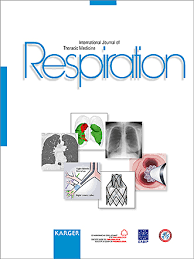 Earlier this year, the president of the Karolinska Institute,
 The New England Journal of Medicine has retracted a 2013 paper that provided some proof that the Mediterranean diet can directly prevent heart attacks, stroke, and other cardiovascular problems.
 Adeel Safdar was once a rising star in the field of kinesiology. After completing his doctorate degree at McMaster University in Canada, working with one of the titans of his field, Safdar took a postdoc at Harvard, then accepted a