Professor suspended after Japanese university finds fishy results in sushi paper

Iwate University

A university in Japan has suspended a fishery science professor for a month after its investigation found fabrication in a retracted paper on fish freezing. 

According to the investigatory report, Iwate University scrutinized a retracted paper coauthored by six researchers at the school, including Chunhong Yuan, a professor of fishery systems science. Following the researchers’ inability to provide the investigating committee with appropriate records of the reported experiment, the inquiry found Yuan and two unnamed coauthors – a graduate student and an individual now retired – fabricated claims about the experimental conditions. 

Yuan has been suspended for one month starting December 25, according to a press release. The university plans to administer additional training on research integrity for laboratory leaders, according to the report. 

Continue reading Professor suspended after Japanese university finds fishy results in sushi paper

Food science journal retracts 10 papers for compromised peer review

Farhan Saeed

A research group based in Pakistan has had 10 of their papers retracted from Wiley’s Food Science & Nutrition based on flaws in the peer review process.

According to the notices, which were identical for each article, “the editorial office found unambiguous evidence that the manuscript was accepted solely based on compromised and insufficient reviewer reports.” 

The following articles have been retracted: 

Continue reading Food science journal retracts 10 papers for compromised peer review

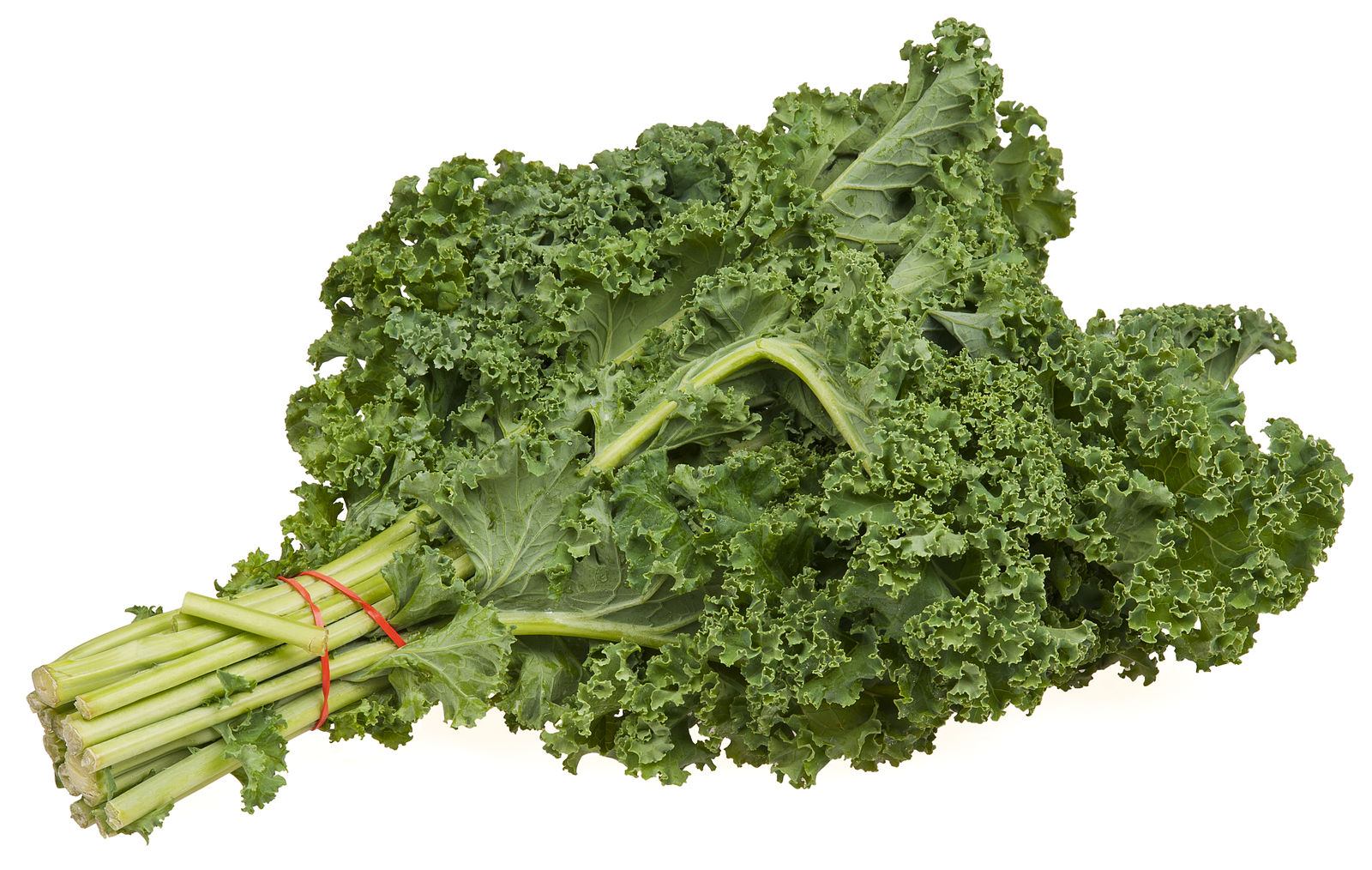
Kale ‘miracle food’ paper retracted for being ‘word salad’

Evan-Amos via Wikimedia

Kale may be a superfood, but for one paper on the vegetable, Twitter proved to be its Kryptonite. We’ll explain.

Last November, Food Science & Nutrition published an article titled “Kale (Brassica oleracea var. sabellica) as miracle food with special reference to therapeutic and nutraceuticals perspective.”

How miraculous? As the authors, from Government College University in Faisalabad, Pakistan, wrote

Continue reading Kale ‘miracle food’ paper retracted for being ‘word salad’

Food packaging journal to retract paper by researchers in Thailand

A food packaging journal plans to retract a 2018 article by Thai researchers who tried to repackage (ahem) a virtually identical article of theirs, Retraction Watch has learned.

That’s not particularly unusual; duplication, sometimes inaccurately called “self-plagiarism,” happens, as they say. What makes the case more interesting is the back-and-forth between the journal and the authors.   

Early last December, the editor of the Food Packaging & Shelf Life, Ali Abas Wani, sent a letter to Chiravoot Pechyen, of Thammasat University, the senior author on a paper FPSL had recently published online (but not yet in print): Continue reading Food packaging journal to retract paper by researchers in Thailand

That study reporting worrisome levels of zinc in tuna? It’s being retracted

Recently, a rash of news outlets posted concerns that canned tuna and other products may contain potentially dangerous levels of zinc. They were all wrong.

News outlets such as The Daily Mail and The Sun reported findings from a recent study, which showed that canned foods such as tuna may contain 100 times the daily limit of zinc — raising concerns about how such huge doses of the mineral could be causing digestion problems. The last author of the study told Retraction Watch the paper is going to be retracted, because the authors made a fundamental error calculating the amount of zinc present in canned foods.

Last week, the UK’s biggest health website NHS Choices posted a critique of the paper, in which they recalculated the levels of zinc present in canned foods:

Continue reading That study reporting worrisome levels of zinc in tuna? It’s being retracted

Caught Our Notice: Retraction eight as errors in Wansink paper are “too voluminous” for a correction

Title: Shifts in the Enjoyment of Healthy and Unhealthy Behaviors Affect Short- and Long-Term Postbariatric Weight Loss

What Caught Our Attention: Cornell food marketing researcher Brian Wansink, the one-time media darling who has been dogged by mounting criticism of his findings, has lost another paper to retraction. As we’ve noted in the past, corrections for Wansink’s work tend to be long. This time, “the number of errors is too voluminous to be executed by issuing a correction statement,” according to the retraction notice for a paper about behaviors following weight loss surgery. Continue reading Caught Our Notice: Retraction eight as errors in Wansink paper are “too voluminous” for a correction

After “considerable intellectual agony,” journal retracts Wansink paper

Eduardo Franco

Ever since critics began raising concerns about high-profile food scientist Brian Wansink’s work, he’s had to issue a series of high-profile retractions — and now has his seventh (including one paper that was retracted twice, after the journal removed a revised version, along with 14 corrections). The latest notice — first reported by BuzzFeed —  is for a paper that was originally corrected by the journal Preventive Medicine earlier this month — and the correction notice was longer (1636 words) than the original, highly cited paper (1401 words). Following criticism by James Heathers about the highly cited study back in March 2017, the authors issued a series of changes, including explaining the children studied were preschoolers (3-5 years old), not preteens (8-11), as originally claimed. (They made that mistake once before, in another retracted paper.) But critics remained concerned. Yesterday, the journal retracted the paper. We spoke with editor Eduardo Franco of McGill University — who provided us with an advanced copy of an accompanying editorial, soon to be published — about the editorial processes behind the two notices, including the moment the journal knew the correction wouldn’t suffice.

Retraction Watch: You write that the initial decision to correct the paper came with “considerable intellectual agony.” Can you say why?

Continue reading After “considerable intellectual agony,” journal retracts Wansink paper

Caught Our Notice: Forgot to make your article open access? It’ll cost you (with a correction)

Via Wikimedia

Title: Industrial antifoam agents impair ethanol fermentation and induce stress responses in yeast cells

What Caught Our Attention: When authors decide they want to make their articles freely available after they’ve already been published, how should publishers indicate the change, if at all? Recently, Ross Mounce (@rmounce) thought it was odd a Springer journal issued a formal correction notice when the authors wanted to make their paper freely available, and we can’t say we disagree.  As he posted on Twitter:

Continue reading Caught Our Notice: Forgot to make your article open access? It’ll cost you (with a correction)

Senior NOAA appointee calls for retraction of paper on illegal fishing

Chris Oliver

A top US official at the National Oceanic and Atmospheric Administration, who was recently appointed by President Donald Trump, has called for the retraction of a paper that suggests the country exports a significant amount of illegal, unreported, and unregulated fishing.

The paper, published July 6 in Marine Policy, estimated that in 2015 approximately one-fifth of Alaska pollock exports to Japan were either illegal, unreported, or unregulated — a value of as much as $75 million.

In an Oct. 11 letter (first reported by IntraFish), Chris Oliver, NOAA assistant administrator for fisheries, criticized the paper’s methodology for calculating the illegal hauls.

Oliver wrote to the journal’s editor-in-chief to say that the National Marine Fisheries Service: Continue reading Senior NOAA appointee calls for retraction of paper on illegal fishing

Prominent food researcher retracts paper from JAMA journal, replaces it with multiple fixes

Brian Wansink

Earlier this week, we reported that high-profile food researcher Brian Wansink — who’s faced months of criticisms about his research — had issued his second retraction. On Thursday, he issued his third.

The retracted paper — a 2012 research letter in the Archives of Pediatrics and Adolescent Medicine, now JAMA Pediatrics — reported that children were more likely to choose an apple over a cookie if the apple included an Elmo sticker. The same day the paper was retracted, Wansink and his co-authors published a replacement version that includes multiple changes, including to the methodology and the results.

The retraction notice lists the mistakes, which the authors say they made “inadvertently:”

Continue reading Prominent food researcher retracts paper from JAMA journal, replaces it with multiple fixes