Second retraction appears for former accounting professor James Hunton

James Hunton, via Bentley University

It took five months, but in December a second retraction popped up for disgraced accounting professor James E. Hunton.

Hunton resigned his teaching post at Bentley University in December of 2012. An extensive investigation by Bentley showed that not only was the data in two papers falsified. Hunton also lied about non-existent confidentiality agreements and tried to destroy evidence of his lies by unsuccessfully wiping his laptop and changing metadata on files.

The first paper Hunton was accused of faking, ironically about accounting fraud, was retracted in 2012.

Here’s the notice for “The relationship between perceived tone at the top and earnings quality”: Continue reading Second retraction appears for former accounting professor James Hunton

Dead men tell no tales – nor respond to journal’s formatting queries

mamasIn November 2014, Mechanics of Advanced Materials and Structures withdrew an online-first publication on the grounds that, over the previous two years, the corresponding author has not responded to questions regarding formatting.

There is, apparently, a good reason for that, although the notice for “Analysis of Effective Properties of Three-phase Electro-magneto-elastic Solids” suggests the editors of the journal are unaware of it:

Continue reading Dead men tell no tales – nor respond to journal’s formatting queries

Exclusive: Former NIH lab head who faked data now working as government patent examiner

usptoThe former director  of the X-ray crystallography lab at the National Institute of Arthritis and Musculoskeletal and Skin Diseases, part of the National Institutes of Health, who was found by the Office of Research Integrity to have faked findings in three papers, is once again earning a government salary, this time as a patent examiner, Retraction Watch has learned. Continue reading Exclusive: Former NIH lab head who faked data now working as government patent examiner

New favorite plagiarism euphemism: “Inadvertently copied text”

biodata miningPlagiarism earned genomics researchers an erratum, not a retraction, in BioMed Central journal BioData Mining.

We keep a list of best euphemisms for plagiarism, and this one is right up there.

Here’s the notice for “An iteration normalization and test method for differential expression analysis of RNA-seq data”: Continue reading New favorite plagiarism euphemism: “Inadvertently copied text”

Former Pitt cancer researcher admits to faking findings

Dong Xiao
Dong Xiao

A former researcher at the University of Pittsburgh inflated the number of mice used in his experiments, and faked data in a number of images in a paper reporting the results, according to the Office of Research Integrity (ORI).

Dong Xiao admitting to having

intentionally fabricated data contained in a paper entitled ‘Guggulsterone inhibits prostate cancer growth via inactivation of Akt regulated by ATP citrate signaling,’ specifically Figure 6G,

the ORI reports. The paper was published in  in July 2014 in Oncotarget. Here’s Figure 6: Continue reading Former Pitt cancer researcher admits to faking findings

Authors get away with throwing quotation marks around plagiarized passages. Again.

PNAS jan15Back in November 2013, we wrote about a correction in PNAS about a May 2012 paper by a group from Toronto and Mount Sinai in New York who, as we said at the time

had been rather too liberal in their use of text from a previously published paper by another researcher — what we might call plagiarism, in a less charitable mood.

Continue reading Authors get away with throwing quotation marks around plagiarized passages. Again.

Franken-paper from U.S. federal contractor heads to the grave

Image via Insomnia Cured Here.

Hindawi journal PPAR Research has pulled a cancer immunology paper after discovering it contained almost no new information.

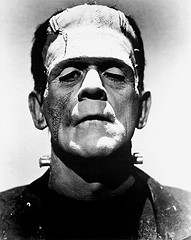
Instead, it was a Frankenstein-style stitch job, containing sentences ripped from 33 different papers. 18 of those ended up in the citations; for 15 more, the authors didn’t even do them that courtesy. You can see a meticulously color-coded call out here.

Here’s the notice for “A Role for PPARy in the Regulation of Cytokines in Immune Cells and Cancer”: Continue reading Franken-paper from U.S. federal contractor heads to the grave

Oklahoma postdoc admits to faking data in grant application, submitted paper

bin kang
Bin Kang

A postdoc at the Oklahoma Medical Research Foundation faked data in a submitted paper and in a grant application, according to a new report from the Office of Research Integrity.

Bin Kang admitted to the misconduct, in which he Continue reading Oklahoma postdoc admits to faking data in grant application, submitted paper

U Colorado “golden boy” grad student faked data in drug lab, says investigation

u coloradoA graduate student at the University of Colorado Denver faked data in his work at a drug research lab that has notched two retractions and an expression of concern over “data integrity,” according to an extensive university investigation.

It seems like many more retractions are on the horizon for grad student Rajendra Kadam, who worked in the lab of Uday Kompella, a pharmaceutical researcher at the university.  

Here’s an excerpt from the report, which you can read in full (but redacted) here: Continue reading U Colorado “golden boy” grad student faked data in drug lab, says investigation

Drug company lawyer letter results in “utterly tedious” retraction

Image via Intropen
Image via Intropen

What’s in a name?

Well, if it’s the same name as a treatment with nearly $1 billion in sales per year in the U.S., a retraction.

A “mind numbingly boring one,” that is.

Here’s the Twin Research and Human Genetics notice for “EpiPen: An R Package to Investigate Two-Locus Epistatic Models”: Continue reading Drug company lawyer letter results in “utterly tedious” retraction