The journal Tropical Animal Health and Production has retracted a 2013 paper by a group from India whose data on feeding young cows special wheat wasn’t quite what it was cracked up to be.
Willibrord Weijmar Schultz, the Groningen sex researcher (and Ig Nobel winner) who misused the 1985 thesis of an American scholar, and the work of another researcher, in at least five published articles, has tallied another retraction in the affair, his sixth.
As we reported earlier, Schultz had been cleared of plagiarism but found to have abused the work (in an “unintended and unknowing” fashion, we’re told) of one Diana Jeffrey, by taking passages from her dissertation without acknowledgement. These articles are pretty long in the tooth, having been published in the 1990s.
The latest, in the Journal of Sex Education and Therapy, appeared in 1992. Titled “Sexual rehabilitation after gynecological cancer treatment,” Schultz wrote it with a colleague H.B.M. Van de Wiel, whose name shows up on the other retractions, too.
We’re a bit late to this, but a Federal court in Massachusetts last fall heard a medical malpractice case with fascinating implications for journals.
The case involved allegations by the plaintiffs — two children who had suffered permanent birth defects and their mothers — that they had lost previous malpractice suits because a fraudulent case report was being used to bolster the defense.
The case targeted two ob-gyns, Henry Lerner, of Harvard, and Eva Salamon, of the Bond Clinic, in Winter Haven, Fla., who had published the case study in question. It also named the clinic itself and the American Journal of Obstetrics & Gynecology, which published the article in early 2008.
An Israeli terrorism scholar has lost a review of a 2011 book on Al-Qaeda because he published it twice in different outlets.
The researcher, Isaac Kfir, is with the International Institute for Counter- Terrorism, where he studies
issues relating to post-conflict reconstruction (security issues) and transitional justice (restorative and retributive justice). His other research looks at the effect of Islamic radicalism within the Arab-Israeli conflict.
A group of researchers in China has lost a paper on the human microbiome in Frontiers in Cellular and Infection Microbiology for cannibalizing much of it from previously published work by other scientists.
Applied Sciences has retracted a 2012 article by a researcher whose efforts to model a particular kind of explosion called a shaped charge proved to be a dud.
The paper, “Steady State Analytical Equation of Motion of Linear Shaped Charges Jet Based on the Modification of Birkhoff Theory,” was written by Seokbin Lim, a mechanical engineer in the Energetic Systems Research Group at New Mexico Tech, in Socorro.
The journal Safety Science has retracted a 2013 paper by a group of engineers from Brazil who had published the article previously, albeit in a much abbreviated form, a year earlier.
What makes this case more than a straightforward matter of duplication/self-plagiarism is that the authors greatly expanded upon the earlier article. The initial paper also appeared in a conference proceedings — the 18th World Congress on Ergonomics – Designing a Sustainable Future — priority that, at least in the minds of some, doesn’t really constitute a true publication. Continue reading Should this engineering paper have been retracted?
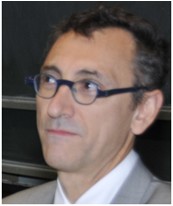
A French court ruled that Sixou was not guilty of aiding his wife, Christine Marchal-Sixou, in her plagiarizing of a fellow student’s work.
We have a follow-up from François-Xavier Coudert on the trial of two French odontology researchers accused of stealing from — and abetting the theft of — the work of a graduate student.
A French court has ruled that French dental researcher accused of plagiarizing the thesis of a fellow student was guilty of the charge, but that her husband was not complicit in the crime, according toaccounts in the French media.
As we reported the other day, Christine Marchal-Sixou and her lab-head-turned-husband, Michel Sixou, had been on trial for plagiarism and complicity in the case.
 The journal Tropical Animal Health and Production has retracted a 2013 paper by a group from India whose data on feeding young cows special wheat wasn’t quite what it was cracked up to be.