193 papers could be retracted: Journal consortium issues ultimatum in Fujii case

A group of editors representing nearly two dozen medical journals has issued an ultimatum of sorts to officials at seven Japanese institutions that once employed Yoshitaka Fujii: Validate the papers of the disgraced anesthesiologist or they will be retracted.

Fujii, as we have reported, was fired by Toho University in late February, putatively for failing to obtain ethics approval for a handful of his studies. That much may be true, but the integrity of his data has been in question for more than a decade. At the time of his dismissal, journal editors expressed concern that the university would not pursue an inquiry into Fujii’s data.

Last month, the journal Anaesthesia published a statistical analysis of Fujii’s research bya UK anesthesiologist named John Carlisle which cast serious doubt on the veracity of the studies.

The joint letter forces the question. Continue reading 193 papers could be retracted: Journal consortium issues ultimatum in Fujii case
It’s all bad, it’s all good: JCI retracts for made-up data but authors stand behind work

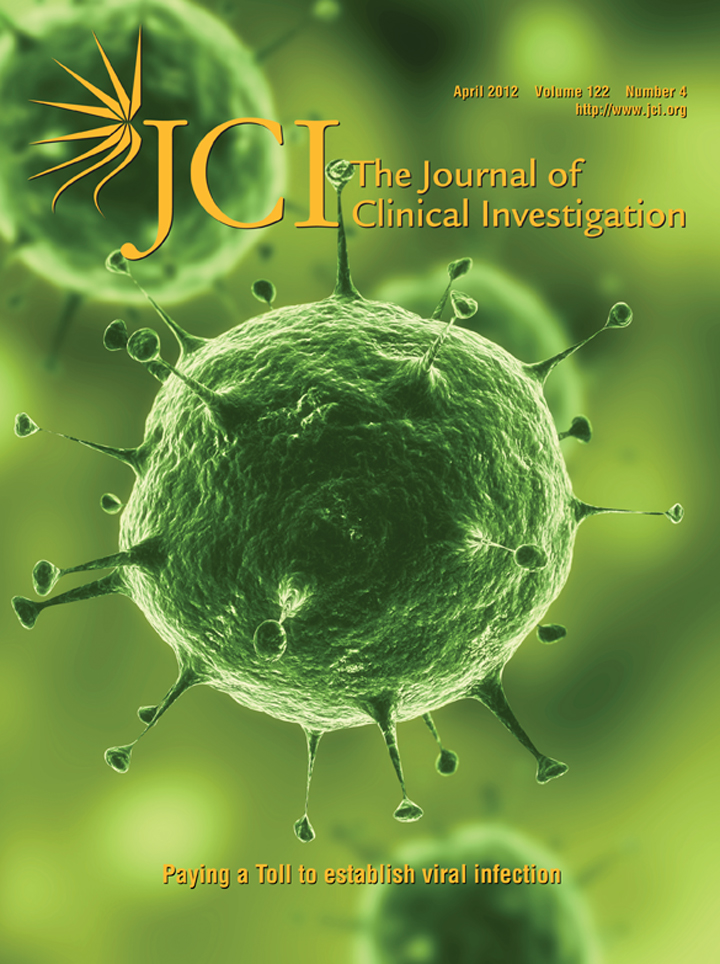
The Journal of Clinical Investigation has retracted a 2010 article after the researchers acknowledged that the paper contained a substantial amount of manipulated or manufactured data.

How much bad data? Enough to sink seven figures. And the authors said they could not produce raw data in another 19 or so figures and four tables.

But, as the notice states, the researcher said that despite the retraction, they stand by the thrust of their article, “Sphingosine-1-phosphate receptor-2 deficiency leads to inhibition of macrophage proinflammatory activities and atherosclerosis in apoE-deficient mice:” Continue reading It’s all bad, it’s all good: JCI retracts for made-up data but authors stand behind work

Crise de foie: Liver journals retract duplicate biomarker pubs

Two liver journals have retracted articles from a group of Irani researchers who published similar — but not quite identical — versions of the same paper some months apart.

A retraction notice in the Journal of Gastrointestinal and Liver Diseases — which bills itself as the “Official Journal of the Romanian Societies of Gastroenterology” explains what happened: Continue reading Crise de foie: Liver journals retract duplicate biomarker pubs

Back in the saddle: After more than 30 retractions, Naoki Mori publishing again

Naoki Mori

Perhaps it’s appropriate given the Easter season, but we have learned that Naoki Mori, the Japanese cancer researcher who received a 10-year publishing ban from the American Society of Microbiology (ASM) for imagine manipulation, has published a new paper.

Mori, who was fired and then rehired by the University of the Ryukyus over the scandal, is listed as the senior author on the paper, “Honokiol induces cell cycle arrest and apoptosis via inhibition of survival signals in adult T-cell leukemia,” which appears in the March issue of Biochimica et Biophysica Acta. The journal, an Elsevier title, is an umbrella for nine publications in the biosciences.

Two of Mori’s retracted articles appeared in the Elsevier journals Leukemia Research and Biochemical and Biophysical Research Communications. Continue reading Back in the saddle: After more than 30 retractions, Naoki Mori publishing again

JCO expresses concern over images from Spanish group that had aroused earlier concern

The Journal of Clinical Oncology has issued an expression of concern about a 2003 article by a group of researchers in Spain who appear to have had recurrent problems with images.

The paper has been cited 56 times, according to Thomson Scientific’s Web of Knowledge. Here’s the notice:

It has been brought to our attention, regarding Figure 1, Part A, that similarity exists between bands 3, 4, and 5 of the top row and bands 1, 2, and 3 of the bottom row, including the presence of artifacts, in the April 15, 2003 article by [Jose] RomanGomez et al, entitled, “Cadherin-13, a Mediator of Calcium Dependent Cell-Cell Adhesion, Is Silenced by Methylation in Chronic Myeloid Leukemia and Correlates With Pretreatment Risk Profile and Cytogenetic Response to Interferon Alfa” (J Clin Oncol 21:1472-1479, 2003).  This similarity has raised concerns about whether these rows represent independent data. We alerted the corresponding author, Dr. Roman-Gomez, of this concern, and he has repeated the experiment shown in the original Figure 1, with the results below. Although the results of the figure appear to be unchanged, we wish to inform the readers of this issue, so that they may make their own independent assessment.

Continue reading JCO expresses concern over images from Spanish group that had aroused earlier concern

It “takes a long time to have these experiments redone,” so group retracts wheat paper after reader challenges

Normally we’d make hay with the following notice in Acta Biochimica et Biophysica Sinica — separating the wheat from the chaff, Love and Death, and all that — but, well, it speaks for itself (sort of).

A group of researchers in China have retracted their 2011 paper on the biochemistry of chloroplast in wheat: Continue reading It “takes a long time to have these experiments redone,” so group retracts wheat paper after reader challenges

Rheumatology explains what went wrong with meta-analysis

Earlier this week we wrote about how Rheumatology, the official journal of the British Society for Rheumatology, was retracting an error-beset meta-analysis on the association between lupus and cervical cancer.

As the notice explained: Continue reading Rheumatology explains what went wrong with meta-analysis

Cell paper, once plagiarized, pulled for dodgy figures

A while back (last June, to be precise), we wrote about a group of Japanese endocrinologists who found a creative way to up their citation counts using duplicate publication. At the time, the researchers were docked a 2004 paper in the Journal of Steroid Biochemistry & Molecular Biology that had self-plagiarized extensively from a 2003 article in Cell.

Well, skeptics of this new math take heart: The group’s publication total has fallen yet again. Turns out that 2003 paper — which has been cited 160 times, up from 144 when we checked last year, according to Thomson Scientific’s Web of Knowledge — wasn’t quite up to snuff, either.

According to the retraction notice for the article, “The Chromatin-Remodeling Complex WINAC Targets a Nuclear Receptor to Promoters and Is Impaired in Williams Syndrome:” Continue reading Cell paper, once plagiarized, pulled for dodgy figures

Rheumatology retracts lupus-cancer meta-analysis over multiple errors

Rheumatology has retracted a 2011 paper with too many errors to correct.

According to the notice, the article, titled “Meta-analysis of systemic lupus erythematosus and the risk of cervical neoplasia’, by Hongli Liu and colleagues at Huazhong University of Science and Technology in China, seems to have been deeply flawed: Continue reading Rheumatology retracts lupus-cancer meta-analysis over multiple errors

Paper linking vitamin C and reduced asthma retracted after authors find “severe” problems with data

It’s never a good sign when a paper has “severe” problems with its data. But when even the researchers are at a loss to explain how those problems made their way into the manuscript, well, that’s downright alarming.

Consider: The journal Clinical and Translational Allergy has retracted a 2011 article by researchers from Egypt and Finland, who have been studying the effects of vitamin C on childhood asthma. In a previous article, published in 2009 in Acta Paediatrica, members of the team reported that Continue reading Paper linking vitamin C and reduced asthma retracted after authors find “severe” problems with data