 The week at Retraction Watch featured a new grant to our parent non-profit organization, a retraction from the NEJM, and our first-ever retraction. Here’s what was happening elsewhere: Continue reading Weekend reads: Retraction reluctance; worthless papers (and stats); too many PhDs
Paper claiming extra CO2 doesn’t always lower plant nutrients pulled for errors
 Authors have retracted a large meta-analysis claiming that rising levels of carbon dioxide don’t always reduce nutrients in plants.
After commenters on PubPeer raised concerns, the authors say they found several unintentional errors in their data that could “significantly change conclusions” of the paper in Plant Ecology, according to the retraction note.
The paper found that the impact of rising CO2 depends on many factors — in some cases, extra amounts of this greenhouse gas could actually increase plant nutrients. Trouble is, some of the papers that cited the now-retracted article came to the opposite conclusion: Increased carbon dioxide levels do decrease plant nutrients.
The retraction note for “CO2 effects on plant nutrient concentration depend on plant functional group and available nitrogen: a meta-analysis” explains some of the specifics of the errors, and says that there was “no evidence of bias:”
Continue reading Paper claiming extra CO2 doesn’t always lower plant nutrients pulled for errors
Voinnet retracts highly cited paper, bringing his total to 7
 Olivier Voinnet, a well-known plant scientist at the ETH in Zurich, has notched his 7th retraction for a highly cited paper. The 2003 paper was pulled when “additional image manipulations” came to light after The Plant Journal issued a correction earlier this year.
The retraction follows an investigation into — and then retraction of — several other papers co-authored by Voinnet. The authors originally corrected the paper after they learned one image had been duplicated, and repeating the experiment found the “same interpretation and conclusions” held true. But when the corresponding author learned of additional “data manipulation,” they decided to retract the paper altogether.
Here’s the retraction notice for “An enhanced transient expression system in plants based on suppression of gene silencing by the p19 protein of tomato bushy stunt virus:”
Continue reading Voinnet retracts highly cited paper, bringing his total to 7
Did a clinical trial proceed as planned? New project finds out

A new project does the relatively straightforward task of comparing reported outcomes from clinical trials to what the researchers said they planned to measure before the trial began. And what they’ve found is a bit sad, albeit not entirely surprising.
As part of The Compare Project, author and medical doctor Ben Goldacre and his team have so far evaluated 36 clinical trials published by the top five medical journals (New England Journal of Medicine, the Journal of the American Medical Association, The Lancet, Annals of Internal Medicine, and British Medical Journal). Many of those trials included “switched outcomes,” meaning the authors didn’t report something they said they would, or included additional outcomes in the published paper, with no explanation for the change.
Here are the latest results from the project, according to its website:
Continue reading Did a clinical trial proceed as planned? New project finds out
ORI names new director, Colorado’s Kathy Partin

The director of the Research Integrity & Compliance Review Office at Colorado State University (CSU) is the new head of the U.S. Office of Research Integrity, taking over a position that has been vacant for more than a year and a half.
A spokeswoman for the Department of Health and Human Services confirmed for us the new appointment, which was first reported by The Report On Research Compliance today. Continue reading ORI names new director, Colorado’s Kathy Partin
Correction changes results about genetics of neurological disorder

A paper on the genetics underlying a common neurological disorder has issued a correction that influences the results of the paper.
“Genetic Diagnosis of Charcot-Marie-Tooth Disease in a Population by Next-Generation Sequencing” was published in BioMed Research International, and looked at 81 families with the disease. The researchers identified mutations that might be connected to the disease. The problem, says the correction note, is that the authors classified a couple variants in one patient’s genes as “likely pathogenic,” when their true nature was less clear.
The correction explains the new numbers:
Continue reading Correction changes results about genetics of neurological disorder
Helmsley Trust helps Retraction Watch chart its future with new $130,000 grant

We’re very pleased to announce a new grant for $130,000 from The Leona M. and Harry B. Helmsley Charitable Trust to The Center For Scientific Integrity, our parent non-profit organization.
The generous funding from the Trust’s Biomedical Research Infrastructure Program will allow us to work with a consultant to develop operational and sustainability plans for the Center. Over the coming months, we will assess the current unmet needs within the realm of scientific integrity, develop a strategic business plan that targets those unmet needs, and explore opportunities for growth. While grants will remain a critical part of our budget, we hope to Continue reading Helmsley Trust helps Retraction Watch chart its future with new $130,000 grant
NEJM pulls letter by heart researcher who faked patient records
 A heart researcher who fabricated patient records has notched retraction number six — this time, for a letter in the New England Journal of Medicine. She has two more retractions forthcoming.
The retraction comes at the request of Anna Ahimastos’s co-authors, following an investigation into her work by her former workplace, the Baker IDI Heart and Diabetes Institute. The investigation was not able to verify the data referenced in the letter, which includes a citation for a recently retracted JAMA paper.
The retraction note is similar to others for Ahimastos’s papers:
Continue reading NEJM pulls letter by heart researcher who faked patient records
After lawsuit, university releases misconduct report about nutrition researcher Chandra
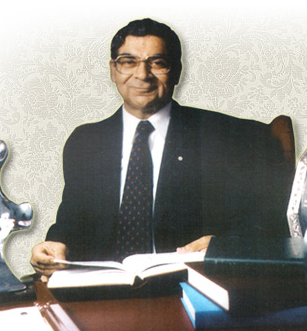
Memorial University in Canada has released a five-year-old report of an investigation, confirming a former nutrition professor had committed misconduct in a 2001 paper.
The 53-page report — about Ranjit Kumar Chandra, a prominent and once-lauded researcher — focuses on a Nutrition paper that examined the effectiveness of vitamins patented by Chandra. The report, authored by MUN professor emeritus William Pryse-Phillips, lists 41 problems with the paper, which it concludes:
…was not in full compliance with the scientific, ethical, and/or integrity standards of Memorial University at the time.
The paper was retracted in 2005; the report is dated 2009. We asked Pryse-Phillips why the university took so long to release it. He told us:
Management researcher with 7 retractions issues “clarifications” to 2013 paper
The authors of a paper on supportive supervisors just want readers to “better understand the reported findings,” and so have issued multiple “clarifications” in a corrigendum note.
Some of the issues addressed in the note have been raised on PubPeer.
The paper’s author list includes one Fred Walumbwa, formerly an Arizona State University management researcher, some of whose work has succumbed to scrutiny in the the past two years. His current list: seven retractions, a megacorrection, an expression of concern, and now this.
“Unraveling the relationship between family-supportive supervisor and employee performance,” published in Group & Organization Management, has been cited twice, according to Thomson Scientific’s Web of Knowledge.
Here’s the note in full:
Continue reading Management researcher with 7 retractions issues “clarifications” to 2013 paper