What Caught Our Attention: Usually, an Expression of Concern (EOC) offers general language about “concerns regarding the validity of the data” or “concerns regarding the integrity of the study.” Here the language is anything but, saying that 54 Western blot bands within three figures have problems such as “visible pasted joints,” “square border,” and numerous “appear to be the same band.” According to the notice, the authors have not responded to requests for the original blots, so the editors are allowing the article to remain intact, choosing instead “to alert readers to these issues and allow them to arrive at their own conclusions regarding the figures.” Continue reading Caught Our Notice: 54 problems in three scientific images equals one expression of concern
Category: image manipulation
In what appears to be a first, researcher sanctioned twice by ORI
 Here’s something we haven’t seen before: The U.S. Office of Research Integrity has issued a second notice for a former researcher at the National Institutes of Health, after determining she withheld information during the first investigation.
Last year, the ORI sanctioned Brandi M. Baughman — formerly at the National Institute of Environmental and Health Sciences — after she “falsified and/or fabricated data” in 11 figures in a 2016 paper. Sanctions included agreeing to have her research supervised for three years. Now, the agency has barred her from receiving federal grants for two years. The reason:
Continue reading In what appears to be a first, researcher sanctioned twice by ORI
What if we could scan for image duplication the way we check for plagiarism?
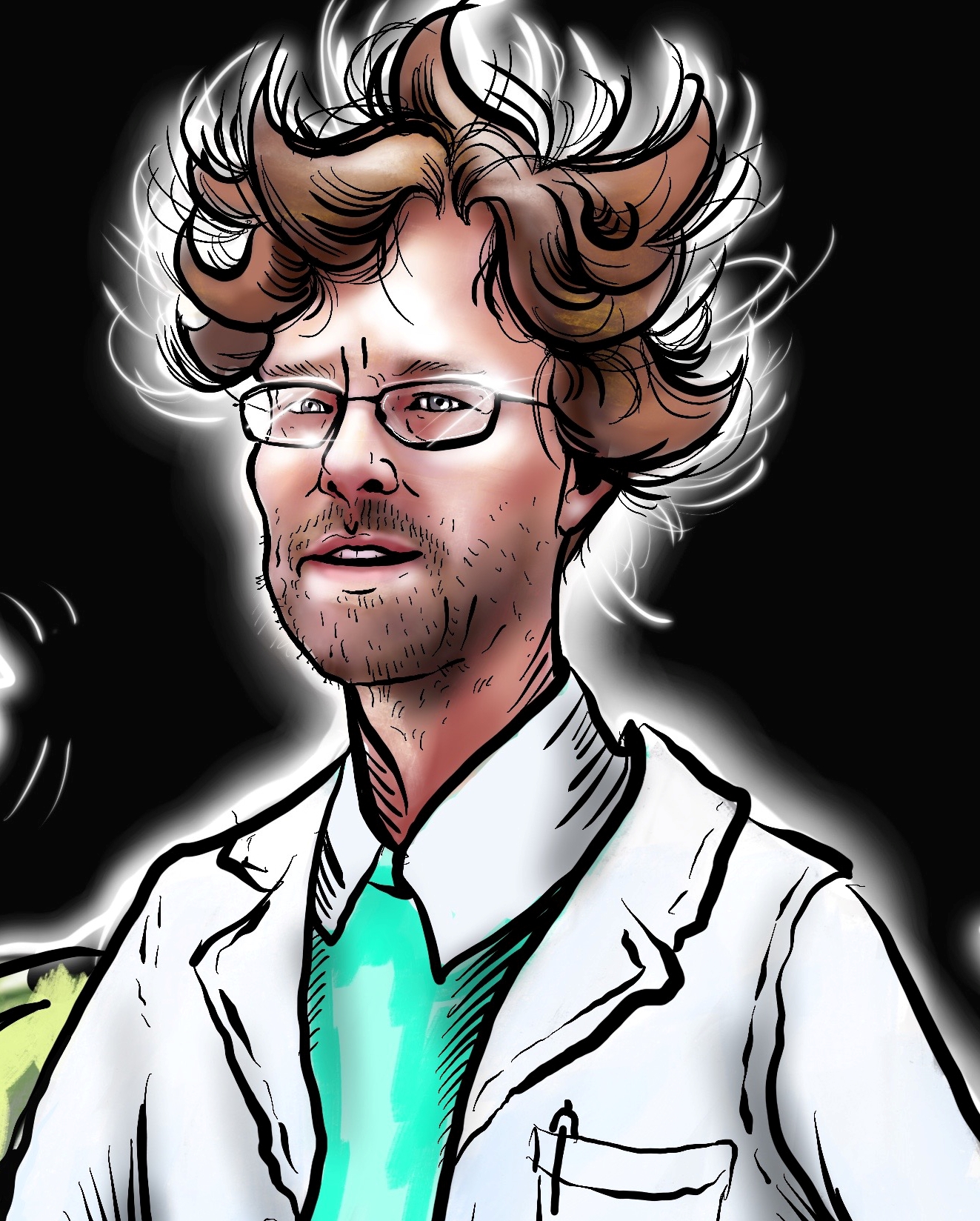
Paul Brookes is a biologist with a passion for sleuthing out fraud. Although he studies mitochondria at the University of Rochester, he also secretly ran a science-fraud.org, a site for people to post their concerns about papers. Following legal threats, he revealed he was the author and shut the site in 2013 — but didn’t stop the fight. Recently, he’s co-authored a paper that’s slightly outside his day job: Partnering with computer scientist Daniel Acuna at Syracuse University and computational biologist Konrad Kording at the University of Pennsylvania, they developed a software to help detect duplicated images. If it works, it would provide a much needed service to the research community, which has been clamoring for some version of this for years. So how did this paper — also described by Nature News — come about?
Retraction Watch: Dr. Brookes, you study mitochondria. What brought you to co-author a paper about software to detect duplications?
Continue reading What if we could scan for image duplication the way we check for plagiarism?
Caught Our Notice: Duplicates, errors prompt two retractions for same author
What Caught Our Attention: In the span of 48 hours, PLOS ONE retracted two papers this month that were co-authored by Bo Yu, based at Key Laboratories of Education Ministry for Myocardial Ischemia Mechanism and Treatment and The Second Affiliated Hospital of Harbin Medical University in China. Both notices cite multiple duplications and errors, and conclude:
Continue reading Caught Our Notice: Duplicates, errors prompt two retractions for same author
Caught Our Notice: Yes, a 20-year-old article is wrong — but it won’t be corrected online
 Title: AMPA receptor-mediated regulation of a Gi-protein in cortical neurons
What Caught Our Attention: Usually, when journals publish corrections to articles, they also correct the original article, except when the original is unavailable online. When Nature noticed that some figure panels in a 20-year-old paper were duplicated, it flagged the issue for readers — but didn’t correct the online version of the original paper. According to the notice, the duplications don’t disturb the conclusion illustrated by the figure, the original data couldn’t be found, and the last two authors had retired. We contacted a spokesperson at Nature, who told us “the information at the start of the paper clearly links to the corrigendum.” Continue reading Caught Our Notice: Yes, a 20-year-old article is wrong — but it won’t be corrected online
Caught Our Notice: “The first author cut the thermoprinter paper printout into pieces and reassembled them”
Title: A mitochondrial ferredoxin is essential for biogenesis of cellular iron-sulfur proteins
What Caught Our Attention: Here’s a cut-and-paste issue that gave us pause. The authors of an 18-year-old paper in PNAS corrected it after realizing some bands in a figure were duplicated (an issue raised on PubPeer one year ago). It turns out, the first author had cut the paper into pieces and reassembled them to present the blots in the “desired order,” and some had become duplicated by mistake. The overall results were unaffected, so the journal swapped the image with a corrected version. Continue reading Caught Our Notice: “The first author cut the thermoprinter paper printout into pieces and reassembled them”
UCSF-VA investigation finds misconduct in highly cited PNAS paper
 PNAS has corrected a highly cited paper after an investigation found evidence of misconduct.
The investigation—conducted jointly by the University of California, San Francisco, and the San Francisco Veterans Administration Medical Center—uncovered image manipulation in Figure 2D, which “could only have occurred intentionally.” The institutions, however, could not definitively attribute the research misconduct to any individual.
According to the notice, the UCSF-VA committee determined that a correction to the 2008 PNAS paper—which explores the genetic underpinnings of prostate cancer—was “appropriate,” and the authors have now replaced the problematic figure with a corrected version. The 2008 paper has been cited 630 times, according to Clarivate Analytics’ Web of Science.
A spokesperson for PNAS told Retraction Watch: Continue reading UCSF-VA investigation finds misconduct in highly cited PNAS paper
“Clear signs of manipulation” in paper co-authored by prominent geneticist

A third paper co-authored by researchers based at a prominent lab whose work has been under investigation on and off for almost three years has been retracted.
According to the notice, the university’s investigation found that a 2008 paper in FEBS Letters contained “clear signs of manipulation” in three figures.
Research from geneticist David Latchman’s group has been dogged by misconduct allegations since late 2013 and subject to two investigations by the University College London (UCL). Continue reading “Clear signs of manipulation” in paper co-authored by prominent geneticist
Former NYU researcher falsified data in 3 papers, 7 grants: ORI
A former researcher at New York University falsified and/or fabricated data in multiple papers and grant applications, according to the U.S. Office of Research Integrity.
Bhagavathi Narayanan has already retracted three papers, the result of missing original data. Among the three papers flagged by the ORI, only one remains intact: A 2011 paper in Anticancer Research.
According to the ORI:
Continue reading Former NYU researcher falsified data in 3 papers, 7 grants: ORI
Delays, arguing over upcoming Cell retraction leave first author “devastated”
 After being “blindsided” a few months ago when she was told one of her 2005 papers was going to be retracted, a researcher scrambled to get information about why. And when she didn’t like the answers, she took to PubPeer.
Eight days ago, Shalon (Babbitt) Ledbetter, the first author of the 2005 paper published in Cell, posted a comment on the site announcing the paper was going to be retracted after the last author’s institution, Saint Louis University (SLU), determined that some figures had been manipulated by the last author, Dorota Skowrya. A letter dated September 2, 2015 sent by SLU to Cell describes the results of the investigation — namely, that the manipulations were “cosmetic,” and had no effect on the data or the conclusions. More than two years later, Ledbetter learned the journal was planning to retract the paper, and an initial draft of the notice wouldn’t identify who was responsible; she has since been pulled into a confusing web of blame-shifting and conflicting information that has been, in her words, “heartbreaking.”
Ledbetter wrote on PubPeer:
Continue reading Delays, arguing over upcoming Cell retraction leave first author “devastated”