As controversy swirls around two papers that used data from Surgisphere, the New England Journal of Medicine and The Lancet have placed expression of concerns on the relevant papers.
We make a point of never calling for a particular paper’s retraction, nor ever weighing in on whether a journal should have made that move. That would be, we often say, like a financial reporter recommending stocks. But a recent expression of concern is sorely testing our resolve on the matter.
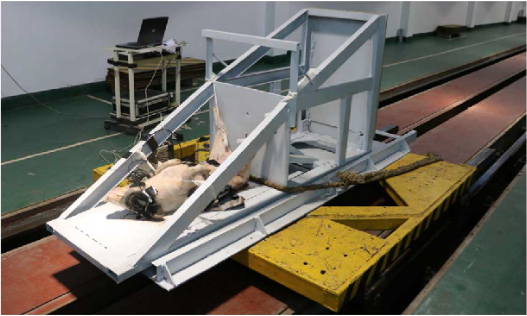
A journal has issued an expression of concern over a 2018 paper which involved strapping 21 anesthetized minipigs to sleds and running them into a wall at speeds of up to 25 miles per hour.
The study, “Experimental study of thoracoabdominal injuries suffered from caudocephalad impacts using pigs,” came from the Third Military Medical University in Chongqing, China, and was funded by the People’s Liberation Army.
About those impacts. The purpose of the study, according to the abstract, was this:
If you’re a fan of the post hoc fallacy, this post is for you. If not, we hope you’ll bear with us anyway.
In June, we reported on an expression of concern in the Journal of Cell Science for a 2006 paper “several bands…in Fig. 5 look very similar.” At the time, we noted that while the expression of concern claimed that the Istituto Superiore di Sanità, the authors’ institution, “does not have a suitable body to investigate this matter,” it in fact does.
After hearing that from us, Sharon Ahmad, the journal’s managing editor, approached Carlos Petrini, the director of bioethics at the ISS, who proceeded to investigate the work. Petrini has now sent us the summary of that investigation, which we’ve made available here.
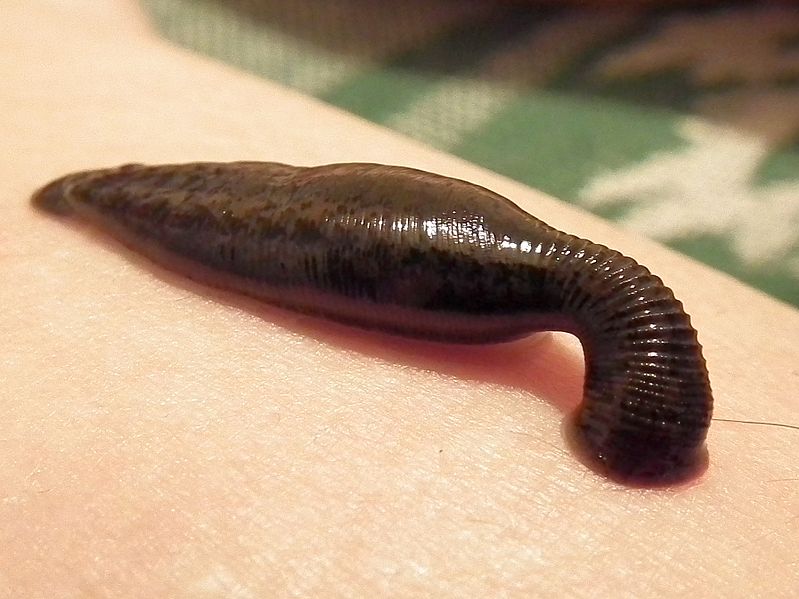
An article claiming to uproot the evolutionary tree of leeches has received an expression of concern after a reader notified the journal about potential problems with the data.
The article, “Phylogenomic analysis of a putative missing link sparks reinterpretation of leech evolution,” appeared online in Genome Biology and Evolution, an Oxford University Press title, on June 19 of this year. According to the authors — an international team that includes researchers at the National Museum of Natural History, the North Carolina Museum of Natural Sciences, Florida State University and University of Gothenburg in Sweden — their results:
Adeel Safdar was once a rising star in the field of kinesiology. After completing his doctorate degree at McMaster University in Canada, working with one of the titans of his field, Safdar took a postdoc at Harvard, then accepted a newly created chair position at another university in Ontario.
That all came crashing down last year, when Safdar went on trial in Canada, accused of horrifically abusing his wife. Over the course of the trial, allegations arose about his research, prompting two journals to flag papers he co-authored with his former mentor, Mark Tarnopolsky.
What Caught Our Attention: Quite frankly, anything with “gorilla gorilla gorilla” in the title will catch our eye, even if it is just the scientific name of the western lowland gorilla. In this case, the journal issued an expression of concern over an “unintended discrepancy” that may have affected the paper, which validates the use of a tool to measure oxytocin in the apes’ urine and saliva. The authors voluntarily notified the editors of Primate of the potential issue, and the journal issued an Expression of Concern only one month after the article was published — which is pretty fast for a notice, although not a record (see this one, issued six days after publication).
Readers of Retraction Watch will be no strangers to the practice of issuing Expressions of Concern — editorial notices from journals that indicate a paper’s results may not be valid. While a good idea in theory — so readers can be aware of potential issues while an investigation is underway — in practice, it’s a somewhat flawed system. As we (and others before us) have shown, so-called EOCs can linger indefinitely, leaving researchers unsure how to interpret a flagged paper.
The Committee on Publication Ethics (COPE) agrees that the system has room for improvement. Although COPE has included advice on when to issue EOCs within its retraction guidelines, it has allotted time in the next COPE Forum (Feb 26) to discuss the topic. Some questions it’s considering:

 Adeel Safdar was once a rising star in the field of kinesiology. After completing his doctorate degree at McMaster University in Canada, working with one of the titans of his field, Safdar took a postdoc at Harvard, then accepted a
 Title:
  A biology journal is investigating concerns about a 2014 paper by a marine biologist
 Readers of Retraction Watch will be no strangers to the practice of issuing Expressions of Concern — editorial notices from journals that indicate a paper’s results may not be valid. While a good idea in theory — so readers can be aware of potential issues while an investigation is underway — in practice, it’s a somewhat flawed system.
