Exclusive: Mayo, Florida profs among authors of article tied to Indian paper mill

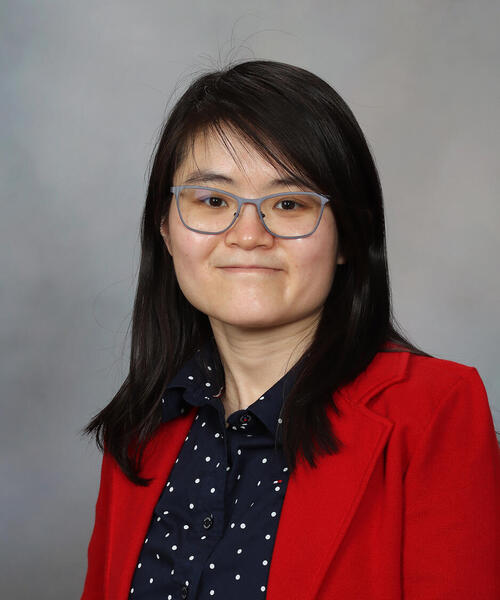
Yuguang Liu

Two assistant professors at universities in the United States are coauthors of a review that appears to have been advertised for sale by the Indian paper mill iTrilon, a Retraction Watch investigation has found.

One of the professors, Yuguang Liu of Mayo Clinic in Rochester, Minn., is also guest editor of the MDPI special issue in the journal Biosensors in which the review was published last year. The other professor, Ajeet Kaushik of Florida Polytechnic University, in Lakeland, sits on the editorial boards of Biosensors and several other titles from MDPI, Elsevier, Wiley, Springer Nature and other publishers.

An MDPI representative said Liu, who declined an interview request, had not been involved in editorial decisions regarding the paper. Meanwhile, Kaushik acknowledged his work on the article had sprung from a LinkedIn message from a researcher in India who, as we reported last week, has been offering co-authorship in return for help getting his articles published.

“This is sad,” Kaushik told us by email, adding that he had not seen “any red flags” when he agreed to collaborate on the review. 

Continue reading Exclusive: Mayo, Florida profs among authors of article tied to Indian paper mill

Exclusive: Paper-mill articles buoyed Spanish dean’s research output

Dionisio Lorenzo Lorenzo Villegas

Last year, a professor and dean at a university in Spain suddenly began publishing papers with a multitude of far-flung researchers. His coauthors, until then exclusively national, now came from places like India, China, Nepal, South Korea, Georgia, Austria, and the United States.

How these unlikely collaborations began is not entirely clear. But a six-month Retraction Watch investigation, part of which is published here as a companion piece to a longer article appearing today in Science, suggests an unsavory possibility: The dean, Dionisio Lorenzo Lorenzo Villegas of the faculty of health sciences at Universidad Fernando Pessoa-Canarias, in Las Palmas, bought his way onto the papers – something he partly admits.

At least six of the seven journal articles Lorenzo published last year had been previously advertised for sale by the Indian paper mill iTrilon. Based in Chennai, this underhand operation sells authorship of “readymade” publications to scientists “struggling to write and publish papers in PubMed and Scopus-Indexed Journals,” according to a WhatsApp message its scientific director, Sarath Ranganathan, sent to prospective clients last summer. Ranganathan also claimed to have connections at journals that allowed him, in many cases, to guarantee acceptance of the manuscripts he would send their way. 

Continue reading Exclusive: Paper-mill articles buoyed Spanish dean’s research output

Exclusive: COPE threatens Elsevier journal with sanctions for ‘clear breakdown’ before seven retractions

An Elsevier journal has retracted seven articles by a prolific data fabricator – three and a half years after the publisher said it would retract 10 of his papers, and five months after the Committee on Publication Ethics (COPE) threatened the journal with sanctions for the delay. 

As we previously reported, the Journal of the Neurological Sciences had decided by June 2020 to retract 10 articles by Yoshihiro Sato and Jun Iwamoto, who are currently in positions four and six on our leaderboard of retractions. But the papers remained intact until December 2023, when seven were retracted. The remaining three are still unmarked. 

“We have no idea why it took so long,” said Andrew Grey, of the University of Auckland, in New Zealand, who with colleagues Alison Avenell and Mark Bolland has scrutinized the work of Sato and Iwamoto. The group’s efforts have led to more than 100 retractions, but publishers have yet to assess a significant number of papers about which they have raised concerns. 

Continue reading Exclusive: COPE threatens Elsevier journal with sanctions for ‘clear breakdown’ before seven retractions

Exclusive: MDPI journal undergoing reevaluation at Scopus, indexing on hold

Elsevier’s Scopus database has paused indexing content from Sustainability, an MDPI journal, while it reevaluates whether to include the title, Retraction Watch has learned. 

Please see an update on this post.

Other MDPI titles were reevaluated in 2023, and its mathematics journal Axioms is no longer included in Scopus’ nearly 30,000 titles. Clarivate also delisted two MDPI journals, including the International Journal of Environmental Research and Public Health, from its Web of Science index earlier this year, meaning those journals will no longer receive impact factors. 

Universities and funders use Scopus to create “whitelists” of journals in which authors are encouraged to publish, so removal from the index can influence submissions.

In 2022, Norway removed Sustainability from its list of journals that researchers get credit for publishing in, and Finland followed suit at the beginning of 2023. In the announcement of its decision, the Finnish Publication Forum wrote: 

Continue reading Exclusive: MDPI journal undergoing reevaluation at Scopus, indexing on hold

Exclusive: Researcher outs Indian university’s publishing scam after it fails to pay him

On March 12, a senior administrator at a university in India sent a business proposal to a prolific economist in Ethiopia. If he joined the school’s stable of adjunct professors, the administrator promised, easy money could be made. 

All the economist had to do was “add our affiliation for incentives in your papers,” explained Lakshmi Thangavelu, dean of international affairs at Saveetha Institute of Medical and Technical Sciences (SIMATS), in Chennai, in a written exchange.

“Surely I will do that. Not a big deal,” replied Mohd Asif Shah, an associate professor at Kebri Dehar University, in eastern Ethiopia.

But the deal turned sour. Although Shah listed SIMATS as an affiliation on at least two research papers he published this fall, in December he still hadn’t received any payments from the school, he complained. Then he turned to LinkedIn to share his frustration in a post that included screenshots of his conversation with Thangavelu, who is also a professor at Saveetha Dental College, part of SIMATS.

Continue reading Exclusive: Researcher outs Indian university’s publishing scam after it fails to pay him

Exclusive: Whistleblower fired after raising concerns about journal articles on LinkedIn

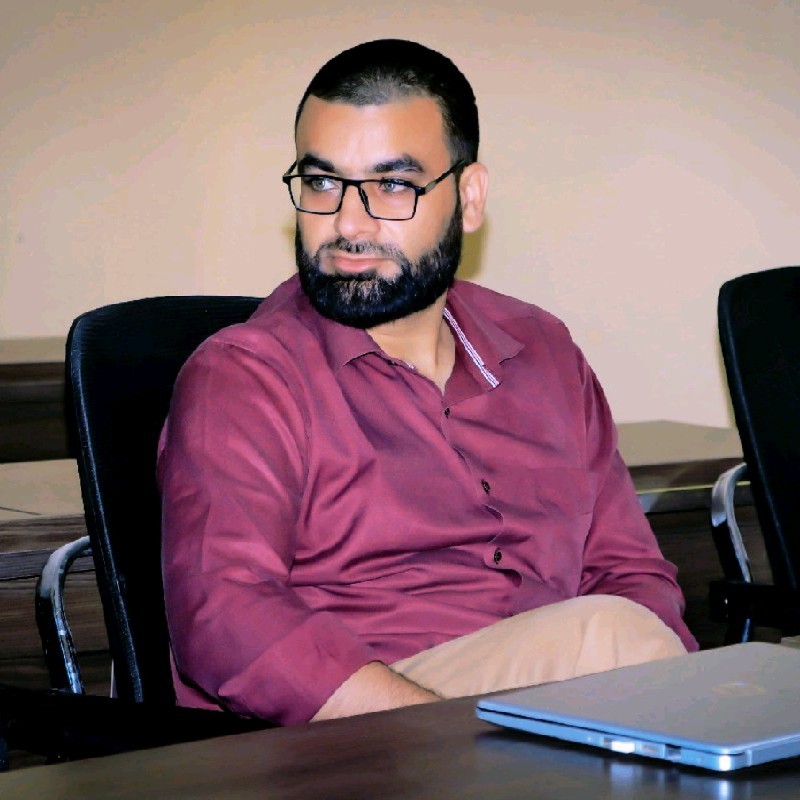
Muhammad Mohsin Butt

A business school in Pakistan has fired a marketing professor after finding he had “damaged the repute” of the university and its scholarly journal, Retraction Watch has learned. 

In a LinkedIn post, Muhammad Mohsin Butt, the now-fired professor, shared a picture of the table of contents of a 2015 issue of Business Review, published by the Institute of Business Administration (IBA), in Karachi. The contents listed seven case studies authored by two other professors at the school: 

Continue reading Exclusive: Whistleblower fired after raising concerns about journal articles on LinkedIn

Exclusive: Editor caught plagiarizing resigns as more concerns emerge

Romaric Loffroy

A radiology professor in France who plagiarized others’ work in a review article has resigned from his role as deputy editor of a medical journal amid new concerns about his publications, Retraction Watch has learned.

The professor, Romaric Loffroy of CHU Dijon Bourgogne, was first and corresponding author of the offending review, which included large amounts of text from two earlier papers without appropriate citation, as we reported last month.

When confronted with evidence of the plagiarism, Loffroy put the blame on an alleged undisclosed ghostwriter, then proceeded to tone down the offense, saying he wouldn’t mind it if his own work had been plagiarized. 

Continue reading Exclusive: Editor caught plagiarizing resigns as more concerns emerge

Exclusive: NYU cancer center director suspended

Benjamin Neel

The director of one the nation’s premier cancer centers has been suspended amid concerns over several of his papers – but he tells Retraction Watch it is unrelated to comments about that work on PubPeer. 

An email Wednesday to employees at New York University’s medical center – and a subsequent message to staff at the institution’s Perlmutter Cancer Center – explained that Benjamin Neel, the former director of the center, had been suspended. 

The letter, signed by Steven Abramson, a rheumatologist and executive vice president at NYU Langone Health, did not state the reason for the move:  

Continue reading Exclusive: NYU cancer center director suspended

Exclusive: Professor in France blames alleged ghostwriter for plagiarism

Romaric Loffroy

A professor of interventional radiology in France pointed the finger at an alleged ghostwriter after he was caught plagiarizing large portions of text in a review article, Retraction Watch has learned.

“After careful checking, I noticed that I am not the author of this paper despite my first authorship since it has been written by our previous medical writter [sic],” Romaric Loffroy of CHU Dijon Bourgogne wrote in an email seen by Retraction Watch.

Loffroy also toned down the offense, saying he wouldn’t care if others had plagiarized his work.

Continue reading Exclusive: Professor in France blames alleged ghostwriter for plagiarism

Exclusive: Author threatened to sue publisher over retraction, then sued to block release of emails

An education researcher who had four papers flagged for plagiarism and citation issues threatened to sue the publisher and editors who decided to retract one of the articles, Retraction Watch has learned. 

We obtained the emails containing legal threats by Constance Iloh, formerly an assistant professor at the University of California, Irvine, through a public records request. Iloh, who was named to Forbes’ “30 Under 30” top figures in education in 2016 and briefly taught at Azusa Pacific University after leaving Irvine, sued to prevent the university from giving us the emails, but after a two-year legal battle, a state appeals court affirmed the records should be released. That battle is described in more detail in this post.

Following our reporting in August 2020 on the retraction of one of Iloh’s articles for plagiarism, the disappearance of another, and the correction of two more, we requested post-publication correspondence between UCI, Iloh, and the journals where the papers had appeared. 

The emails UCI released to us in May of this year shed light on the processes three journals took after concerns were raised about Iloh’s work, and how she responded. 

Continue reading Exclusive: Author threatened to sue publisher over retraction, then sued to block release of emails