First paper retracted in string of studies using the wrong medication name

Tara Skopelitis

A scientific sleuth and a mother who nearly lost her daughter to a hormonal condition teamed up in January to flag a series of papers that misnamed a medication for pregnant women. They have recently started to see the fruits of their labors: one retraction and three corrections. 

In 2014, Tara Skopelitis, a lab manager at Cold Spring Harbor Laboratory, was given weekly progesterone injections to prevent preterm birth for her daughter, as reported by STAT. Six years later, after her daughter showed symptoms of an unknown hormonal condition which still hasn’t been formally diagnosed, Skopelitis discovered she should have received synthetic progesterone variant 17α-hydroxyprogesterone caproate, often referred to as 17-OHPC, 17P, sold as Makena. When the drug wasn’t available, her doctor had ordered the wrong replacement from a compounding pharmacy. Skopelitis suspects her daughter’s condition could be a result of the mixup.

The confusion lies within the literature, Skopelitis says: Many clinical trials and papers refer to 17P as intramuscular progesterone, as if they are interchangeable or even the same compound. 

Continue reading First paper retracted in string of studies using the wrong medication name

Researcher whose work was plagiarized haunted by impostor emails

Sasan Sadrizadeh

A researcher who posted on LinkedIn about a paper that plagiarized his work says he’s now the subject of an email campaign making false allegations about his articles.

In July, we reported that Sasan Sadrizadeh, researcher at KTH Royal Institute of Technology in Stockholm, had his work plagiarized in a now-retracted paper. 

“In what seems to be a direct response to our efforts,” as Sadrizadeh wrote in a recent LinkedIn post, his bosses, colleagues, and journals have been inundated with emails from impostors, accusing Sadrizadeh of misuse of funds and calling for the removal of his articles. At least one journal editor seems to have taken the allegations seriously. 

Continue reading Researcher whose work was plagiarized haunted by impostor emails

‘Coding’ errors prompt retraction of paper on long COVID in kids

JAMA Pediatrics has retracted a controversial 2023 paper on the incidence of long COVID in children after the authors discovered a raft of “coding” errors in their analysis that greatly underestimated the risk of the condition. 

The article – a research letter titled “Post–COVID-19 Condition in Children” – was written by a group of researchers in Canada led by Lyndsey Hahn, of the University of Alberta, in Edmonton. It has been cited eight times, according to Clarivate Analytics’ Web of Science, and garnered significant attention on mainstream and social media sites, including by critics who said the authors fatally botched the definition of long COVID. 

According to the authors, the incidence of long covid in kids was “strikingly low”, occurring in just 0.4% of young patients. Symptoms of infection in kids typically resolve within two weeks, they added. 

But those reassuring findings hinged on several errors in the analysis that made the incidence of long COVID in children look less than a third of what the researchers should have reported. 

Continue reading ‘Coding’ errors prompt retraction of paper on long COVID in kids

“Deceit, delusion, and a classic medical fraud”: An excerpt from a new book about a cancer treatment hoax

There once was a drug named Krebiozen;

It came from below the horizon.

It used to be said, by patients now dead,

Now what do we put our reliance on?

–Limerick attributed to University of Illinois president George Stoddard and University of Illinois provost Coleman Griffith, both of whom would lose their jobs over Krebiozen

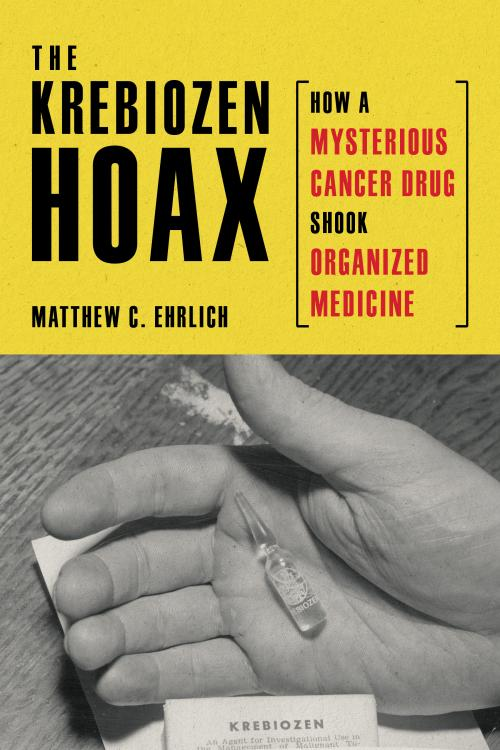
It is a story that resonates with the present: A 1950s cancer treatment hoax that showed “charges of conspiracy, elitism, and un-Americanism directed against the educational, scientific, and medical establishment are nothing new; neither is uncritical news coverage of what turns out to be quackery.” We’re pleased to share an adapted excerpt from Matthew Ehrlich’s The Krebiozen Hoax:  How a Mysterious Cancer Drug Shook Organized Medicine, out today.

On March 26, 1951, one of America’s most respected scientists called a meeting at Chicago’s Drake Hotel to make a dramatic announcement: he and a Yugoslavian refugee doctor had found a drug that showed great promise in treating cancer. The scientist was Andrew Ivy, vice president of the University of Illinois (U of I) and designated spokesperson for medical ethics at the Nazi war crimes trials in Nuremberg. Time magazine had gone as far as to pronounce him “the conscience of U.S. science.” Ivy’s Yugoslavian collaborator was Stevan Durovic, said to have discovered the new drug in Argentina after the Nazis forced him to flee his homeland. The drug itself was called Krebiozen, a name that was supposed to connote “cancer suppressor” or “regulator of growth.”

Continue reading “Deceit, delusion, and a classic medical fraud”: An excerpt from a new book about a cancer treatment hoax

‘A proper editor would be horrified’: Why did a pediatric journal publish articles on the elderly?

In June, a scientist researching sarcopenia came across a relevant paper about treatment for elderly patients with complications from the disease as well as type 2 diabetes. The paper was “very bad,” he told us. “It looked like someone just copied two or three times the same text.” 

The scientist, who asked to remain anonymous, became even more concerned when he realized the paper, which had the word “elderly” in its title, had been published in a pediatric journal. 

“I started reading other issues of the same journal and noticed that this is a widespread problem: Chinese papers about older adults being published in pediatric journals!” he said. 

Continue reading ‘A proper editor would be horrified’: Why did a pediatric journal publish articles on the elderly?

Did Flint water crisis set kids back in school? Paper saying so is ‘severely flawed,’ say critics

Siddhartha Roy

A paper finding kids did worse in school following the Flint water crisis is “severely flawed and unreliable,” according to critics who were deeply involved in exposing the crisis.

The paper has now earned an addendum from the authors, but the critics say it should be retracted.

The authors of the article investigated whether the water crisis in Flint – a period when the drinking water in the Michigan city was contaminated with lead – affected the academic capability of children living there. The authors concluded children in Flint did worse in math after the crisis and more needed special education than before the episode. 

The article was published in Science Advances in March and referenced by major news outlets like ProPublica and The Washington Post.

Continue reading Did Flint water crisis set kids back in school? Paper saying so is ‘severely flawed,’ say critics

‘A threat to the integrity of scientific publishing’: How often are retracted papers marked that way?

Caitlin Bakker

How well do databases flag retracted articles?

There has been a lot of interest recently in the quality of retraction notices and notifications, including new guidelines from the National Information Standards Organization (NISO; our Ivan Oransky was a member of the committee) and a new study which Ivan and our Alison Abritis joined.

In another new paper, “Identification of Retracted Publications and Completeness of Retraction Notices in Public Health,” a group of researchers set out to study “how clearly and consistently retracted publications in public health are being presented to researchers.”

Spoiler alert: Not very.

We asked corresponding author Caitlin Bakker, of the University of Regina — who also chaired the NISO committee — some questions about the findings and their implications.

Continue reading ‘A threat to the integrity of scientific publishing’: How often are retracted papers marked that way?

Food science journal retracts 10 papers for compromised peer review

Farhan Saeed

A research group based in Pakistan has had 10 of their papers retracted from Wiley’s Food Science & Nutrition based on flaws in the peer review process.

According to the notices, which were identical for each article, “the editorial office found unambiguous evidence that the manuscript was accepted solely based on compromised and insufficient reviewer reports.” 

The following articles have been retracted: 

Continue reading Food science journal retracts 10 papers for compromised peer review

Paper recommending vitamin D for COVID-19 retracted four years after expression of concern

Michael Holick

A paper that purported to find vitamin D could reduce the severity of COVID-19 symptoms has been retracted from PLOS ONE, four years after the journal issued an expression of concern about the research.

The article, “Vitamin D sufficiency, a serum 25-hydroxyvitamin D at least 30 ng/mL reduced risk for adverse clinical outcomes in patients with COVID-19 infection,” appeared online September 25, 2020. Michael F. Holick, a professor of medicine at Boston University and a proponent of the use of vitamin D, was the last author among a group of other researchers from the Tehran University of Medical Sciences in Iran. 

Soon after publication, the paper gained traction on platforms like Twitter (now X) as evidence vitamin D could treat COVID-19 symptoms.

Amidst this discussion, Nick Brown, a science integrity researcher at Linnaeus University in Växjö, Sweden, and Gideon Meyerowitz-Katz, a research fellow at the University of Wollongong, Australia, pointed out potential flaws with the work, including the small sample size of the study and a lack of patient information such as how the patients died.

Continue reading Paper recommending vitamin D for COVID-19 retracted four years after expression of concern

Superconductor researcher loses fifth paper

Ranga Dias

Ranga Dias, the physics researcher whose work on room-temperature superconductors has been retracted after coauthors raised concerns about the data, has lost another paper for the same reason. 

This retraction brings Dias’ total to five, by our count

The University of Rochester in New York, where Dias is an assistant professor, is investigating his work, Science has reported. Washington State University, where Dias obtained his PhD, is also investigating allegations of plagiarism in his thesis. 

Dias has not responded to our request for comment about his latest retraction, of a 2021 paper in Physical Review Letters titled “Synthesis of Yttrium Superhydride Superconductor with a Transition Temperature up to 262 K by Catalytic Hydrogenation at High Pressures.” The article has been cited 178 times, according to information presented on its abstract page. 

In December, the journal published an expression of concern for the paper, stating it was investigating concerns “regarding the origins and integrity of the transport data” in several of the paper’s figures “with the cooperation of the authors.” 

On June 13, the journal retracted the paper. The notice states: 

Continue reading Superconductor researcher loses fifth paper